We analyzed 2,330+ LLM crawler hits in our server logs (Here’s what modern bots actually read)
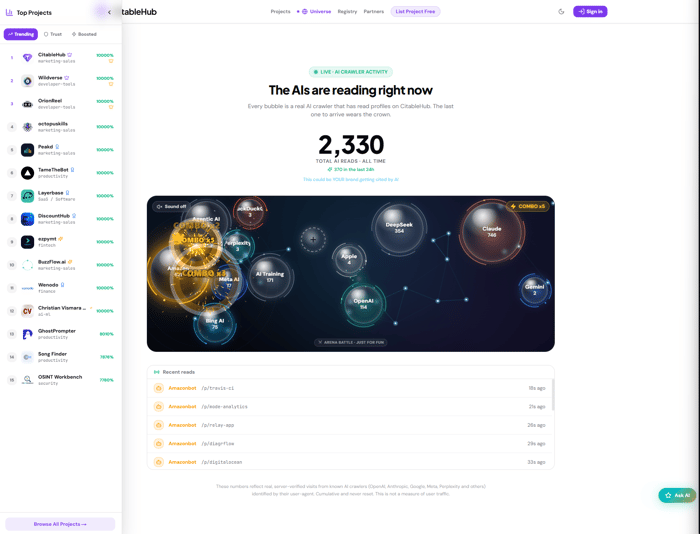
Most indie hackers spend months optimizing for Google's index, but over the last few weeks, looking at our server logs revealed a massive shift:
Conversational AI search (ChatGPT, Claude, Perplexity, DeepSeek) is actively bypassing standard marketing fluff.
When an AI assistant needs to answer "What's the best tool for X?", traditional heavy SPAs and complex client-rendered JS often fail to get properly parsed.
To see what was actually happening under the hood, we built CitableHub—an AI-first directory engineered specifically with structured schemas so LLMs can ingest and cite SaaS profiles directly. We also hooked up live server tracking into an interactive radar.
What 2,330+ AI crawler hits taught us:
- User-Agents are hyper-active: We tracked direct, repeated hits from OpenAI, Anthropic, DeepSeek, Apple, and Perplexity crawlers.
- Deep record indexing: Once an LLM finds machine-readable data, it doesn't just hit the homepage it walks individual catalog records one by one.
- Speed over style: Clean semantic markup gets indexed almost instantaneously compared to visual-heavy marketing pages.
If you aren't optimizing for Generative Engine Optimization (GEO) yet, your product might literally be invisible when users ask AI for alternatives in your niche.
We just went live on Product Hunt today to open up the radar data and start indexing more tools:
https://www.producthunt.com/products/citablehub
Question for fellow devs:
Are you actively inspecting AI bot user-agents in your Nginx/Cloudflare logs? What patterns or crawling frequencies are you seeing on your projects?

Useful distinction is bot access versus recommendation-worthiness. Clean server-rendered pages and schemas help crawling, but they should surface a clear answer: who the product is for, what it does better, proof and limits, pricing, and a concrete comparison.
For a tool directory, I’d measure not only crawler hits but whether bots reach product-detail pages, find current structured fields, and whether referred visitors take an intent action. A small, well-maintained “use cases / alternatives / why us” layer often makes the product easier for both people and AI systems to understand.