We analyzed over 1 million user sessions to study how predictable online behaviour is
We analyzed a dataset of website visitors’ navigation patterns to find out how much predictability there is to how we interact with a site. The dataset contains almost 10 million navigation events (i.e. page changes) from 1.4 million user sessions on an online banking site. In total, the website has 819 pages and on average there are 208 links on each page (weighted by number of visits). This means that if you made a random prediction which link a user would next click, you would be right less than 0.5% of the time (1/208).
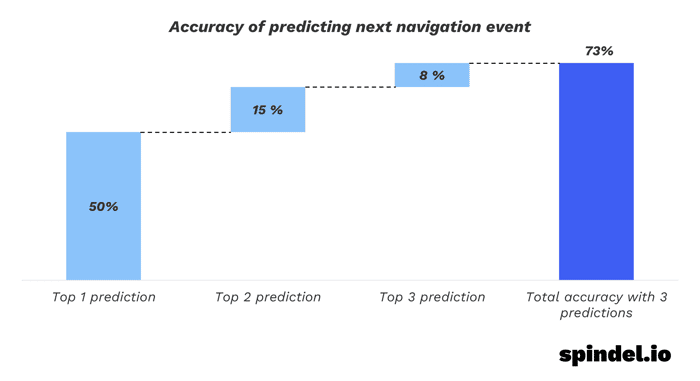
We preprocessed the user session data and fed it into our machine learning model. The results are below:

Reducing the sample size to about 60 thousand only decreased the top 3 accuracy from 73% to 69%, implying that great results can be achieved with relatively little data.
Why is this useful?
- You can deliver a seamless user experience by prerendering or prefetching the content a visitor is likely to access before they actually do. This will improve page load times materially and increase conversions and overall user experience.
- To build any kinds of custom use cases. For example, if you predict that a user is likely to access a given page, you can make links to them more pronounced to make them easier to find.
We ran this case study as part of making Spindel, a prediction driven framework that lets you build lightning fast & customizable user experiences without infringing on privacy. To get Spindel, visit us at https://www.spindel.io.
Ps. if you want to know the details of this study, refer to my blog post here.
