We Built a Routing Layer That Saved Us From the Claude Ban — Here's the Playbook
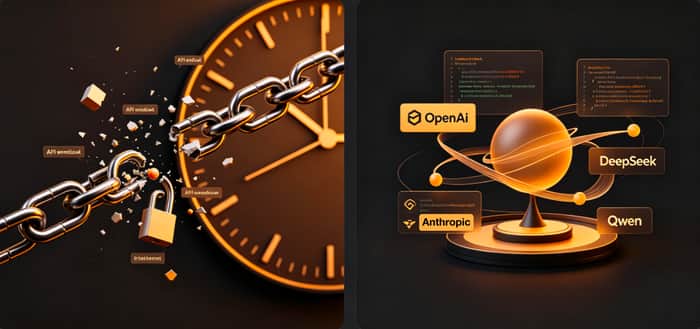
Alibaba dropped Claude across 200,000 employees in 7 days and nobody panicked because they had Qwen in-house.
We're a bootstrapped dev tools startup. We don't have an in-house LLM. But we saw this coming.
The wake-up call
Since September 2025, Anthropic has been systematically cutting off China-related accounts. First the obvious violators, then legitimate team subscriptions, then individual paid users. The pattern was clear: vendor lock-in isn't a theoretical risk, it's a timeline.
Most teams we talk to are in the same boat: Claude is deeply integrated into their workflows — code generation, documentation, reasoning. Switching isn't a 5-minute endpoint change. It means re-tuning prompts, rewriting vendor-specific parameter logic, rebuilding monitoring around a new provider's response format. Two weeks minimum, if nothing breaks.
What we built instead
We started AiKey with a simple premise: your application code should never know which LLM provider is on the other end. Not "use multiple providers." Not "have backup keys." One clean abstraction.
The architecture is a local proxy that sits between your app and model APIs. Your code calls a logical model — like code_generation or long_context — and the proxy routes to the actual provider based on configuration. Switch providers? Change one mapping in the control plane. No code changes, no prompt rewrites, no team-wide variable swaps.
Where this matters
The proxy adds zero value during normal operations. You use Claude when you want Claude. It earns its keep the day your account gets suspended.
That's the bet we're making: vendor reliability is not something you select for — it's something you architect against. The best model on your benchmark isn't the one that stays available. It's the one you can stop using without anyone noticing.
What we've learned
Shipping a credential management + routing layer for multiple LLM providers taught us a few things:
- Logical model abstraction is the hard part. Mapping business intent ("code generation") to physical models sounds simple, but model capabilities drift over time. What worked great on Claude last month might produce garbage on a different model today.
- Teams don't care about architecture until they need it. We've heard "sounds cool but we're fine with Claude" more times than we can count. The conversion event is always the same: a close call with a suspension notice.
- Key management is the Trojan horse. Everyone thinks they'll solve routing later. But credential sprawl — keys scattered across .env files, hardcoded in CI configs, shared in Slack DMs — that's the immediate pain point that gets them in the door.
The numbers (honest version)
We're early. This isn't a "$0 to $50K MRR in 6 months" post. What we do know: teams that adopt the proxy layer report cutting model-switching time from weeks to under an hour. That metric is our north star.
If you're building anything that calls LLM APIs in production, the question isn't whether you'll need to switch providers. It's whether you'll have time to do it when you have to.
AiKey: https://aikeylabs.com/zh/i/ih18
Enterprise: aikeyfounder@gmail.com
