We explored how Model Context Protocol can simplify AI integrations
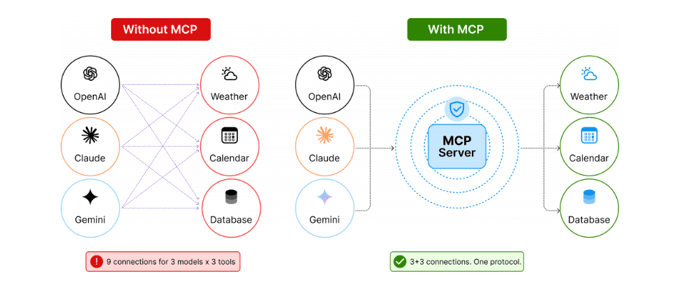
As AI products connect with more databases, APIs, and business tools, custom integrations become difficult to build and maintain. Model Context Protocol, or MCP, introduces a common interface through which AI applications can discover tools, access contextual data, and perform approved actions.
Our article explains the roles of MCP hosts, clients, and servers, along with the tools, resources, and prompts they exchange. We also examine the message flow, transport options, security boundaries, and the architectural decisions teams should consider before adopting MCP.
The key insight is that MCP does not replace APIs, agents, or security controls. It creates a reusable communication layer around them. This can reduce integration complexity, but production systems still require authentication, authorization, validation, audit logging, and user approval for sensitive actions.
For teams building AI agents, developer tools, or AI-powered SaaS products, MCP could shift integrations from one-off connectors toward a modular ecosystem.
Read the article: https://capestart.com/resources/blog/model-context-protocol-architecture/
Do you see MCP becoming a standard part of the AI application stack, or are custom integrations still the better choice for your product?
