We Found the Hidden 23% Eating Our AI Budget (It Wasn't What We Thought)
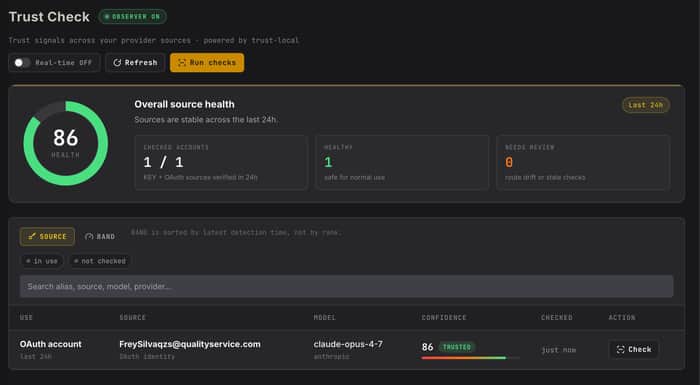
Last month, one of our customers at AiKey hit a number that made everyone pause: call volume was flat, but AI costs jumped 23%.
And here’s the kicker — nobody could agree on why.
Operations blamed output quality and downstream rework. Engineering pointed to stable API success rates. Finance just saw the bill climbing.
Sound familiar?
The real culprit was subtler: output quality had been degrading slowly over weeks. Not enough to trigger system alerts. Not enough for anyone to file a bug. Just enough that people started re-running prompts, adding follow-up corrections, and manually fixing results every day.
Those micro-corrections compounded. By month-end: +23% cost.
When “Slightly Worse” Outputs Become a Cost Problem
Here’s what silent quality drift usually looks like in production:
- Same prompt, lower first-pass usability
- More follow-up prompts per task
- Rework time creeping up
- Pipeline pass rates dropping, which drives retries
Individually, each signal looks manageable. Across thousands of calls, the math turns ugly.
The key point: quality monitoring isn’t a nice-to-have. It protects your budget from quiet degradation.
The 3-Step Debugging Playbook We Actually Used
1) Establish a Quality Baseline First
Most teams start with API success rates and latency. Those matter, but they don’t answer the business-critical question:
“Is this output still usable for the job to be done?”
What we did:
- Sampled a stable task set, weighted by business priority
- Locked evaluation dimensions: accuracy, completeness, format compliance, actionability
- Compared same-task outputs across time windows
Once we had the baseline, the anomaly surfaced quickly:
- First-attempt usable rate (the % of outputs usable without extra edits) trended down on specific task types
- Outputs looked structurally fine, but key details were increasingly missing
- The same tasks needed more rounds before reaching acceptable quality
That turned “it feels worse lately” into measurable evidence.
2) Separate a Quality Problem from a Pipeline Problem
After confirming the anomaly, we split investigation into two layers:
- Quality layer: is content drifting from defined standards?
- Pipeline layer: are retries rising, response stability changing, or routing shifting?
The team’s biggest friction was scattered signals across multiple dashboards with no unified timeline. They consolidated the key metrics into a single operational view (quality signals, retry behavior, model/source distribution, and cost trend side by side).
That made two questions answerable fast:
- Is there a real anomaly, and how broad is it?
- Which source/model is driving it?
Tools don’t replace judgment. Methodology still matters most — baseline design, anomaly criteria, and cost translation. But having one coherent view dramatically shortens the see → isolate → track loop.
3) Translate the Anomaly into Business Language
This is where many technical teams get stuck: proving to leadership this is not random noise but an operating issue.
We frame it in three buckets:
- Quality: first-attempt usable rate, manual rework rate
- Efficiency: average delivery time, retry count
- Cost: cost per effective result
Then we show a simple before/after:
- Call volume: roughly flat
- Cost per effective result: significantly up
- Rework + retries: the multiplier
- Monthly impact: +23%
That framing shifts the conversation from “Was one output bad?” to:
“We are systematically paying more for degraded outcomes.”
What Changed After the Fix
The fixes weren’t fancy — just prioritized correctly:
- Tightened quality thresholds on high-risk tasks first
- Used gradual rollout + A/B checks on critical pipelines
- Kept continuous monitoring in place to prevent regression
The team’s feedback wasn’t “the dashboard looks better.” It was:
- Noticeably less rework pressure
- Lower tech-to-business communication overhead
- Cost variance back in an explainable range
If You’re Running AI in Production
Start with a minimal quality detection loop. Don’t over-engineer day one:
- A fixed baseline sample
- Basic anomaly detection
- A clear mapping from quality drift to cost impact
Because in production, the most expensive issue is rarely a dramatic outage.
It’s the quiet anomaly that burns budget for a month before anyone notices.
One More Thing (For Builders Who Want This Operationally)
I’m building AiKey to solve exactly this class of problem: API key management, quality monitoring, call visualization, cost tracking, and basic risk controls.
The personal edition is free and covers what most indie builders need to get started.
After install, you can quickly see:
- Which tasks are losing first-pass usability
- Where retries are inflating real cost
- How quality shifts correlate with spend over time
Install
# macOS / Linux
curl -fsSL https://aikeylabs.com/zh/i/ih05 | sh
:: Windows (cmd)
curl.exe --ssl-no-revoke -fsSLo "%TEMP%\aikey-w.ps1" https://aikeylabs.com/zh/iw/ih05 && powershell -ExecutionPolicy Bypass -File "%TEMP%\aikey-w.ps1"
# Windows (PowerShell)
$f="$env:TEMP\aikey-w.ps1"; curl.exe --ssl-no-revoke -fsSLo $f https://aikeylabs.com/zh/iw/ih05; & $f
If you’re running AI at scale and want enterprise controls, feel free to reach out: aikeyfounder@gmail.com

This is a strong case because the pain is not “AI costs are high.” It is that teams often cannot explain why the cost changed.
The sharper category might be less API key management and more AI quality-cost observability.
The strongest line in the post is “cost per effective result.” That is much more powerful than API success rate, latency, or raw spend, because it connects output quality, retries, rework, and finance impact in one metric.
If AiKey is moving toward enterprise, I’d make that the center of the positioning: detect quality drift before it quietly turns into higher AI operating cost.
The only thing I’d be careful with is trying to carry too many promises at once: API key management, quality monitoring, call visualization, cost tracking, and risk controls. The wedge feels strongest when it starts with quality drift causing hidden cost leakage.
This is easily the sharpest feedback I've gotten. You just put words to something I've been circling around for weeks without quite landing.
The shift from "key management" to "quality-cost observability" is exactly right. The real enemy isn't a stolen key — it's a model silently degrading from Claude to Haiku-tier while your cost dashboard looks flat. Nobody notices until the support tickets pile up.
"Cost per effective result" is the metric I want to hang everything on. It captures what latency and raw spend never will: how much did you actually pay to get a usable answer, including retries and rework.
The warning about carrying too many promises is well-taken. Quality drift as the wedge, everything else as supporting infrastructure. I'd rather be known for one thing that actually matters than five things nobody can remember.
Are you building in this space, or just sharp enough to see the cracks from the outside?
Mostly seeing the cracks from the outside.
I work with early founders on positioning, GTM, and first-customer messaging, so I tend to notice where a technical product needs a sharper buyer frame.
AiKey feels like one of those cases. The technical base is interesting, but the category frame will decide whether buyers see it as tooling or as something tied to AI spend, drift, and operational risk.
Drop your email and I’ll send over the tighter version. It’ll be easier to make useful in writing than turning this into a full category teardown here.