We just shipped Teams – our most requested enterprise feature
Hey IH community! 👋
I'm Michael, building AI Nexus – a professional workspace for working with AI models (think ChatGPT but with access to 100+ models, better organization, and actual workflow tools).
We've been in beta for a few months now, and something interesting happened: we started getting traction with larger teams and companies. Not the typical "2 founders in a garage" startup customers, but actual enterprise-y organizations – consulting firms, research teams, development agencies.
And they all wanted the same thing: team collaboration.
The problem:
These companies had 10-50 people all using AI Nexus. We installed a "private-cloud" version just for these companies. But those teams had zero visibility or control. They wanted to:
Share projects and prompts across teams
Manage who has access to what
Consolidate billing and usage
Actually work together instead of in silos
Fair enough. But here's the thing – I'd been avoiding building team features because:
It felt like scope creep (we're still in beta!)
I wanted to nail the individual experience first
Team features = complexity = slower shipping
What changed my mind:
Three specific customers came to us within the same week saying "we love this, but we need teams or we'll have to build something in-house." One was a 30-person consulting firm, another was a research lab, the third was an agency.
When you have paying customers basically begging for a feature and threatening to churn without it... you listen.
What we shipped:
The full spec is pretty detailed (happy to share if anyone's curious), but the core features:
Team workspaces – Switch between personal and team contexts
Project sharing – Share AI projects with granular permissions (view/comment/edit/admin)
Team prompt libraries – Build and share effective prompts across the org
Member management – Invite, roles (owner/admin/member/viewer), remove
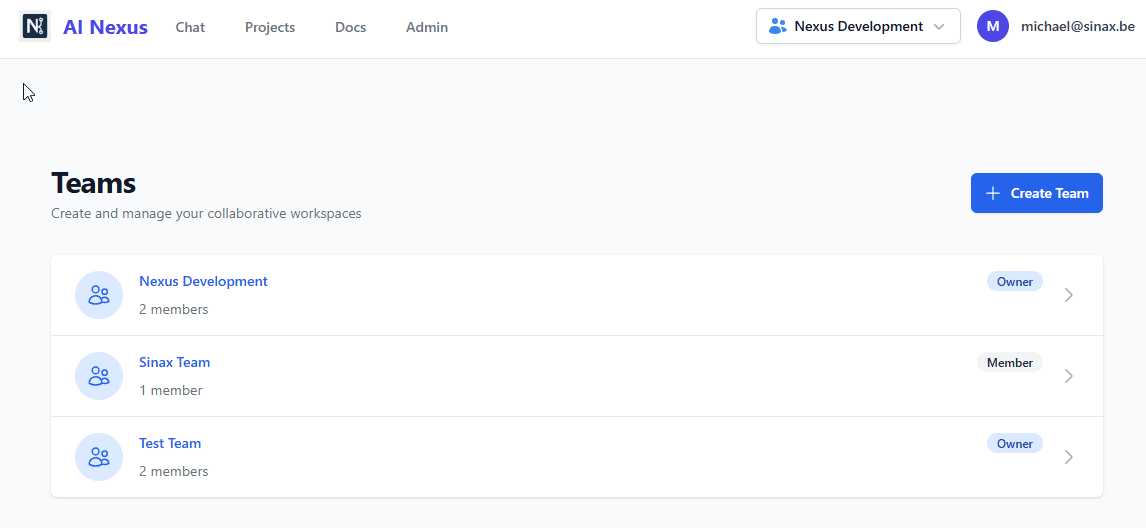
The interesting part: we kept our BYOK (bring-your-own-key) model working for teams too. So enterprises can use their own Azure OpenAI, AWS Bedrock, or Google Vertex credentials. This is huge for regulated industries.
Early results:
Shipped 2 weeks ago. The three customers who requested it have already upgraded and brought their teams on. One went from 8 individual accounts to a 32-seat team plan. Another is rolling it out to 50+ people.
The interesting insight: these features aren't just for "enterprise" – we're seeing 3-5 person dev teams and small consulting shops signing up for team plans too.
What I learned:
Listen to paying customers – If multiple customers ask for the same thing, that's signal
Enterprise doesn't mean corporate – Small teams want collaboration too
BYOK is a moat – Letting teams use their own cloud credentials removes a huge barrier
Complexity is worth it – Yeah, teams added complexity, but the revenue impact justified it
What's next:
Now that teams can collaborate, the next requests are already coming in:
Shared conversation threads (multiple people in one chat)
Team analytics and usage tracking
Better permission controls for sensitive projects
Honestly, I'm glad we waited until we had product-market fit with individuals before tackling teams. But once we had it, shipping teams unlocked a whole new segment.
Anyone else dealing with the "should I build team features?" question? Happy to share more details on the implementation or trade war stories.

