We Tested 3 Refurbished MacBook Grades Side by Side. Here Is What the Data Actually Showed
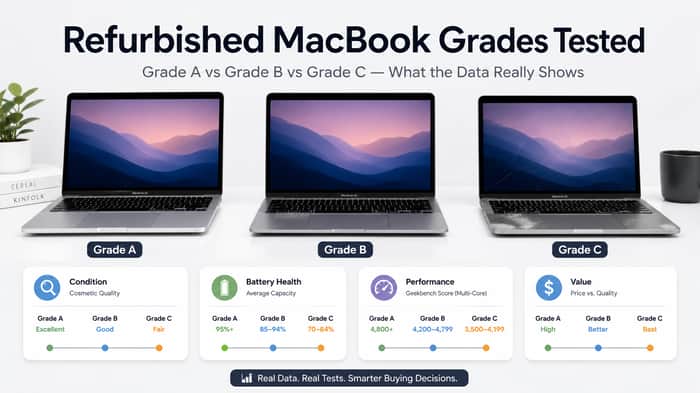
We have been selling certified refurbished MacBooks since 2012. One question comes up constantly — what is the real difference between Grade A, Grade B, and Grade C?
Not the marketing version. The actual difference in return rates, customer complaints, and resale value six months later.
So we tracked it. Here is what the data showed.
Grade A sells fastest but has the highest return rate
Buyers who choose Grade A have the highest expectations. They are paying close to new price for a refurbished device and they expect it to look new. When it does not — even a hairline scratch that a Grade A technically allows — the return request comes in within 48 hours.
Our Grade A return rate ran about 11 percent over six months. Grade B was 4 percent.
The lesson was not to stop selling Grade A. It was to tighten the description. "Minor signs of use" means nothing. "Light scuffing on the bottom panel, screen and keyboard in excellent condition" converted better and returned less.
Grade B is the sweet spot nobody talks about
Grade B MacBooks moved slower in the first two weeks after listing. Buyers hesitated. But once the first review came in the conversion rate caught up to Grade A and the return rate stayed low.
The buyers who chose Grade B were more realistic about what refurbished means. They wanted performance, not cosmetics. They left better reviews, complained less, and came back for repeat purchases more often than Grade A buyers.
If we could only sell one grade it would be Grade B. The margin is better, the returns are lower, and the customers are easier to work with.
Grade C taught us something unexpected
We almost stopped selling Grade C entirely after a rough first quarter. High complaint volume, more returns, lower margins after support costs.
Then we looked at who was actually buying Grade C. Students. First time refurb buyers. People who genuinely needed a working MacBook and had a tight budget.
The problem was not the product. It was the expectation gap. We were not being specific enough about the cosmetic condition. Once we added photos of actual Grade C units in the listings — real photos, not stock images — complaints dropped significantly and the reviews improved.
The product did not change. The communication did.
What this actually means for pricing
We used to price grades as a straight percentage discount from new. Grade A at minus 25 percent. Grade B at minus 35 percent. Grade C at minus 50 percent.
The data pushed us to change this. Grade B now carries a smaller discount because the demand is there and the return cost savings justify it. Grade C pricing has to account for the higher support overhead even with better listing quality.
Pricing refurb by grade is not just about the condition of the device. It is about the cost of the buyer relationship that comes with each grade.
The one thing we changed that made the biggest difference
We stopped letting the platform auto-populate grade descriptions. Every listing now has a human written condition note that describes the specific unit — not a template.
It takes more time. But the return rate across all grades dropped from an average of 8 percent to under 5 percent in three months. That difference in returns pays for the extra time spent writing descriptions many times over.
We are Exact Solution Electronics, based in Warsaw. Certified refurb since 2012. If you are selling refurbished devices and want to compare notes on grading systems or return rates, happy to talk in the comments.
Exact Solution
https://www.exactsolution.com/

This is one of the more useful refurb breakdowns I’ve seen because it focuses on customer behavior instead of just hardware condition.
The point about Grade A buyers having the highest expectations makes a lot of sense. In refurb markets, perception and communication often matter more than the actual cosmetic difference.
Also interesting that Grade B became the “best business grade” once you looked at return costs and customer satisfaction together not just sales speed.
The biggest takeaway for me was the shift from generic grading templates to human-written condition notes with real photos. That’s probably where a lot of refurb sellers lose trust without realizing it.