We tested our hallucination checker against ChatGPT and a dedicated checker. The results surprised us.
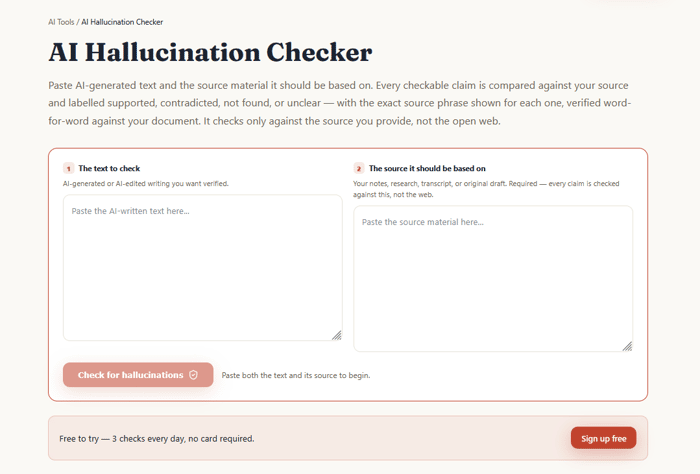
We built a tool that checks AI-rewritten text against your original source — not the open web, your actual document (https://letsflw.com/tools/hallucination-checker). Before pushing it as our main feature, we wanted an honest answer to the obvious question: is this actually better than just asking an AI to check it, or a free tool built for the same job?
So we wrote four original documents, planted specific known problems into rewritten versions, and ran the same test three ways: our tool, a general-purpose chatbot, and a free dedicated hallucination-detection tool.
Against the dedicated tool, it was close. Each side caught something the other missed exactly once, and both correctly held back from flagging a claim that sounded risky but was actually accurate — the harder skill of the two.
Against the chatbot, one pattern held up across all four documents: when a source hedges something ("would likely," "suggests," "may") and the rewrite states it as certain, the chatbot's actual verdict field kept saying it passed — the real issue was buried in a footnote, not the answer itself. Five separate times. It did catch the more obvious jumps in confidence; it was specifically the subtler ones that got through.
We wrote up the whole thing here: https://letsflw.com/blog/hallucination-checker-vs-chatgpt — including where our own tool missed something a free competitor caught. Genuinely didn't expect the honest version of this post to be more useful to write than a "we win" version would have been.
