What Actually Works in B2B Lead Generation: Strategies I Use in 2026

Most B2B lead generation advice still sounds like it’s 2018.
Run some ads.
Buy a list.
Send cold emails.
Retarget.
Add a chatbot.
Post more on LinkedIn.
Sprinkle in “AI” somewhere and call it a strategy.
And look, some of that stuff can work. For a minute. Then the cracks show.
In 2026, the game is different in a bunch of small annoying ways that add up fast. Inboxes are crowded and protected.
CPCs are up. Tracking is blurry.
People are numb to AI generated “personalized” outreach. Also, buyers are more educated and more skeptical. They do their own research, they talk to peers, they show up to your call already half decided. Or they don’t show up at all.
So I stopped optimizing for “leads”.
I optimize for sales ready conversations with the right accounts.
Conversations that can realistically become pipelines. The kind sales actually want, not the kind that makes your dashboard look pretty.
In this article, “works” means:
Predictable pipeline, not random spikes
Qualified meetings, not form fills
Sales Accepted Leads, not MQL volume
Revenue, not impressions
And yes, I’m going to share a system I personally use. Strategy, execution, measurement.
It does not have a list of 47 tactics you try once and abandon.
Why most B2B lead generation advice fails (and what I do instead)
The biggest oversimplification is the “just run ads + send cold emails” thing.
It breaks in 2026 for a few reasons:
Crowded inboxes: Deliverability is a skill now, not a setting. A lot of outbound dies before anyone sees it.
Rising CPCs: You can still buy demand, but you pay more and you need tighter pages, tighter qualification, and better follow up.
Privacy limits: Attribution is messy. “This LinkedIn post influenced the deal” is often true and hard to prove.
AI generated noise: Prospects have seen the templates. They can smell it. Even good offers get ignored if the wrapper feels fake.
So instead of asking “How do I get more leads?” I ask:
How do I create and capture enough high intent to get into sales conversations with accounts that match our ICP… and then not waste that opportunity?
That framing changes everything. It forces you to connect the dots between marketing and sales, and it kills the vanity metric addiction.
My 2026 B2B lead gen operating system (the simple framework)
Here’s the framework I use and keep coming back to. Four parts.
ICP & Offer
Demand Capture
Demand Creation
Conversion & Follow up
The pieces connect like this:
Creation feeds capture (people discover you, then they search and compare)
Capture validates creation (you see what messaging actually converts)
Conversion turns interest into pipeline (speed, routing, qualification, follow through)
Single channel hacks fail because you get blind spots. Bad attribution. Inconsistent lead quality. You think ads “don’t work” when the issue is the page.
You think outbound “is dead” when the issue is your ICP. You think content “doesn’t convert” when you never give it a next step.
A basic example of the system in practice, week to week:
ICP & offer: reviewed monthly, tightened quarterly
Capture: 1 to 2 high intent pages shipped or improved per month
Creation: 2 to 4 LinkedIn posts per week or one workshop per month (pick your lane)
Conversion: daily speed to lead, weekly SAL review, weekly meeting quality review
One primary KPI per stage. That’s it. Otherwise you drown.
Step 1: Nail the ICP (or your B2B sales leads will be junk)
People mix up ICP, persona, and targeting. They’re related but not the same.
ICP: who wins fastest and stays longest
Persona: who inside the account influences the purchase
Targeting: how you reach them
That’s a category. An ICP is more like… the conditions where you’re the obvious choice.
Minimum ICP fields that actually matter for lead gen:
Firmographics (industry, size, geography)
Tech stack (what you integrate with, what you replace)
Trigger events (what causes them to look)
Buying team roles (who owns it, who blocks it, who signs)
Budget range (even a rough band)
Compliance constraints (SOC2, HIPAA, ISO, procurement reality)
Deal size and motion (self serve vs sales led)
Time to value expectations (days, weeks, quarters)
And then the key part. The part most people skip.
Combine intent + fit
Intent without fit equals churn, refunds, long painful onboarding, or deals that never really expand.Fit without intent equals slow cycles and “maybe next quarter”.
So I use a lightweight model:
Fit score (1 to 5)
Intent score (1 to 5)
Then I prioritize.
This also keeps your team sane because you stop treating every inbound as sacred.
Data sources, without over tooling it:
CRM and closed won analysis (what actually converted, what expanded)
Website analytics (what pages correlate with meetings, not just traffic)
Sales calls (what language prospects use, what triggers show up repeatedly)
Public signals (job posts, press releases, product updates, legal pages)
The fastest way I find “high intent” accounts in 2026
The intent signals that actually correlate with pipeline, at least in my experience:
Job postings that indicate a project is funded (implementation roles, RevOps, security, migration)
Tech stack changes (new tooling, rip and replace, integration announcements)
Funding or major budget events
Leadership hires (new VP, new head of data, new CRO)
Compliance deadlines (SOC2, ISO, HIPAA, vendor security reviews)
Product launches that require infrastructure, analytics, onboarding, security, whatever your category is
Migration projects (cloud move, CRM switch, data warehouse shift)
Then I map that back to fit. If they’re high intent but wrong size, wrong compliance environment, wrong motion. I don’t push. I might nurture, or I might ignore. Sounds harsh. It saves time.
A simple scoring example:
Fit: industry match (2), stack match (2), size match (1) = 5
Intent: trigger event (2), content consumption (1), response signals (1) = 4
Total priority = 9 out of 10.
That gets the best outreach, the best follow up, faster routing.
Step 2: Fix the offer (most “lead generation services” can’t save a weak offer)
If your offer is “Book a demo”, you do not have an offer. You have a request.
Lead gen fails when the offer is vague because the buyer has to do too much thinking. And they won’t.
Not when they have 11 other options.
What I use instead are low friction offers tied to outcomes. Things that feel useful even if they never buy.
Examples that work well in 2026:
Audit (pipeline audit, analytics audit, security posture audit)
Benchmark (compare them to peers, even if it’s directional)
Teardown (landing page teardown, outbound teardown, onboarding teardown)
ROI model (simple, transparent, editable)
Migration plan (steps, timeline, risks, what breaks)
Pilot (scoped, time boxed, clear exit criteria)
Then I add qualification criteria upfront so sales doesn’t hate marketing.
Practical qualification criteria I care about:
Problem recognized (they can name it)
Urgency window (why now, and when)
Stakeholder access (do we have the right people in the room)
Realistic budget band (not exact, just “this is a thing we fund”)
Technical feasibility (can we actually deliver in their environment)
And a handoff rule I’m strict about:
Marketing doesn’t “count” a lead until sales can run a real discovery call.
Which is why I’m obsessed with one shared metric.
Sales Accepted Lead rate (SAL%)
SAL% is the percentage of leads sales accepts as worth pursuing. Not “we got an email”. Not “they downloaded a PDF”. Sales looked at it and said yes, we want this.
SAL% beats raw lead volume almost every time.
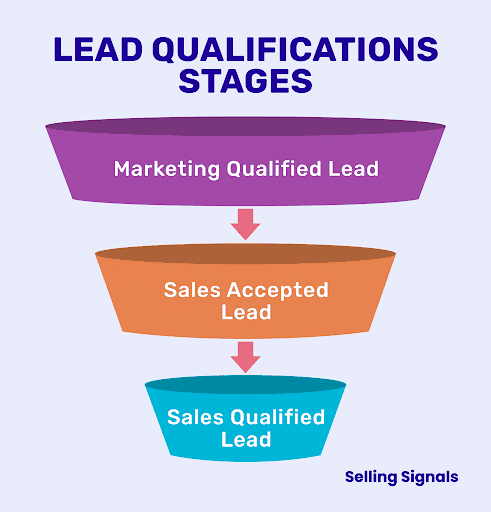
My “good lead” definition (the bar sales actually respects)
Stages, simplified:
Inquiry
MQL (optional, and honestly often useless)
SQL
Meeting held
Opportunity
Closed won
A “good lead” to me is not an inquiry. It’s typically an SQL that results in a meeting held. If you want one sentence:
A good lead is one where sales can run discovery with the right role, on a real problem, inside a real timeline.
If it’s unqualified, I don’t want it shoved into sales and marked “SQL” anyway. That just poisons the data and kills trust.
Step 3: Demand capture that still prints B2B leads (when done right)
Demand capture is harvesting existing intent. Not creating desire.
It still works in 2026 because buyers still search. They still compare. They still look for alternatives. They still need proof for their boss and procurement.
Capture channels that remain reliable:
High intent SEO pages
Comparison pages
Integration pages
Demo and pricing pages (yes, pricing)
Retargeting
Review sites and directories, if your category uses them
The B2B Growth Formula: Mastering Demand Capture & Customer Retention | Full Funnel Friday
The key to capture is boring but powerful:
Message match + proof + frictionless conversion
Classic mistake: driving traffic to a generic homepage, or a vague “contact us” form that asks 11 questions and then takes 3 days to respond.
SEO pages I build first (and why they convert)
I don't start with "top of funnel" blog posts anymore unless I'm already winning capture.
I start with pages that scream buying intent:
{category} for {ICP}
{competitor} alternative
{use case} solution
{integration}
Pricing
Security and compliance
Structure I use on these pages:
Problem (call it out clearly)
Outcomes (what changes, what improves)
Social proof (logos, stats, quotes, specific)
How it works (simple, not buzzwords)
Objections (answer the scary stuff)
CTA (matched to intent)
Lead capture options beyond forms:
Calendar booking (with guardrails)
"Get the template"
"Request the benchmark"
"Talk to an expert"
"Get a 10 min teardown"
Internal linking matters more than people admit. I connect capture pages to proof pages. Case studies. Security page. Implementation docs. Integration guides. Anything that reduces anxiety.

Conversion upgrades that increase B2B sales lead generation without more traffic
This is where a lot of easy wins live.
Simplify forms. Ask less. Progressive profile later.
Add scheduling, but with routing and qualification questions.
Tighten CTAs by intent level: "Get a 10 min teardown" beats "Contact sales"
Put proof near the CTA. Not buried.
Short testimonials
Quantified outcomes
Security badges only if true
Fast follow up
Immediate confirmation
Clear next steps
Pre call asset (short doc, checklist, 2 minute video)
If your follow up is slow, you are lighting money on fire. Even if the lead is great.
Step 4: Demand creation that doesn’t feel like spam (my 2026 playbook)
Demand creation is creating new intent in accounts that match your ICP.
Rule I use:
Creation must be targeted, opinionated, and proof backed. Otherwise it’s content noise.
And every creation asset needs a bridge to a conversation. Not “DM me”. A real next step that fits naturally.
Optimizing Demand Creation and Demand Capture for the Buying Cycle
Diagnostic. Benchmark. Teardown. Workshop. Something.
Also, Pick 2 to 3 creation channels max. Half executed efforts feel worse than no effort.
LinkedIn that generates B2B sales leads (without going viral)
I post for my ICP, not the algorithm.
Content types that consistently drive meetings:
Teardown posts (here’s what’s broken, here’s what we’d change)
“What we changed” case snippets (before, after, numbers)
Objection handling posts (procurement, security, switching costs)
Templates and checklists (practical ones)
Contrarian takes with receipts (screenshots, examples, data)
Distribution mechanics that matter more than posting:
Comment on ICP relevant threads, consistently
Follow up with DMs tied to the post, not random
Repurpose winners into carousels or a newsletter
How I convert interest:
Simple CTA tied to the offer: “If you want, I’ll do this teardown on your setup. Takes 10 minutes. No pitch unless it makes sense.”
Guardrails:
No mass DM blasts
Personalize with one relevant signal, max two
If there’s no signal, don’t force it

Cold email that still works in 2026 (because it’s not really “cold”)
The new baseline is deliverability plus relevance plus restraint.
My structure is simple:
Relevant trigger
Specific problem hypothesis
Proof
Low friction CTA
Permission to close the loop
I use GrowthToolkit to verify emails in real time before sending. Their triple verification and catch-all detection keeps my bounce rate under 2.5%, which protects sender reputation and ensures my outreach actually lands.
Personalization that scales is not “Loved your recent post”. It’s 1 to 2 sentences tied to role or trigger.
Sequencing - fewer emails, clearer angles. And I stop when there’s no signal. Silence is a signal.
I also pair outbound with other touches:
LinkedIn view or comment
Retargeting (light, not creepy)
Direct mail only for Tier 1 accounts, and only when it’s thoughtful
Webinars and live workshops (the underrated B2B lead generation engine)
Workshops beat webinars when the goal is pipeline.
A webinar is usually passive. A workshop has a promise. You will leave with something. A plan. A model. A teardown.
How I pick topics:
High stakes problems with clear before and after
Ideally tied to a trigger event (new compliance rules, migration waves, category shifts)
Co marketing is huge here. Partner with adjacent vendors or communities that share your ICP. You borrow trust. And you get better attendees.
Conversion design:
Registrant → attendee
Attendee → action (audit, benchmark)
Action → booked call
How to Build a Lead Generation Machine Using Webinars - Sales Insights by Michael Humblet
Post event follow up is where the money is, and most teams barely do it.
Segment by behavior:
Attended
No show
Asked a question
Clicked resources
Booked call
Different follow up for each. It’s extra work. It’s also the difference between “brand awareness webinar” and pipeline.
This is How You Follow Up with Webinar Attendees
The 2026 B2B lead generation stack (lightweight, not tool-first)
Principle I follow:
Tools support the system. They don’t create it.
Core categories, keep it simple:
CRM (source of truth)
Enrichment and firmographics
Sequencing (email and tasks)
Scheduling and routing
Analytics (site and conversion)
Intent signals (basic is fine)
Content ops (publishing, repurposing, approvals)
How I keep it lean:
One source of truth in the CRM
Automate handoffs
Minimize duplicate fields and conflicting definitions
Implementation note: start with basics.
Add tools only when a bottleneck is proven. Not because someone on LinkedIn said it’s a “must have”.
Wrap-up: the small set of things that actually work for me in 2026
If I had to reduce my 2026 lead gen to a small set of moves, it’s these:
Clear ICP (fit plus intent)
A real offer (not “book a demo”)
High intent capture pages (built to convert)
One demand creation channel done well
Tight follow up (speed, routing, nurture)
Stage based metrics (SAL to revenue)
Quality beats volume. Conversations beat clicks.
If you want a practical starting plan, do this for 30 days:
Pick one ICP segment
Pick one offer (audit, teardown, benchmark)
Build or fix one capture page that matches that offer
Choose one outreach motion (LinkedIn or outbound) and run it consistently
Review SAL and meetings held weekly, not “leads”
Refine monthly, scale what produces sales accepted leads
That’s it. Not sexy. But it’s real.
Measure weekly. Refine monthly. Scale what turns into sales accepted conversations.


The thing that kills most B2B outreach before it starts: sending from a cold domain.
Great copy, right target, solid offer — still 0 replies because you're landing in spam. Domain warmup is table stakes now, not a nice-to-have.
Bare minimum: dedicated sending domain separate from your main, 3-4 weeks of warmup (mix of real sends + a warmup tool), under 50 daily sends until you've got reply history. Most people skip this entirely and then blame the copy.
Interesting points, One thing I'd push back on slightly: "add tools only when a bottleneck is proven." I get the intent but in cold email specifically the bottleneck is rarely obvious until you're well into the loss. You don't know which angle is costing you reply rate until you've run enough volume against it. The problem is manual A/B testing at normal send volumes takes weeks per variant and almost never reaches statistical significance. So people end up deciding on vibes.
Really solid framework, especially the shift from "how many leads" to "how many sales-ready conversations." That reframe alone would fix most B2B pipelines.
One pushback on chatbots not working - I think it's a placement problem. A generic widget on a corporate homepage talks to everyone and qualifies no one.
But what if the chatbot lives on an individual seller's profile instead? A prospect clicks a link in your Sales Navigator signature, or scans your card at a conference, lands on your page, and asks a question - that's a self-qualified, high-intent interaction where the question itself tells you what they care about.
Full disclosure: that's what I'm building with Parsley - a digital business card with an embedded AI chatbot. It picks up intent signals from the conversation and feeds them into lead scoring, which maps directly to your fit + intent framework. And it handles the speed-to-response problem 24/7 - no lead goes cold while the rep is in another meeting.
Curious whether you've seen anyone combining personal profiles with conversational lead capture?
This comment was deleted 5 months ago