What Building for Utility Billing Taught Us About Scaling Complex Billing Systems
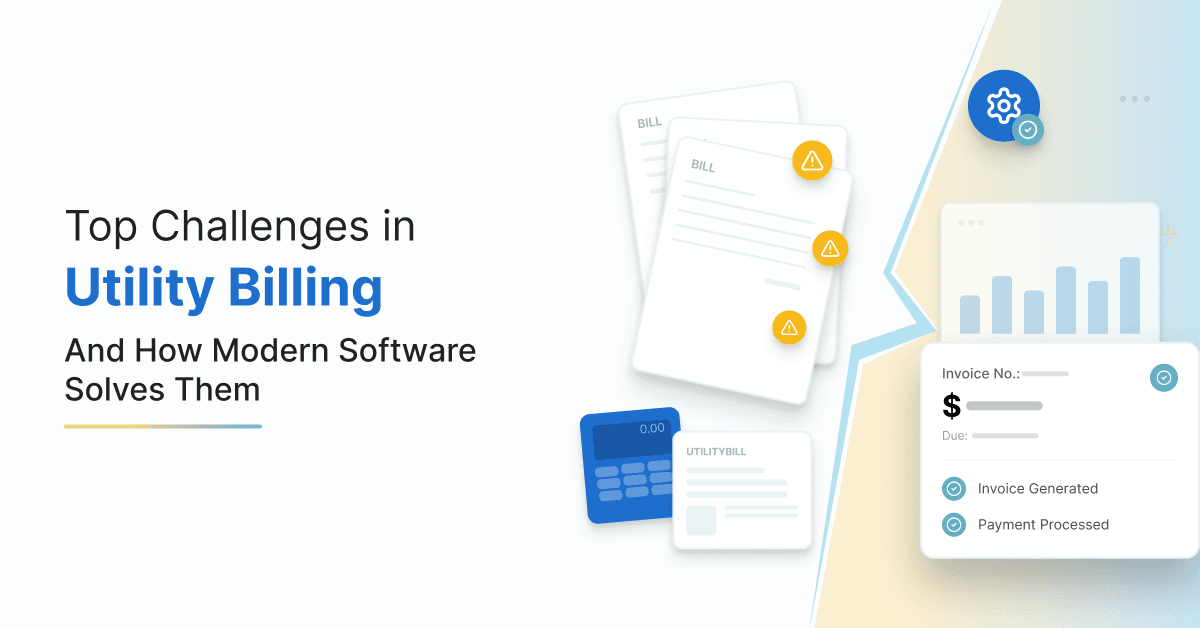
Before looking deeper into utility billing workflows, I assumed the challenge was mostly about generating invoices.
It wasn’t.
The deeper we got, the more it looked like an operational scaling problem disguised as billing.
A surprising number of utility providers still rely on spreadsheets, disconnected invoicing tools, manual meter imports, and patchwork workflows stitched together over time.
That setup works for a while.
Then the scale hits.
And suddenly,
Small calculation errors turn into customer disputes
Billing cycles become delayed
Support teams spend hours explaining invoices
Pricing logic becomes difficult to maintain
Revenue leakage starts showing up quietly in the background
What struck me most is how similar these problems are to what many SaaS companies are now facing with usage-based pricing and AI billing models.
Once pricing depends on consumption, things get complicated fast.
A flat subscription is relatively predictable.
But usage-based billing introduces an entirely different layer of operational complexity:
tracking consumption accurately
handling changing rate structures
maintaining audit trails
managing taxes and regional rules
generating transparent invoices that customers can actually understand
reconciling large volumes of data without manual intervention
And the bigger the customer base gets, the more fragile manual workflows become.
One interesting pattern we noticed is that billing problems are rarely isolated finance problems.
They usually expose deeper operational gaps:
disconnected systems
inconsistent data flows
lack of visibility
unclear pricing logic
poor reporting infrastructure
Often, teams aren’t struggling because billing is “hard.”
They’re struggling because their infrastructure was never designed for dynamic pricing at scale.
That’s becoming increasingly relevant outside utilities, too.
AI products, API platforms, cloud services, IoT businesses, and SaaS products with metered usage are all facing similar challenges:
Customers want pricing transparency
Finance teams want accurate reporting
Operators want fewer manual processes
Founders want scalable systems that don’t collapse under growth
One lesson that became very clear while working on utility billing workflows at Saaslogic Utilities is that automation alone isn’t enough.
Transparency matters as much.
If customers can’t understand how usage translates into charges, support overhead increases quickly even when the calculations themselves are technically correct.
Another thing that surprised me:
Many businesses don’t outgrow their billing system due to customer volume.
They outgrow it because pricing logic becomes more complex than the system was originally designed to handle.
We recently wrote a deeper breakdown on some of these operational challenges here:
Top Challenges in Utility Billing and How Modern Software Solves Them
Would be interesting to hear how other founders here are handling:
usage-based billing
metered pricing
AI token billing
API consumption models
or operational scaling problems tied to invoicing infrastructure
What broke first as your pricing model became more complex?

