What Do We Talk About When We Talk About Vanity Metrics?
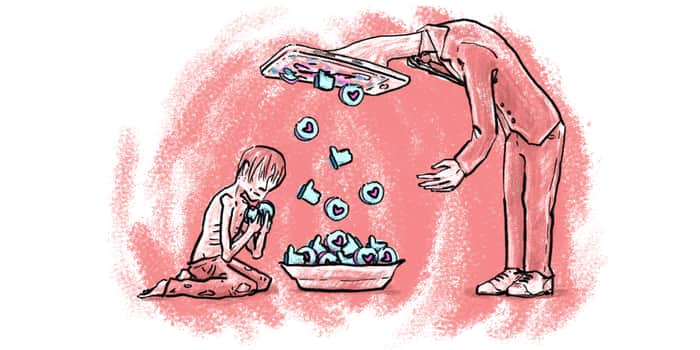
I was scrolling through one of my social media when I realize that I have spent a hefty amount of time liking posts from one topic to another. It is easy to wedge into the conversation online; just one tap away. Whether to show your support regarding political issues or laugh over repeated jokes, that "like" button is that simple to navigate. At this moment, I realize that the feature feels frictionless and I hardly imagine a platform without it. It supposedly useful as well as I can traverse the platform based on what I like. Without realizing it, I am in a constant loop of liking one content and consume another one and liking the next one; going round and round.
When Jack Dorsey stated that if he had to start a platform again, he would not emphasize the follower count as much, I was surprised. He also claims that he does not think that he would create the feature in the first place. It sounds unthinkable. Take TikTok for example, an emerging platform that is used globally. It is showered with numbers and feedbacks. It is undeniable that the platform is successful. The platform always changes from one name to another but among all of them, there is one thing that stays which is vanity metrics - a tool to calculate and assess the numbers regarding one's account. It can be defined as attention, engagement, participation, interaction, agreement. It has many forms too: subscribers, followers, likes, retweets, etc. If everyone likes using it why do we have to even think to remove it? What is so unlikable behind every like is something that might be profound to answer. Then, we could have answered whether vanity metrics are essential to social media or not.
### Critically - unlikely
The amount of likes on a post means a lot. It determines the validity of arguments online, it dictates certain action in a form of social proof, and it could also scale your value. It is easier to like or share information online when thousands of others do the same. Sometimes, a lot of people did not even finish consuming the content before they hit the button. The phenomenon becomes prevalent among the adolescent since peer influence can give a direct hit towards their behavior. Lauren E. Sherman and his peers researched the power of likes in adolescence. In his 2016 studies, he concluded that adolescent tends to give their likes to a post that has more existing likes than the fewer ones. In his studies, the existing likes are fabricated by the researcher. There is a high chance that the uses of the like button can be manipulated. People might ride the bandwagon by giving their likes because they assume that it is supposed to be an interesting post or a popular one, but not because they genuinely like it.
Contemplative Man, the fellow who came to understand the world sentence by sentence, paragraph by paragraph, is a goner. He’s being succeeded by Flickering Man, the fellow who darts from link to link, conjuring the world out of continually refreshed arrays of isolate pixels, shadows of shadows.
- Carr, 2007
Metrics also create a biased opinion regarding issues. Every time you hit "likes", you register data to determine which content that you preferred. It would not be a problem when it is applied to your source of entertainment, but it is a plague that awaits when social media is your source of information. It is true that communities online provide a platform for us to speak directly from people around the world who likely share our believes. On the other hand, it also limits our news consumption that mostly supports our existing beliefs - confirmation bias. PNAS (Proceeding of the National Academy of Sciences) stated in their published study that active Facebook users were more likely to interact with a limited number of news sources. Then, the community will be more segregated and polarized the more active the community is. There is an old saying that ignorance comes from the lack of knowledge and with the rise of the internet, we finally might be able to reduce the case number. The issue is not that the information is inaccessible; or the lack of knowledge, we might as well are hindered from knowledge in the first place. Even when we delve into different opinions from our existing beliefs, it is hard to process the data since we live in an online polarized incubators of information this whole time.
Like a crack
A "like" button is a pocketed slot machine. but instead of gambling away your money, you wager on your mood swing. Getting stimuli for our emotional fulfillment cannot get any easier than this - it is 24/7 with you. It does not just affect one side of the coin. When you actively participate in social media as consumer and content creator, your action would be influenced by the favoritism of "likes". Lovematically is a script created by Rameet Chawla that automatically like every photo that passed through his Instagram feed. What he found was something interesting as he stated that he averaged 30 followers a day and has gained 2,700 followers in 3 months. He also found that his post gets more likes in return - reciprocal love. Pre-lovematically he would average 35 likes and now he usually hits triple-digit likes. It is all done by tweaking the system. Then, it happens; our mind craves higher numbers and higher doses of likes to beat our own record. We do not realize that we openly building a tolerance. When a certain number of all-time high has been achieved, we might face internal turmoil - withdrawals.
The theory goes that by hiding like counts, users may feel less self-conscious when they post photos or videos that don’t receive many likes. This, in turn, may serve as a catalyst for getting users to post more often.
The impact of vanity metrics is not something that is supposed to be taken easily. Adam Mosseri, Head of Instagram said that to depressurize Instagram; to make it less of a competition, they have to try hiding likes. The users are so fixated with likes and popularity that HYPR, an influencer marketing platform found in the 2018 study that 64% of influencers admitted to buying likes. Likes have become incredibly valuable in social media. We are no longer the consumers but also the thing consumed online. We commercialize ourselves and frame our relationship through commerce which made us obsessed with numbers. We are operating in an emotional stock market where the stock is ourselves and we are encouraged to weigh our worth against other said Kurt Vonnegut. If the impact of likes can affect adult rootedly, to children it could be massive. Anne Longfield warned that children are becoming addicted to "likes" as a form of social validation. It also undermines the children's point of view of themselves by making them feel inferior to the people they follow. It is especially true since most of our feeds are saturated by people who are exercising their success theater. Everything online is constructed and refined and people rally to position themselves as the way they want to be seen: self-presentation. Unlike face-to-face interaction that requires instant and messy interaction, we have time to edit out the unlikable part of our life. It feels as if we constantly compare other's highlight reels to our behind the scenes. This is why it is odd when people make slip-ups online because they have a lot of time to choose what to post and when to post the material.
Like the system
What you see on your social media feed is not a result of your today activity, It is a compilation of signals you register in the past - thing you have liked, the time you spent on the user's content, the private conversation you have conducted, affinity towards certain topics. Social media algorithm determines the friendly content that fit your preference. The vanity metrics used to be meant for people. Currently, they feed signals for the machines. They can determine what is popular, what works, who is in favor of, what is trending, or what is relevant, and vice versa.
Van Baarle who currently has 1.9 million followers on Instagram expressed that she needs to produce bite-sized content as frequently as possible. She needs to play along with the algorithm of the site if she wants the algorithms to choose what followers see and gain a frequent reward which is visibility. She stated that most social media platforms do not encourage giving extra effort that goes into detailed digital paintings. The system is apparent among social media platforms. People will follow what other people are doing to generate as many likes as possible. CNBC reports that inside Facebook's growth and data science teams, there is a theory that by taking off "likes" could be an effective tactic for getting users to post more original content. By stripping away the metrics, people do not have to play with the system since they can focus on what they want to share instead of what the algorithm would favor. Therefore, the user does not need to feel less self-conscious regarding their post that do not receive many likes. The hypothesis is that it hopefully creates a positive chamber for the users.
Do you really like it?
Social media could be deemed as valuable since it revolves around the idea that people are creating free content by presenting themselves online. To support that, metrics are created to measure the success of the presentation. This is what we called as vanity metrics. It is undeniable how impactful metrics are: both as blessings and curses. Some of our current social media might be nicer without it, in some way. Unfortunately, it would not have produced the social media we know today, or at least not the one that can be valued for a billion dollars. Despite what is trending, discussing the possibility of an ecosystem without vanity metrics is still engaging. On one side it could hurt thousands of influencers online. It could raise a healthier platform and train us to read beyond social proof. It could also be a gimmick to ask advertisers to pay for premium ads as a cynic would say. In the end, we all need to conclude it ourselves. Perhaps, doing what Niklas Göke did to his social media would shed some light on how beneficial it is to live online without being chained by numbers.

This comment was deleted 6 years ago
This comment was deleted 6 years ago