What Happens After the Hero? The Section That Decides If Users Stay
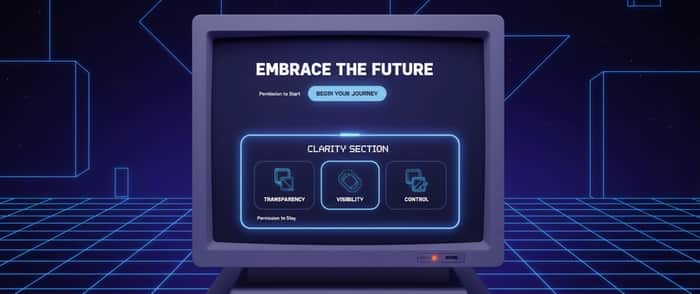
When I first started thinking seriously about homepage structure, I obsessed over the hero section.
Headline.
CTA.
Clarity.
But after watching real users on my tools site, I realized something:
The hero gets attention.
The next section earns trust.
And that second section quietly decides whether people stay… or leave.
The 5-Second Shift
When someone lands on your site, the hero answers:
“Can I do my thing here?”
If that’s clear, they scroll.
Now a new question appears:
“Okay… but what exactly is this?”
If that second question isn’t answered fast, hesitation kicks in.
And hesitation = drop-off.
What I Noticed Watching Real Behavior
Users don’t scroll to read a story.
They scroll to validate their decision.
After the hero, they usually:
• Scroll slightly
• Scan for confirmation
• Look for clarity
• Check if it feels legit
They’re not exploring.
They’re verifying.
The Mistake I Made
On AllInOneTools, I used my second section to:
• Tell the brand story
• Explain the philosophy
• Add nice marketing language
It sounded smart.
But it didn’t help the user.
It helped me.
Users at that stage don’t need inspiration.
They need reassurance.
What the Post-Hero Section Should Actually Do
In my experience, it should:
• Clearly define what the website is
• Reinforce who it’s for
• Reduce doubt
• Add light credibility
• Match the expectation set by the hero
It’s not an essay.
It’s confirmation.
Example (Tools Website)
Instead of:
“Welcome to a powerful platform designed to optimize your workflow…”
Better:
Free browser-based tools for quick daily tasks. No login. No limits.
Short. Direct. Confirming.
The Mental Model I Use Now
Hero = Permission to start
Next section = Permission to stay
If the second section is vague, users feel uncertainty.
And uncertainty quietly kills momentum.
Curious how others structure this:
After your hero section, what do you put next?
A story?
Feature breakdown?
Proof?
Clarity statement?
What have you seen actually work?

Local Python scripts have a structural advantage in the current market: they're immune to the SaaS subscription backlash. No recurring costs, no vendor risk, no data concerns.
The positioning challenge is that 'script' sounds less polished than 'platform.' Worth double-down on the positioning: 'the tool you own, not the subscription you rent.'
That’s a really interesting way to frame it. I like the “own vs rent” idea — positioning definitely shapes how people perceive even simple tools.
This is underrated. Many stores obsess over the hero section, but the real decision often happens immediately after. Structuring that area to answer “What is this and why should I care?” improved engagement for us more than any design tweak.
Completely agree. I used to think improving the hero would fix engagement, but the real difference came when I made the next section brutally clear about what the site is and who it’s for.
It’s interesting how small clarity changes there reduce hesitation more than any visual redesign. Curious — did you focus more on proof (testimonials, numbers) or just clarity first?
While building AllInOneTools, I realized something simple —
the hero gets the click, but the next section gets the trust.
If someone scrolls once and still isn’t sure what the site actually is, I consider that a failure on my side