What Happens When You Combine AI Search + Faces? The Future of Visual Search Engines
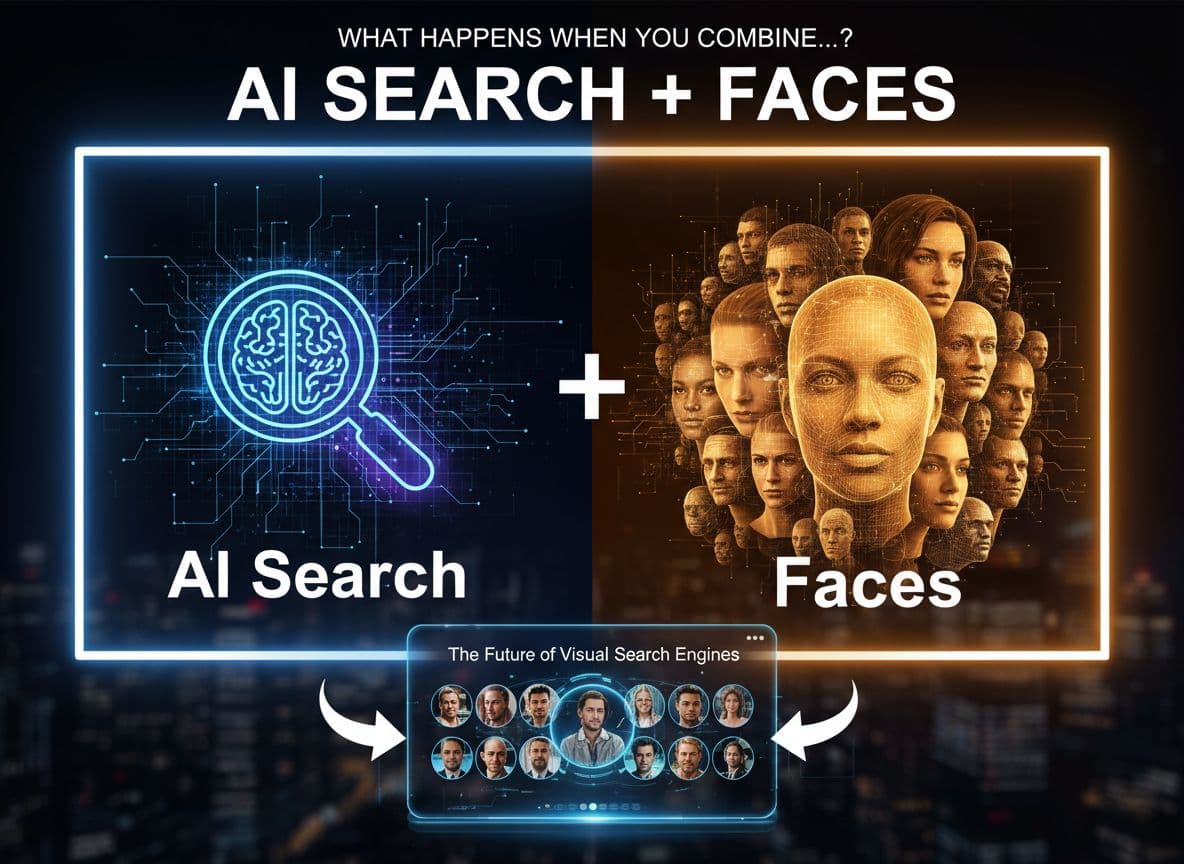
What if finding a person in photos felt as simple as searching by name? That is the promise of a modern AI search engine that understands faces and the context inside images. This kind of visual search does not rely on text. It looks at the picture itself. Think of it as a quiet shift from typing to showing. Faceseek is one of the tools nudging this change, building a practical, face recognition search engine you can use today. Here is how it works, what you can do, and where it is heading next.
What Happens When an AI Search Engine Meets Faces? The Basics of Visual Search
An AI system studies a face in a photo, then turns it into a compact numeric pattern called an embedding. That pattern captures features like shape, distance, and texture in a balanced way. The AI search engine then compares patterns to find close matches. It is like matching fingerprints, but for faces, and it is measured by similarity, not names.
Traditional search depends on text, tags, or file names. Visual search looks at pixels. This matters when you do not have a name, or when images are unlabeled or edited. Faceseek focuses on fast matching and privacy-aware handling, which helps people find visually similar images without sharing more data than needed.
### From pixels to patterns: how face embeddings work
Picture a face turned into a unique map of features. Each face becomes a point in a big space. Nearby points look alike. The system returns similar faces, not guarantees. Think “close match,” not “certain match.”
Why visual search beats keywords for images
You do not need exact names.
It works across angles, lighting, and light edits.
It saves time compared to manual tagging and sorting.
Limits and bias: what to watch for
Results depend on image quality and context. Blurry, tiny, or heavily edited photos reduce accuracy. Human review, clear rules, and opt-out options help keep use fair and responsible.
Real Uses You Can Try Today With a Face Recognition Search Engine
Ready to picture real workflows? A face recognition search engine makes visual tasks faster and clearer. Faceseek supports quick matching and privacy-friendly searches you can run in minutes.
Photo audits for teams: find lookalikes across event shoots to keep albums tidy.
OSINT and trust checks: surface accounts with similar profile photos for manual review.
Creator protection: spot visually similar reposts, then request credit or takedown.
Media research: compare frames across sources to verify if two images feature the same person.
For broader picture-level matching, try FaceSeek’s AI-powered reverse image search. For face-focused work, use the Facial recognition search engine.
Photo management: find similar faces across albums
Group photos by similar faces, then clean up duplicates. Save hours of tagging. Keep names optional, use similarity to start.
Safety and trust: flag impostors and obvious lookalikes
Use similarity search to spot near-identical profile photos. Treat results as leads, then confirm by hand.
Creator and brand protection: track reuse of public images
Find visually similar uses of your public photos. Reach out for credit, licenses, or removal when needed.
The Future of Visual Search Engines: Private, Multimodal, and Consent-First
The next wave brings more private, hybrid tools. More steps will run on your phone or laptop, not only on servers. Strong consent and opt-out controls will be standard. Multimodal visual search will mix text and image clues for tighter results. Faceseek’s approach aligns with privacy, transparency, and user control, which helps people and teams use an AI search engine without guesswork.
On-device and edge search for privacy
Face encoding and initial matching can run locally. Less data leaves your device, so fewer parties ever see your images.
Consent, opt-out, and clear policies
People should see how results are made, remove data on request, and decide what gets searched. Clear notices reduce confusion.
Multimodal search: faces plus text and context
Combine a face with short hints, like “red jacket, night street,” to filter results. Small details can cut noise fast.
Conclusion
Faces plus an AI search engine make finding images faster, clearer, and more useful. You get similarity, not hunches, and you save time without heavy tagging. Try Faceseek to explore visual search in a responsible way that respects privacy. Keep a privacy-first mindset and always review sensitive results by hand. The next chapter of search will be simple, safe, and human-centered.


It's great.
This is a great breakdown of where visual search is headed — especially the shift from “search by text” to “search by similarity.” The privacy-first angle stood out. Most face-search tools chase accuracy and skip ethics, but the consent + on-device direction you highlighted is what will make this tech sustainable long-term. Curious to see how FaceSeek evolves as multimodal search becomes mainstream. 👏
Honestly, FaceSeek is next-level. I uploaded a selfie and it found pictures I forgot existed on my socials. It’s like Google for faces — but faster and smarter.
This is hands-down one of the coolest AI tools I’ve tried. It literally understands faces like humans do. The search results are fast, clear, and super accurate. It feels like magic but it’s real tech.
The technology behind FaceSeek is impressive — turning a face into a numeric pattern and matching it in seconds. It’s not always perfect with blurry photos, but when it works, it’s shockingly precise. Definitely worth trying if you care about image tracking or identity safety online.
As someone who works with large media databases, FaceSeek saves hours of manual searching. Its visual-based approach is far more reliable than keyword tagging. The accuracy is strong, and the interface feels minimal and intuitive. Highly recommended for journalists, investigators, or anyone managing visual archives.
This matters when you do not have a name, or when images are unlabeled or edited. Faceseek focuses on fast matching and privacy-aware handling, which helps people find visually similar images without sharing more data than needed.
A face recognition search engine makes visual tasks faster and clearer. Faceseek supports quick matching and privacy-friendly searches you can run in minutes.
good luck
While other are still trying to achieving this accuracy and precision,how you guys are giving that accurate result , insane!!!!
faceseek is good