What I learned building an AI product in poker's grey market
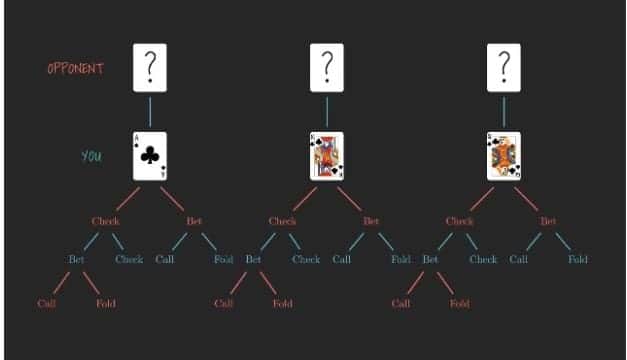
I've worked in the grey area of the poker industry. I am building AI for online poker specifically for autonomous play. Software that analyzes opponents and calculates equity, then makes decisions from thousands of hands. Its a viable business model with actual customers and revenue. However, it exists in a space where many people deny its existence while others are working to stop it.
Below is what I learned building an AI product in a grey area of the poker industry.
The product nobody wants to advertise
The first thing you learn is that typical marketing avenues do not work. Google ads cannot run a campaign on "Poker Bot", Facebook will flag your ad, and many affiliate programs include exclusions for gambling products.
You end up creating content instead of marketing. Articles about how poker AI actually works, the math behind decision trees, and historical examples of successful poker AI platforms such as Libratus and Pluribus. Then, some percent of the people that read your content will buy your product.
SEO was our primary acquisition channel due to restrictions in all other channels. Honestly, this restriction ended up being a blessing in disguise. We created a comprehensive knowledge base that ranked for numerous poker ai related searches. Creating a barrier to entry for other forms of advertising helped us create a competitive advantage that we could not achieve through paid advertising.
The trust problem nobody warned you about
Trust in a typical SaaS business is concerned with keeping your application available and protecting user data. In poker ai, there are multiple layers of trust that I didn't realize existed until several years into the business.
Layer One: Does the Product Even Work?
There is incredible variance in poker. As a result, it is possible for a customer to utilize your software correctly and still lose money for weeks based purely on the nature of probability. It is difficult to explain to an upset customer that their $2,000 loss over 50,000 hands is simply outside the bounds of statistically expected variance. I have had this conversation far too many times.
One of the ways we address this layer of distrust is through education. Writing extensively about the concept of variance, sample sizes, and reasonable expectations for return-on-investment helps educate potential customers on what to expect before they even purchase your product. Educating them prior to sale helps minimize the amount of time you spend addressing these types of concerns in post-sale conversations.
Layer Two: Will You Steal My Money?
Grey market customers have lost money to fly-by-night operators who sell "poker bots" that are little more than poorly-written script that includes a beautiful landing page. Establishing and maintaining a reputation of honesty is critical. You must establish credibility by staying in the market for years, not months. This requires a team of developers and designers, a functioning support process, and comprehensive documentation. These things require investment and planning.
Layer Three: Can I Get Banned Using Your Product?
This is the existential concern. Your customers are risking thousands of dollars in their poker accounts when they utilize your product. If the poker room determines that your software is performing automated actions, they will close the customer's account and confiscate any funds that were in the account. To mitigate this concern, your product must be reliable enough to avoid triggering detection systems, and your customers must believe that you have invested the necessary resources in developing your product.
Revenue model in a market where nobody wants to measure anything
It took us a long time to figure out a pricing model that works. Monthly subscription models seem intuitive; however, they create a perverse incentive. The customer is paying for the service regardless of if they are playing or not, which creates a high rate of churn when they take a break from the service.
A better model is to tie revenue to usage. Customers pay for each hand they play. If they are not playing, they are not paying. If they are playing ten tables at once, they are paying more. This creates perfect alignment of interests. We only earn revenue when the customer is utilizing the service in a manner that likely adds value to their experience.
However, this creates a volatile revenue stream. A customer who plays 200,000 hands in a single month and none the next creates a nightmare for forecasting. We mitigated some of this through establishing minimum commitment levels and through simply acknowledging that our revenue growth chart will never resemble the predictable growth chart associated with a traditional SaaS.
The detection arms race
Here is the component of this business that separates it from nearly every other software development company: your competition is attempting to shut you down.
The online poker rooms employ teams dedicated to detecting players who utilize automated software. These teams examine timing patterns — how long it takes a player to react, the variability in reaction times, and whether reaction times correlate with the complexity of the hand. They also examine behavioral consistencies — is a player's fold-to-three-bet percentage suspiciously consistent over 100,000 hands? They also evaluate session patterns — do players take bathroom breaks? Do players play fewer hands at 3am?
Developing software that successfully avoids detection is an ongoing engineering challenge. The poker rooms continually evolve their detection methodologies and you continually evolve your evasive tactics. Essentially, this creates a form of cybersecurity, except both parties are private companies and publish very little regarding their methodologies.
This creates a significant R&D burden that would be rare for most SaaS businesses in our revenue range. We probably dedicate 30-40% of engineering time towards evolving evasion of detection, which reduces the time available for feature development, improving UX, and adding new poker formats. This is the price of doing business in this space.
What I'd tell a founder considering a grey market
The Grey Area is Real.
Don't confuse the grey area with lack of size. Online poker is a multi-billion-dollar industry. Demand for poker-related AI tools is legitimate, growing, and under-served specifically because established organizations are hesitant to enter the space.
Your Biggest Risk and Biggest Advantage is Regulation.
The uncertainty that creates discomfort for operating in the grey area is the same uncertainty that prevents larger, well-capitalized organizations from entering. If a VCs-backed organization attempted to develop a similar product, their legal department would kill the idea before a single line of code was written. This is why independent builders have an advantage in the grey area.
Support is Different.
Customers have no recourse to report complaints to the poker room. Therefore, they will reach out to you for all issues - technical, strategic, and emotional - when they are on a losing streak. Your support team needs to function as a combination of technicians, poker coaches, and therapists.
Even Though You Are in a High-Risk Space, Build for the Long-Term.
It is easy to cut corners in a space with limited accountability. Do not. We spent years building the right infrastructure - comprehensive documentation, transparent pricing, honest marketing about the capabilities and limitations of the product. All of the competitors that cut corners failed to build lasting businesses and made it much harder for the rest of us to maintain trust with our customers.
Your Unfair Advantage Is Expertise.
In most industries, the advantages of your product are replicated relatively quickly. In poker AI, the depth of expertise needed to build a competitive product is so extensive - game theory, behavioral analysis, platform-specific integrations, anti-detection - that it is extremely difficult for competitors to build a comparable product. If you possess true domain expertise in a grey area, that expertise builds upon itself over time in ways that are virtually unreplicable.

