What is a business roadmap? (and how to create one)
Having a clear business roadmap has helped me plan, organize, and steer my journey past $4M+ in income with no paid ads.

This article was originally published here.
I've run my business since 2019, juggling multiple tasks and projects simultaneously with zero employees. Having a clear business roadmap has helped me plan, organize, and steer my journey past $4M+ in income with no paid ads.
In this guide, I'll cover what a business roadmap is, how it differs from a business plan, and why solopreneurs need one. I'll also break down the 7 steps I took to create and execute my own business roadmap.
So without further ado, let's dive in.
What is a business roadmap?
A business roadmap is a master plan that helps solopreneurs visualize where they want to be within a specific timeframe. It lets you see the big picture and break that down into smaller steps. Having goals, projects, and timelines organized in one place makes it easier to track your progress.

What is the difference between a business roadmap and a business plan?
This is a question I get often from aspiring solopreneurs. Both business roadmaps and business plans are important parts of your success, but they serve unique purposes.
As I’ve said, a business roadmap defines the journey you'll take to reach your company's goals. Imagine you're planning a week-long road trip with friends.
Before driving to your destination, you create a roadmap to show the spots you'll visit, when you'll take a break, and the specific routes you'll take. Similarly, a business roadmap helps you effectively plan your path to success.
A business plan, on the other hand, is a document that details everything about your business. It includes information like:
Financials
Operational details
Marketing strategies
How you'll make money
Who your customers are
Company mission and purpose
Stakeholders and investors (if any)
How you'll compete with other businesses
To summarize:
Think of your business roadmap as an overall strategy that outlines the key steps and milestones (with timelines) you'll take to achieve your business goals.
On the other hand, your business plan is a detailed document that lays out essential information and strategies for running your business.
What are the different types of business roadmaps?
There are plenty of business roadmap types, but I'll mention a few more popular ones:
A strategic roadmap defines the company's long-term vision and goals. It focuses on the big picture and the overall direction the company wants to move in.
A project roadmap includes the steps, tasks, and timelines for completing a specific project. It provides a visual representation of the key milestones and deliverables.
A product roadmap is specific to a product or service that a company offers. It outlines the features, improvements, and timelines for the product's development and release.
A marketing roadmap focuses on the marketing initiatives and strategies that a company plans to implement. It includes activities like social media efforts and advertising campaigns.
A technology roadmap outlines the technology upgrades and innovations required to support the company's goals.
Companies use different roadmap types based on their needs.
In my solopreneurial journey, I've mostly relied on a strategic roadmap, with marketing, project, and product-related aspects included as I see fit. As my business continues to grow, I may create additional roadmaps to help me accomplish new goals.
How to create a business roadmap
Creating a business roadmap involves 7 key steps:
Identify a problem and come up with a solution
Define your short-term and long-term business goals
Break goals down into manageable steps
Outline tasks required to reach key milestones
Set realistic timelines for activities
Visualize your roadmap
Review and adjust your roadmap as needed
Let's explore each step in detail.
1. Identify a problem and come up with a solution
A business is often born from a solution to a problem that a specific group of people have. If you're struggling to come up with a problem to solve, think about the obstacles you've personally faced in your life.
What was something you had a problem with last year? How did you solve it Or, recall a problem someone came to you with?
For example, you may have worked for a startup company looking to improve its content marketing strategy. They hired you to write content for them. There you had a problem (improve content marketing strategy) and a solution (content writing) — and you are ready to create your business roadmap.
2. Define your short-term and long-term business goals
Clarify what you want to achieve. What's your business vision?
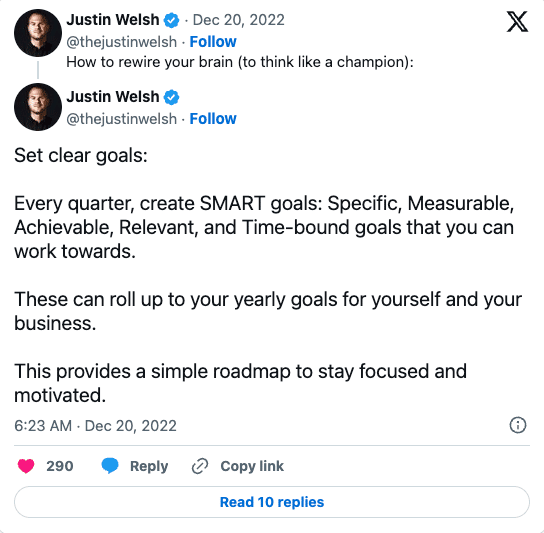
Let's say you want to quit your full-time job to become a freelance writer.
Possible short-term goals include:
Polish and optimize your LinkedIn profile
Start building a personal brand online
Secure 3-4 retainer writing clients
Gather 3 testimonials for social proof
Create social media accounts for discoverability
Possible long-term goals may include high-level business opportunities:
Outsource writing work
Offer 1-on-1 coaching
Create new products
Start an agency
Sell a course
3. Break goals down into manageable steps
Once you've identified your goals, it's time to break them down into smaller, manageable steps. These are like checkpoints along your journey.
Using the freelance writing example:
One short-term milestone could be publishing insightful content online every weekday for a month to showcase your expertise. Hitting this milestone would help you accomplish your short-term goal of establishing a personal brand.
A long-term project may be creating your first digital product (e.g. guide, checklist, or template) by a certain date. Reaching this milestone puts you on the right track to eventually outsource your writing work and diversify your income.
4. Outline tasks required to reach key milestones
Everyone has goals. But not everyone has a concrete plan of action for achieving them.
In this step, you'll determine the tasks you must complete to reach each milestone.
Freelance writing activities include:
Identifying your niche
Securing your first clients
Designing a great landing page
Researching your target audience
Sending pitches to potential clients
Marketing your service(s) on social media
5. Set realistic timelines for activities
This step is where solopreneurs can struggle the most. You know exactly what you need to do, but will you actually get it done?
Without deadlines, keeping yourself accountable and achieving business goals can be difficult. Personally, I've learned that setting practical deadlines for every task boosts my productivity.
First, I estimate how long something will take me to complete. From there, I set a reasonable deadline. Not only does this keep me on track, but it also helps me understand the sequence of activities and how they fit together.
Suppose an aspiring freelance writer wants to secure their first retainer client within the month.
They can break the goal down into bite-sized tasks with realistic deadlines:
Optimize your LinkedIn profile by the 15th of the month
Reach out to 10 companies by the 20th of the month
Finish making a company website by the 30th of the month
6. Visualize your roadmap
Having goals, milestones, and timelines is an excellent start. But staying on course long-term without a visual representation can be daunting.
Fortunately, there are several ways to visualize your roadmap:
Use a project management tool
Create a written timeline
Make a flowchart
Many people work best by having things written down in a physical planner. I've found success using Notion, a digital platform that I can always access from my phone and laptop.
7. Review and adjust your roadmap as needed
A business roadmap requires more than creating and executing. It involves strategic planning, too.
The reality is life happens, and business conditions change. You may need to modify your goals, milestones, or activities based on new information or challenges you encounter.
Remember, a business development roadmap is a flexible tool that can be updated as your business evolves. It should help you stay focused and organized as you work toward your goals — not cripple you.
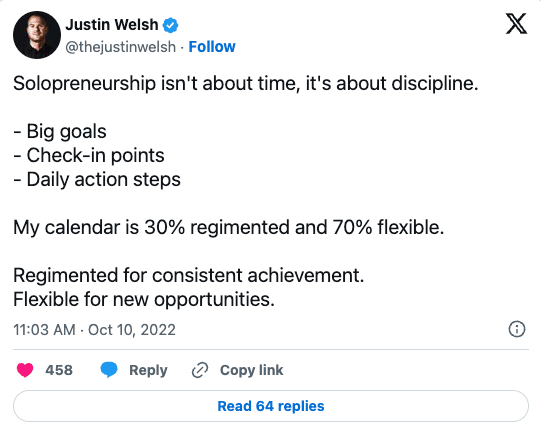
Executing your business roadmap
There's no right or wrong way to execute your startup roadmap. As mentioned earlier, Notion has been incredible for me:
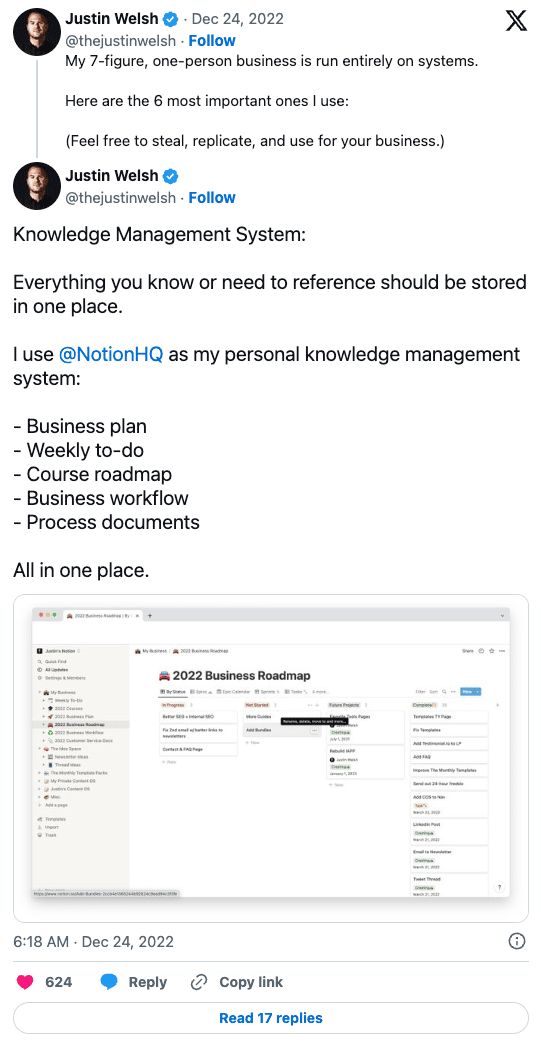
I have my goals and projects neatly listed and organized by status parameters:
In progress
Not started
Future projects
Complete
No matter how busy my schedule gets, I can refer back to my business roadmap and see where I left off with a project.
As a solopreneur juggling many tasks at once, it helps to get a glance at what needs my attention (and what can wait). At the end of each year, I reflect on and evaluate my progress. This helps me make specific, actionable business goals for the coming year.
I've optimized my business roadmap to suit how I work best. It may take you some time to establish the most effective execution plan, but I recommend keeping it simple.
Start by creating the four parameters listed above, and brain-dump ideas into each category:
Things you need to finish this month
Projects you're currently working on (with due dates)
Longer-term goals for your business this year
Future/passive projects to keep in mind (for slower seasons)
Tasks you've recently completed (don't forget to celebrate your successes!)
Once you've created your strategic roadmap, you'll have a blueprint to realize your small business dreams. Remember, each baby step will lead to something greater if you stay the course.
That's all for now.
If you’ve enjoyed this, you may find my other free guides resourceful for growing your one-person business.

Really helpful explanation on creating a business roadmap! Having a clear plan is so important for reaching long-term goals. At Plansing. co. uk , we take a similar approach when working on our projects. Just like a business roadmap keeps things on track, we use detailed plans to make sure everything in our designs goes smoothly and matches what our clients want. Whether it’s a business or a building, a good plan is always the way to go. Thanks for sharing this!
A carefully crafted business roadmap should be the key to long-term success. At Plansing.co.uk aligning with this philosophy ensures that every project is meticulously planned to meet client expectations smoothly. Whether it’s business strategies or architectural designs detailed planning keeps goals clear and execution smooth. A strong plan truly opens the way to excellence.
Great post! Does this work for growing a team, too?