What Is a Cold Air Diffuser and How Does It Work?
Creating a comfortable indoor environment involves more than temperature, lighting, and decor. Fragrance can also contribute to how people experience a space, particularly in hospitality, retail, offices, spas, and residential settings. A Cold Air Diffuser is a modern scent-diffusion system designed to distribute fragrance oil through the air without relying on heat or water.
Instead of heating fragrance oil or mixing it with water, cold-air systems use atomization or nebulization to break fragrance oil into very fine particles that can be dispersed throughout an indoor area. This approach allows users to control fragrance intensity and operating schedules while avoiding the need for an open flame or heating element.
What Is a Cold Air Diffuser?
A Cold Air Diffuser is a fragrance-dispensing device that uses air pressure or airflow to atomize fragrance oil into a fine mist. The resulting particles are released into the surrounding environment, where they can circulate through the intended area.
Unlike water-based ultrasonic diffusers, cold-air systems do not require fragrance oil to be diluted with water. They also do not depend on heat to release the fragrance. These characteristics make cold-air diffusion suitable for applications where consistent fragrance delivery and controllable scent intensity are important.
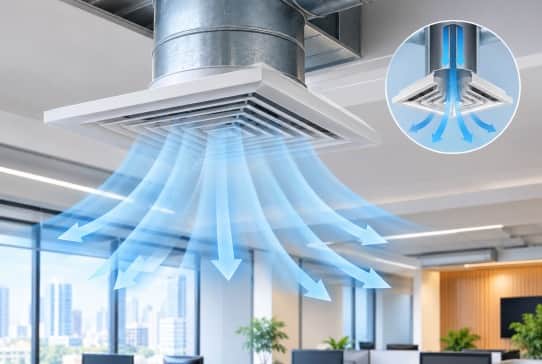
Cold-air diffusers are used in a variety of environments, including homes, hotels, restaurants, offices, retail stores, spas, and other commercial spaces. Some systems can also be integrated with HVAC systems to distribute fragrance through a building’s existing air circulation.
How Does a Cold Air Diffuser Work?
A Cold Air Diffuser generally works by combining fragrance oil with a controlled stream of air. The fragrance oil is placed in the device’s reservoir or connected oil container. The system then uses airflow or pressure to atomize the liquid into very small particles.
These fine particles are dispersed into the surrounding air, allowing the fragrance to circulate through the intended space. Because the fragrance oil is not heated or mixed with water before dispersion, the system can deliver the fragrance without the dilution associated with water-based diffusion.
Modern systems may include adjustable controls for fragrance intensity, operating intervals, and scheduling. These controls allow users to adapt the amount of fragrance released according to the size and purpose of the space.
How Is Cold Air Diffusion Different From Traditional Diffusers?
Different fragrance systems use different methods to release scent. Some rely on heat, while ultrasonic models typically combine fragrance or essential oils with water and use vibrations to create a mist.
Cold-air diffusion takes a different approach. It uses atomization to disperse fragrance oil without heating it or adding water. This can be useful when a user wants a concentrated fragrance-diffusion method with greater control over how and when scent is released.
The choice between diffusion technologies depends on factors such as room size, desired fragrance intensity, maintenance requirements, oil consumption, noise level, and whether the system needs to operate independently or through an HVAC system.
Benefits of Using a Cold Air Diffuser
One of the main benefits of a Cold Air Diffuser is controlled fragrance distribution. Instead of manually refreshing an air freshener throughout the day, users can configure many modern systems to operate at predetermined intervals and intensity levels.
Another advantage is that cold-air systems can distribute fragrance across areas larger than those typically served by small personal fragrance products. Depending on the diffuser design, installation, and airflow conditions, some systems can be used for larger commercial environments.
Cold-air diffusion also avoids the use of heat during the fragrance-dispersion process. This makes it different from systems that depend on heating elements to release aromatic compounds.
Many modern diffusers also provide programmable controls. Users can set operating periods and adjust scent intensity, which can help prevent unnecessary fragrance release when the space is unoccupied.
Applications of Cold Air Diffusers
Cold-air scent technology is used across residential, hospitality, retail, and commercial environments.
Homes
In residential spaces, a diffuser can be used in living rooms, bedrooms, entryways, and other areas where occupants want a controlled fragrance experience. Smaller systems are generally more appropriate for limited spaces, while larger systems can be selected for open-plan areas.
Hotels and Hospitality
Hotels and resorts often pay close attention to the sensory aspects of guest experience. Fragrance can be incorporated into lobbies, reception areas, corridors, spas, and other shared spaces.
A controlled scent-diffusion system can provide a consistent fragrance environment without requiring staff to repeatedly replace small air-freshening products.
Retail Stores
Retail environments may use ambient fragrance as part of their broader customer-experience strategy. Research into ambient scent suggests that fragrance can influence perceptions of an environment and consumer responses under certain conditions. However, outcomes can vary depending on factors such as scent intensity, the type of fragrance, and how well the scent fits the environment.
Cold-air diffusion gives retailers a way to control when and how much fragrance is introduced into a space.
Offices and Corporate Spaces
Offices may use scent-diffusion systems in reception areas, meeting spaces, lounges, and other shared environments. A controlled fragrance system can be incorporated into an overall approach to maintaining a comfortable indoor atmosphere.
The fragrance level should always be appropriate for the people using the space, particularly because sensitivity to fragranced products varies among individuals.
Is a Cold Air Diffuser Safe?
A Cold Air Diffuser should be operated according to the manufacturer’s instructions and used with fragrance oils that are intended for the specific diffusion system.
Fragrance sensitivity varies from person to person, so excessive fragrance intensity may be uncomfortable for some occupants. Appropriate settings, ventilation, and consideration for the people regularly using the space are therefore important.
Because cold-air systems do not use an open flame or rely on heating the fragrance oil during diffusion, they also differ from candles and certain heated fragrance systems in how the fragrance is introduced into the environment.
Users should follow the manufacturer’s recommendations for oil selection, operating duration, cleaning, placement, and fragrance intensity. Commercial installations should also take the characteristics of the building and its ventilation system into account.
How to Choose the Right Cold Air Diffuser?
Choosing the right Cold Air Diffuser depends largely on the environment in which it will be used. A small bedroom requires a different system from a hotel lobby, retail store, or office building.
Important factors to consider include:
Coverage area: Check whether the diffuser is designed for the size of the intended space.
Fragrance control: Adjustable intensity allows users to find an appropriate scent level.
Scheduling: Programmable operating times can reduce unnecessary use.
Oil capacity: Larger reservoirs may be more convenient for commercial applications.
Noise: A quiet system may be preferable in bedrooms, offices, hotels, and other occupied environments.
Installation: Determine whether the unit will operate independently or connect to an HVAC system.
Maintenance: Check cleaning and replacement requirements before purchasing.
The right system should match the physical characteristics of the space as well as the user’s fragrance and operational requirements.
Why Are Businesses Using Cold Air Diffusers?
Businesses increasingly consider the sensory experience of their environments alongside visual design, customer service, and branding. Ambient scent is one element that can contribute to this experience when it is used appropriately.
A Cold Air Diffuser provides businesses with a controllable way to introduce fragrance into an environment. Hotels may use scent in guest areas, retailers may incorporate fragrance into store design, and spas may use carefully selected scents as part of the overall atmosphere.
The goal is not simply to make a space smell stronger. Effective scent management involves selecting an appropriate fragrance, maintaining a suitable intensity, and ensuring that the scent complements the purpose of the environment.
Cold Air Diffusion and Scent Marketing
Cold-air technology is also relevant to scent marketing, a strategy in which businesses use ambient fragrance as part of their overall brand and customer experience.
Research on ambient scent has examined relationships between fragrance, environmental perception, memory, and consumer behavior. However, the effects are not universal and can depend on factors such as the fragrance itself, concentration, context, and whether the scent is consistent with the brand or environment.
For this reason, businesses using scent marketing should focus on creating an appropriate and recognizable atmosphere rather than simply maximizing fragrance intensity.
Frequently Asked Questions
Does a Cold Air Diffuser use water?
No. Cold-air diffusion systems generally atomize fragrance oil without mixing it with water.
Does a Cold Air Diffuser use heat?
No. Cold-air diffusion does not depend on heating the fragrance oil to disperse it.
How long does fragrance last in a Cold Air Diffuser?
The duration depends on factors such as oil capacity, fragrance intensity, operating schedule, diffuser settings, and the size of the area being treated.
Can a Cold Air Diffuser be used in large spaces?
Some models are specifically designed for larger commercial areas. The appropriate system depends on the manufacturer’s stated coverage and the airflow characteristics of the space.
Can a Cold Air Diffuser connect to HVAC?
Some commercial cold-air systems are designed for HVAC integration. This allows fragrance to be distributed through existing air-handling systems where the installation is appropriate.
Conclusion
A Cold Air Diffuser is a modern fragrance-diffusion system that uses atomization to disperse fragrance oil without relying on heat or water. Its controllable operation makes it suitable for a wide range of residential and commercial environments, from bedrooms and living spaces to hotels, retail stores, offices, and spas.
The main advantages of cold-air technology include controlled fragrance release, flexible scheduling, and the ability to distribute fragrance without first diluting it with water. However, selecting the right system requires consideration of coverage, fragrance intensity, maintenance, ventilation, and the needs of people using the space.
As businesses and homeowners continue to pay greater attention to indoor experiences, cold-air diffusion offers a practical technology for introducing fragrance in a controlled and consistent way.
