What Not to Do in SEO Now (From an Indie Maker’s POV)
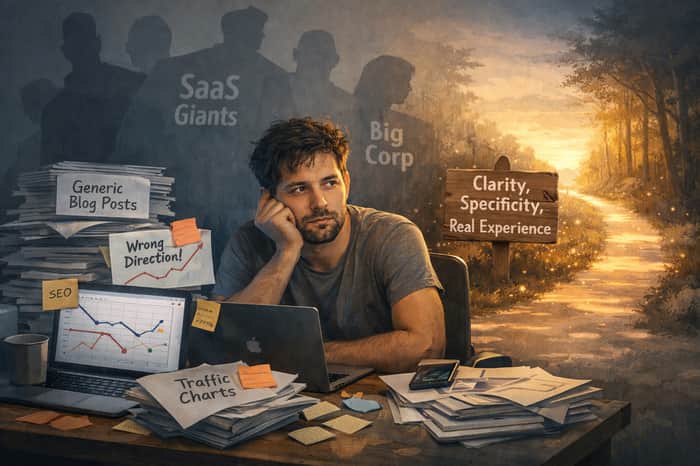
A lot of indie makers are “doing SEO” and wondering why nothing moves.
The problem isn’t effort.
It’s direction.
Here’s what to stop doing if you don’t want to waste months on content that never compounds.
Stop Publishing Content Just to “Have a Blog”
A blog without a point of view is just inventory for AI to summarize.
If your posts exist only because “SEO says we should publish,” they won’t build trust, traffic, or demand.
Content needs a job:
attract the right users
answer buying questions
reinforce why you’re different
If it does none of those, kill it.
Stop Targeting Keywords You Don’t Want to Be Known For
Ranking for the wrong keyword is worse than not ranking at all.
A lot of indie founders chase volume and accidentally train the market to see them as:
generic
cheap
interchangeable
SEO is positioning, whether you like it or not.
Choose keywords that reflect who you want as customers, not just what’s easy to rank.
Stop Writing “Beginner” Content Forever
Beginner content scales badly.
AI answers it.
Big sites dominate it.
And serious buyers outgrow it fast.
You don’t need more “What is X?” posts.
You need content that helps someone decide.
Decision-stage content is harder to write — and much harder to replace.
Stop Treating SEO as a Traffic Channel Only
Traffic is a lagging indicator now.
Some of your best SEO wins won’t show up as pageviews:
brand recognition
AI mentions
community references
“I’ve seen this tool before” moments
If you only value clicks, you’ll underinvest in credibility.
Stop Copying SaaS SEO Playbooks From Big Companies
What works for HubSpot is not what works for a 2-person startup.
They can afford:
broad content
generic education
slow payoff
You can’t.
Indie SEO should be narrow, opinionated, and tied directly to your product’s wedge.
Stop Optimizing Pages Before You Understand Users
SEO tools can’t tell you:
why someone hesitates
what makes them trust
what finally convinces them
Talk to users first.
Then write.
The best SEO content usually starts as a sales answer, not a keyword idea.
Stop Expecting SEO to Save a Weak Product
This one hurts, but it’s real.
SEO amplifies what already works.
It doesn’t fix unclear positioning, poor onboarding, or a fuzzy use case.
If users don’t stick, ranking higher won’t help.
Final Thought
SEO isn’t gone.
It’s just less forgiving.
For indie makers, that’s actually good news.
Clear thinking beats big budgets.
Specific beats generic.
And real experience beats recycled advice.
If your SEO feels heavy right now, don’t do more.
Do less — better.
