What Pico's Project Swan Taught Me About Spotting Market Shifts
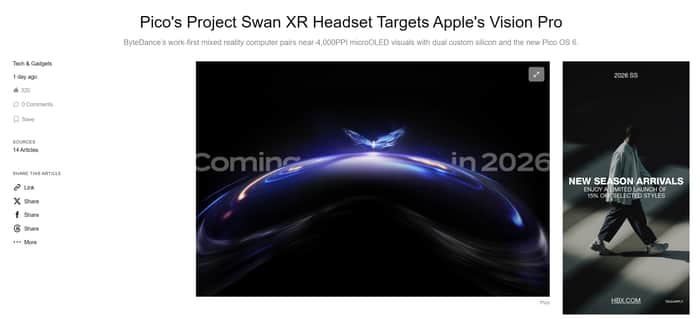
Scrolling through tech news today and Pico's Project Swan announcement made me stop.
4000 PPI MicroOLED. 12ms latency. Android apps running natively in XR.
Cool specs. But here's what actually caught my attention:
They're solving a hardware problem with software.
Pico's new Spatial Engine lets regular Android apps run inside immersive XR environments. Not as floating windows you switch between—actually in the space.
This got me thinking about something I've been mulling over since joining a cloud phone startup last October.
The pattern I keep seeing:
New hardware pushes boundaries → Users want more → Local hardware can't keep up → Cloud becomes the enabler
We saw it with phones. Now maybe we'll see it with XR.
Why this matters for cloud phones:
Right now, cloud phones are mostly used for:
Managing multiple accounts (e-commerce, social media)
Game automation
Testing
All 2D stuff. Moving phone screens to the cloud.
But if XR becomes a real productivity tool—where someone's running 5 apps simultaneously in a 360° workspace—the render load gets intense.
Local device can't handle that forever. Especially if you want it lightweight.
That's where cloud rendering comes in.
The opportunity I'm watching:
Not "cloud phones" competing with regular phones.
But "cloud compute" becoming the backend for the next wave of hardware that needs serious power but can't carry it locally.
XR headsets. Maybe AR glasses later. Who knows what else.
What this taught me about market shifts:
Follow the hardware constraints. When devices hit a wall (battery, heat, weight), that's where cloud solutions become valuable.
Watch what big players are building. Pico (ByteDance) betting on this means they see something. Doesn't mean they're right, but worth paying attention.
The "thin client" pattern keeps repeating. Dumb terminal → PC → smartphone → maybe XR headset. Each time, the heavy lifting moves somewhere else.
I'm still new to this industry—only been in cloud phones since October. But I'm learning that the best opportunities aren't always about building the flashy hardware.
Sometimes it's about asking: when this thing takes off, what infrastructure will it need?
That's where I'm placing my attention.
Curious if anyone else is watching the XR/cloud intersection? Or spotted similar patterns in other industries?
