What to Look for in a Crypto Savings Platform Before Depositing Funds
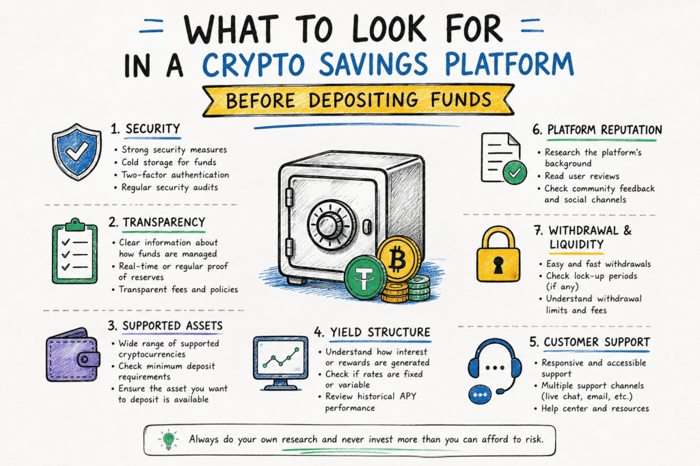
Crypto savings products have become increasingly popular among users looking to generate returns on idle digital assets without actively trading. From stablecoin earning accounts to fixed-term crypto products, the number of available platforms continues to grow across both centralized and decentralized markets.
However, not all crypto savings platforms operate the same way. Before depositing funds, users should carefully evaluate several important factors including security, liquidity, transparency, and platform structure.
Understanding these considerations can help investors make more informed decisions while managing risk more effectively.
Understand the Type of Crypto Savings Product
The first step is identifying whether the platform offers flexible savings products, fixed-term products, or both.
Flexible Savings
Flexible savings products allow users to deposit assets and redeem them without long lock-up periods. These products are often used by investors who want liquidity while still earning yield on assets such as USDT.
Platforms such as CoinEx Flexible Savings provide users with access to flexible earning opportunities designed for digital assets.
Flexible products may appeal to:
- Beginners
- Active traders
- Users needing quick liquidity access
- Stablecoin holders managing short-term positions
Fixed-Term Savings
Fixed-term products usually require assets to remain locked for a specific duration such as 30, 90, or 180 days. In exchange, they may offer different yield structures compared to flexible products.
These products are often used by long-term holders who do not plan to access their assets immediately.
Understanding the difference between flexible and fixed structures is essential before selecting a platform.
Evaluate Platform Security
Security should be one of the highest priorities when choosing any crypto savings provider.
Users should research:
- Platform history
- Security incidents
- Custody systems
- Cold wallet usage
- Withdrawal protection mechanisms
- Two-factor authentication support
Even if a platform offers attractive yields, weak security infrastructure can significantly increase risk exposure.
For centralized platforms, users should also evaluate the company’s operational reputation and public track record.
Review Liquidity and Withdrawal Policies
Some crypto savings products allow instant redemption, while others impose waiting periods or lock-up requirements.
Before depositing funds, users should carefully review:
- Withdrawal processing times
- Early redemption rules
- Lock-up durations
- Daily withdrawal limits
- Potential fees
This is especially important for users seeking flexible crypto savings solutions where accessibility remains a key priority.
Liquidity needs vary by investor. Someone holding emergency capital may prioritize immediate access, while long-term holders may be comfortable with fixed-term commitments.
Understand How Yield Rates Work
Crypto savings APYs are not always fixed permanently. Rates may fluctuate depending on:
- Market demand
- Asset utilization
- Borrowing activity
- Platform liquidity
- Overall crypto market conditions
Users looking to earn interest on USDT or generate returns on BTC and ETH should understand that advertised yields can change over time.
Instead of focusing only on headline APY numbers, it is often more useful to evaluate:
- Historical consistency
- Platform transparency
- Sustainability of returns
- Risk-adjusted yield potential
Aggressive marketing claims should always be approached cautiously.
Compare CEX and DeFi Models
Another important consideration is whether the platform operates as a centralized exchange (CEX) product or a decentralized finance (DeFi) protocol.
Centralized Platforms
Centralized products often provide:
- Easier onboarding
- Customer support
- Simplified interfaces
- Managed account systems
These platforms are frequently preferred by users new to crypto passive income products.
DeFi Platforms
DeFi protocols typically offer:
- Non-custodial participation
- Smart contract transparency
- Direct wallet interaction
However, DeFi products may require greater technical knowledge and involve smart contract-related risks.
The decision between centralized and decentralized savings products depends largely on user experience and comfort level with self-custody systems.
Check Supported Assets
Not all platforms support the same cryptocurrencies.
Some focus primarily on stablecoins such as USDT, while others offer earning products for BTC, ETH, and additional digital assets.
Users should evaluate:
- Asset availability
- Minimum deposit requirements
- Supported earning products
- Redemption flexibility
Diversification options can also be important for investors managing multi-asset portfolios.
Research Platform Transparency
Transparency is another major factor when evaluating a crypto savings provider.
Helpful indicators include:
- Public documentation
- Clear risk disclosures
- Transparent yield explanations
- Consistent communication
- Public operational history
Users should avoid platforms that provide vague or unrealistic promises regarding guaranteed returns.
Well-established platforms generally provide clearer information about product structures and redemption conditions.
User Experience and Accessibility
A platform’s interface and usability can significantly affect the overall experience, especially for newcomers.
For users exploring crypto savings for beginners, factors such as:
- Mobile accessibility
- Clear dashboards
- Simple deposit processes
- Easy redemption systems
- Educational resources
can make participation much more manageable.
Complicated interfaces may increase the likelihood of user mistakes or operational confusion.
Final Thoughts
Crypto savings products offer users new ways to potentially generate returns on idle digital assets, but choosing the right platform requires careful evaluation beyond advertised yields alone.
Security, liquidity, transparency, platform structure, and user experience all play important roles in assessing whether a savings product fits an investor’s goals and risk tolerance.
For users researching flexible stablecoin earning opportunities, platforms like CoinEx Flexible Savings are part of the growing ecosystem of crypto savings solutions available today.
As always, thorough research and responsible risk management remain essential before depositing funds into any crypto platform.
