What's New: Aim, fire, and scan to iterate effectively
(from the latest issue of the Indie Hackers newsletter)
Here's a simple iteration process:
- Plan, Do, Learn. But, of course, it's not as simple as it sounds. Structure things so that 20% of your factors lead to 80% of your outcomes.
- Improve your customer experience by placing more emphasis on data security, offering personalized experiences, and using predictive analytics.
- 100K users. 3 years. Jordan Hughes became a Gumroad bestseller by leaning into best practices and sweating the details.
Apply now to join Big Cash Money 2024, a community of ambitious indie hackers and solopreneurs with multiple streams of income focused on making 2024 their biggest financial year yet. Includes access to a Growth and Accountability Coach for support and advice on your journey. Limited to 35 spots, totally free. Applications close January 12. #ad
Aim. Fire. Scan. 🎯

On March 13, 2023, I did something crazy. I opened StickK, a site for making commitment contracts for your goals, and placed a bet that I would write a novel in nine months and submit it to my literary agent by the end of the year. I told all of my friends about this contract and discussed it publicly many times, including to 100K+ listeners of my podcast.
The stakes of the bet? If I failed, I would send $9,999, the maximum amount allowed by StickK, to an "anti-charity" whose cause I didn't support.
(Spoiler: I succeeded with about an hour left in the year and zero gas left in the tank. I'd even found a free day to whip together an AI-based book trailer after finishing the first draft.)
Plan, Do, Learn
I was confident about this challenge because I've spent years mastering a simple iteration process: The Plan, Do, Learn loop helps me innovate and course-correct toward just about any goal, provided I'm given a reasonable timeframe.
tl;dr: I make a plan, do the plan, then learn from my efforts by reviewing my progress. I do this every day of the year, going on half a decade now. If it sounds simple, it is...and isn't.
AIM: The 80/20 of good planning
20% of factors lead to 80% of my outcomes. They're captured in the following acronyms:
- AIM: Plan.
- FIRE: Do.
- SCAN: Learn.
- AIM: ABZs, Interrogate, and Mandatory. Examine where are you now, the next small step, and the end vision. After taking your small step, interrogate the plan to confirm that it still makes sense. Identify a mandatory, must-ship objective for the work iteration, and commit to shipping it regardless of the obstacles you encounter.
- FIRE: Frontload, Improvise, Resourcefulness, and Exhaust. Wake up assuming everything will go wrong today, and execute accordingly. If things do go wrong, you'll still be on track. Just improvise. If they don't, you'll be way ahead. Don't rely solely on mental resources, like willpower and memory; use extra-mental resources (tools, techniques, mentors, etc.) for added leverage.
- SCAN: Score, Critique, Adjust, and Notes. Track inputs and outputs, identify performance flaws and act upon them, and write down how things went during this iteration, and why.
Discuss this story.
In the News 📰

from the Growth Trends newsletter
💻 TikTok launches a 2024 marketing calendar for small and medium businesses.
📝 The top three Google ranking factors that really matter.
💲 Link to your product here. Our most affordable ad.
🔗 Internal linking best practices for accessibility.
🤖 OpenAI will open its custom ChatGPT store next week.
🌊 How crowded are the oceans? AI reveals interesting activity.
Check out Growth Trends for more curated news items focused on user acquisition and new product ideas.
Breaking Down Customer Experience 🤝

from The Hustle newsletter)
Customer experience (CX) refers to a customer's entire journey with a business. This can include the time a customer first hears about a brand, all the way up to years after they purchase a product or service.
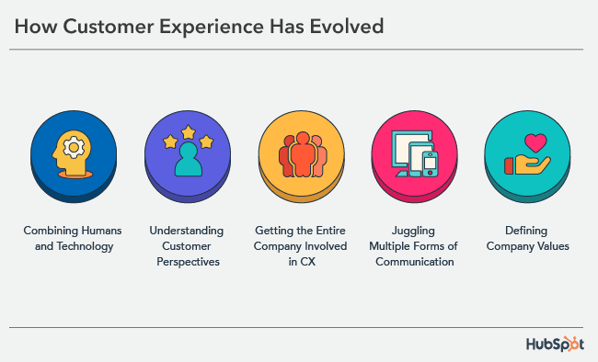
The evolution of CX
-
Combining humans and technology: Customers want to be able to find answers to easy questions quickly, which is where automation comes in. But offering human support is important, too, if you want customers to trust your brand. 54% of customers say that their biggest frustration with chatbots is the number of questions they must answer before being transferred to a human agent.
-
Understanding customer perspectives: Consider all of your audience segments before making big strategy shifts that could impact customer satisfaction.
-
Getting the entire company Involved in CX: Emplifi found that 43% of consumers place high importance on previous positive customer experience with a brand when considering a new purchase. So, every level of a business should be thinking about ways to improve bad CX and maintain good CX.
-
Juggling multiple forms of communication: Adapt your support as needed, considering time zones, channels, and tone.
-
Defining company values: Customers expect businesses to be socially conscious, and want to support businesses that share or reflect the same values they do. In fact, 49% of US adults think brands should do more regarding social advocacy, and that's even more important with younger generations. 53% of Gen Z thinks that companies should take a stance on social issues.
Customer experience trends for 2024
-
AI-powered customer experiences.
-
24/7 customer support. AI can help with this.
-
Predictive analytics. Stay ahead of your customers by anticipating their needs, and offering solutions before they know they need them. Use past behaviors, like purchase history and patterns, to make predictions.
-
Personalized experiences.
-
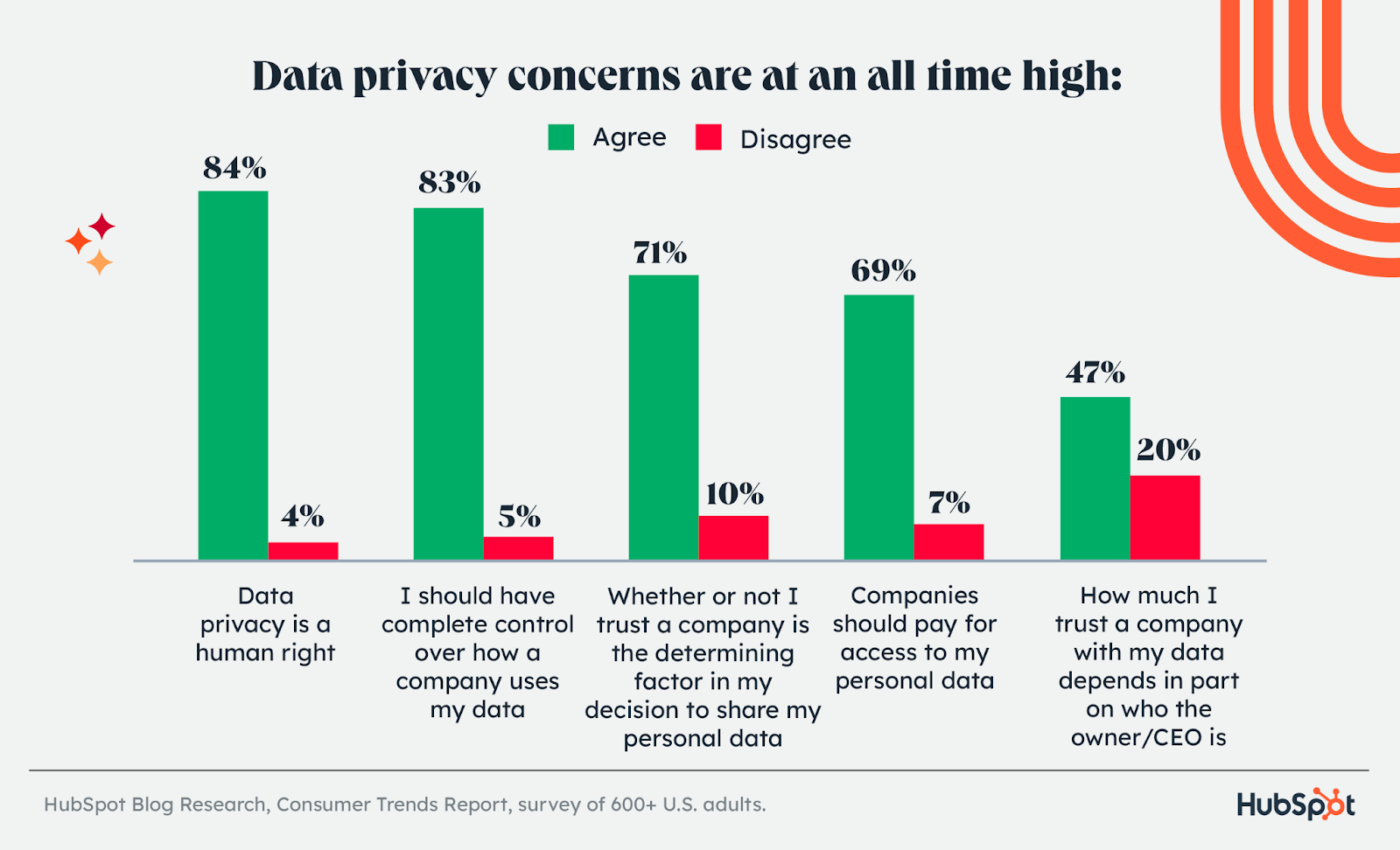
More emphasis on data security. 81%of customers worry about how companies use their data, and they want control over how it is used.
Pro tips:
- Let customers opt in to sharing their data in the first place.
- List your data practices, and make them easy to understand.
- Explain exactly how you'll store data.
- Be honest about any data breaches or security risks you might experience.
Be especially mindful if your business uses AI, or has any plans to, since AI relies heavily on customer data. Review the privacy policies of the tools you use, and develop guidelines for how you and your team will use the data you collect.
Subscribe to The Hustle newsletter for more.
Top Posts on Indie Hackers This Week 🌐

🧘 The best way to focus? Do nothing. Posted by Jacob Robinson.
✅ I completed 12 startups in 12 months! Posted by Jason Leow.
✨ What's your 2024 sales and marketing plan? Posted by Iftekher Islam Sunny.
🤹♀️ I'm juggling eight startups at the same time. Posted by Arian Adeli.
📱 Tips for growing on X. Posted by Semyon Fast.
💪 The power of clear copy. Posted by Paul van Oijen.
Want a shout-out in next week's Best of Indie Hackers? Submit an article or link post on Indie Hackers whenever you come across something you think other indie hackers will enjoy.
Untitled UI Set Itself Apart 🚀

by Hazel Lim
Jordan Hughes is one of Gumroad’s bestsellers, with his $119 digital templates, Untitled UI, selling 100K times. Here's how he did it.
The lessons
Jordan was introduced to the world of product design in 2019 when he stumbled across the book Refactoring UI. Within three years, he had built one of the most popular UI kits on the market. How?
-
Invest in transformational relationships: Your best opportunities will come from people who already know, like, and trust you. Find people you admire and work well with, and stick with them over the long term.
-
It’s not just about productivity: Find ways to cut out shallow work in your life to get extremely good at your craft in a much shorter timeframe.
-
Sweat the details: Sharing half-baked MVPs isn’t the right approach. Focus on quality, allowing your best work to define you.
-
Leverage free products: Offer a free product or lead magnet as part of your product ecosystem.
-
Make clean, reusable assets: If your users rely on your tool to build their own projects, or they need to learn to interact with your tool in any way, always try to follow the industry’s best practices when you build.
Protect your time and improve your product
By the time Jordan created Untitled UI, there were already plenty of UI kits on the market. So, he started Untitled UI with the intention of making a product that was better than any others.

Many startups operate with a “move fast and break things” mentality. Everyone races to share half-baked MVPs and iterate on the fly. However, if you are not building something new and innovative, you should focus on being the best; you can't afford not to.
Be absolutely ruthless about protecting your most valuable asset: Your time.
Use best practices
Jordan recommends leaning into existing best practices. One of his favorites is Client-First:

You don't need to reinvent the wheel. Every time you set out to build something, start by Googling “best practice for X,” and just copy what works.
Also, someone has to pick up your work and use it, whether it's your customers, freelancers, or acquirers. Make their lives easier by keeping everything standardized.
You can read the full article here, or sign up to get notified when a new issue of Juicy Ideas drops!
Discuss this story.
The Tweetmaster's Pick 🐦

I post the tweets indie hackers share the most. Here's today's pick:

Enjoy This Newsletter? 🏁
Forward it to a friend, and let them know they can subscribe here.
Also, you can submit a section for us to include in a future newsletter.
Special thanks to Jay Avery for editing this issue, to Gabriella Federico for the illustrations, and to Darko, Paige Bennett, and Hazel Lim for contributing posts. —Channing
