What's New: Nail your founder story to gain traction
(from the latest issue of the Indie Hackers newsletter)
Stories matter. Your users want to hear from you, not a robot:
- Share your story online, then contact writers and reviewers to share your product. This can help you gain traction and reach.
- Customer personas can solve almost any marketing problem you have. Combine customer interviews and the power of Reddit for insight.
- Blindness in his right eye led Daniel Nguyen to launch a new tool. In one year, he's hit $32K in total revenue from bootstrapping three tools.
Want to grow your business? Try running a promo in the Indie Hackers newsletter to get in front of nearly 70,000 founders.
The Power of Stories 💪

On June 8, I released the first version of my product, WinFindr, a free, lightweight data searching app for Windows. Since then, the app has hit 1M+ users.
Here are key lessons from my journey.
FSD: Free, simple, and different
Being different is important, since most people won't try something new if they already have a solution that works for them.
I studied all the existing apps in my niche, and listed what they did well and what they lacked. Then, I added the key features that they all had, along with features that were lacking from the other products.
Being free is also important. Asking for money right off the bat can be difficult, and it also limits how much free press you get. Outlets that review software are more likely to review a free or freemium app than a paid one. I did two press releases and paid for their distribution (~$50 apiece).
The power of stories
Stories matter. People like to read interesting stories and interact with real people instead of AI and robots. That’s why, on my product’s website, I show my face. I tell you exactly who I am and why I built this.
I searched for articles and blog posts about similar apps, then contacted the authors of those articles. I asked them to have a look at my app, and sent along some key talking points to catch their interest. I wasn't spamming people, but contacting them with relevant information. This resulted in quite a few websites writing about my app.
Quality
Every day, I see people posting what they call a MVP, and to me, the product sometimes seems low-effort and low-quality.
Instead of focusing on the "M" in "MVP," I focus on the "V." Viable. The first version I released wasn't as good as I wanted it to be, but it was usable. It was already solving actual problems for people, and my users told me what they wanted it to do next.
Discuss this story.
In the News 📰

from the Growth Trends newsletter
🚫 Google is making big changes to prevent Gmail spam.
🤑 Determining your users' willingness to pay.
🏛 What's at stake in the US Supreme Court's landmark social media case.
⏱ Time-saving content planning templates.
🦷 An AI deepfake of Tom Hanks. A dental ad. Increased calls for AI regulation.
Check out Growth Trends for more curated news items focused on user acquisition and new product ideas.
Get Inside Your Customer's Mind 🧠

from The Hustle newsletter
Here's the big secret about customer personas: They can help you solve just about any marketing problem you have.
Persona research is a lot of work, but it can give you a telepathic peek into the minds of your customers.
Trendster and persona marketing expert Alvin Ding recently sat down with us to discuss the research that will make your customers see themselves in your product.
Take precise aim
Demographic data is where brands often halt their persona research, but you're leaving money on the table if you stop there.
A great persona is multidimensional, identifying five data sets about your customer:

Do the research
Do the research before you build so you can develop your product with your customer's priorities in mind.
Here are the two best ways to get into your customer's mind:
1\. Customer interviews gather deeper insights and more qualitative data than other methods. Live interviews with open, broad questions are the way to go. Once you feel that you understand their problems and motivations, ask specific questions about your product.
2\. Reddit is a surprisingly useful tool. The juiciest data can be found in what Alvin refers to as consumers' "unvarnished, unfiltered, deepest, darkest questions." He broke down the steps for us:
- Google the problem you solve + "Reddit."
- The top-performing threads on the subject will show in the results.
- Open every link and read every thread.
- Pull out interesting excerpts and drop them into a spreadsheet.
- Repeat this process, giving Google different prompts, until you don't have anymore questions about your audience.
Analyze the data
Start by noticing patterns in your excerpts, then sort them into four categories:
1\. Questions: Look for frequency and type (open, closed, well-informed, or inexperienced). This will reveal the questions other brands aren't answering that you should.
2\. Complaints: Are they complaining about your competition? Looking for solutions they cannot find? Frustrated with shipping times or customer service?
3\. Raves: Make note of comments that rave about the competition. These are needs you'll want to satisfy.
4\. Rants: Negative attitudes often contain controversial insights. They let you see through the eyes of hard-to-satisfy customers.
Once you've got all your data sorted, select the most significant pieces of information and repeat the Google + Reddit process until you know your customer better.
Stay on top of your customer's needs by revisiting this practice monthly for updated insights. Keep your perspective fresh by checking out other resources. For example:
-
Similarweb provides demographic data about website users.
-
Research firms like McKinsey and Deloitte produce topic-specific reports.
-
Answer The Public shows you exactly what people are asking search engines.
Without persona research, your business operates on assumptions...and you know what they say about assumptions!
Subscribe to The Hustle newsletter for more.
Build Apps, Generate Revenue 🛠

This issue is sponsored by monday․com
Looking to bootstrap your app business or diversify your SaaS portfolio? Unlock a new revenue stream by solving user pain points and enhancing their workflows.
Build apps on the monday․com app marketplace, and reach 180K+ customers in hundreds of industries.
Learn more and start building!
Three Products and $32K in Total Revenue 🛠

by Sveta Bay
Every week, I send a marketing case study from a profitable founder. Today, I want to share with you how Daniel Nguyen reached $32K revenue in one year with three bootstrapped tools.
The products
I'm Daniel, a founder based in Ho Chi Minh City, Vietnam. Last year, I quit consulting to bootstrap KTool ($1K MRR, $12K revenue), BoltAI ($14K revenue), and PDF Pals ($5.9K revenue).
How blindness led to KTool
The idea of KTool first came to my mind when I was reading an article entitled Ask HN: I'm a software engineer going blind, how should I prepare?
I was genuinely scared. My right eye is basically blind, and doctors say there is no way to cure it. I'm very conscious about time spent on computer screens. I built KTool to send any web content to Kindle, since Kindle e-readers don't harm eyes like LED screens.
It took more than a year to reach $1K MRR.
A void in the market
When I started, I didn’t expect BoltAI to be commercially viable. It comes from my pet peeve of switching back and forth between ChatGPT web UI and native Mac apps, like Xcode or Apple Notes.
Unlike VSCode, there is no Copilot for XCode. I have a habit of writing blog posts in Apple Notes, so I needed a tool to invoke ChatGPT within these apps.
I built the MVP in a weekend. The app was quite ugly, but I managed to ship it anyway.
BoltAI recently hit ~$14K in revenue.

Palling around
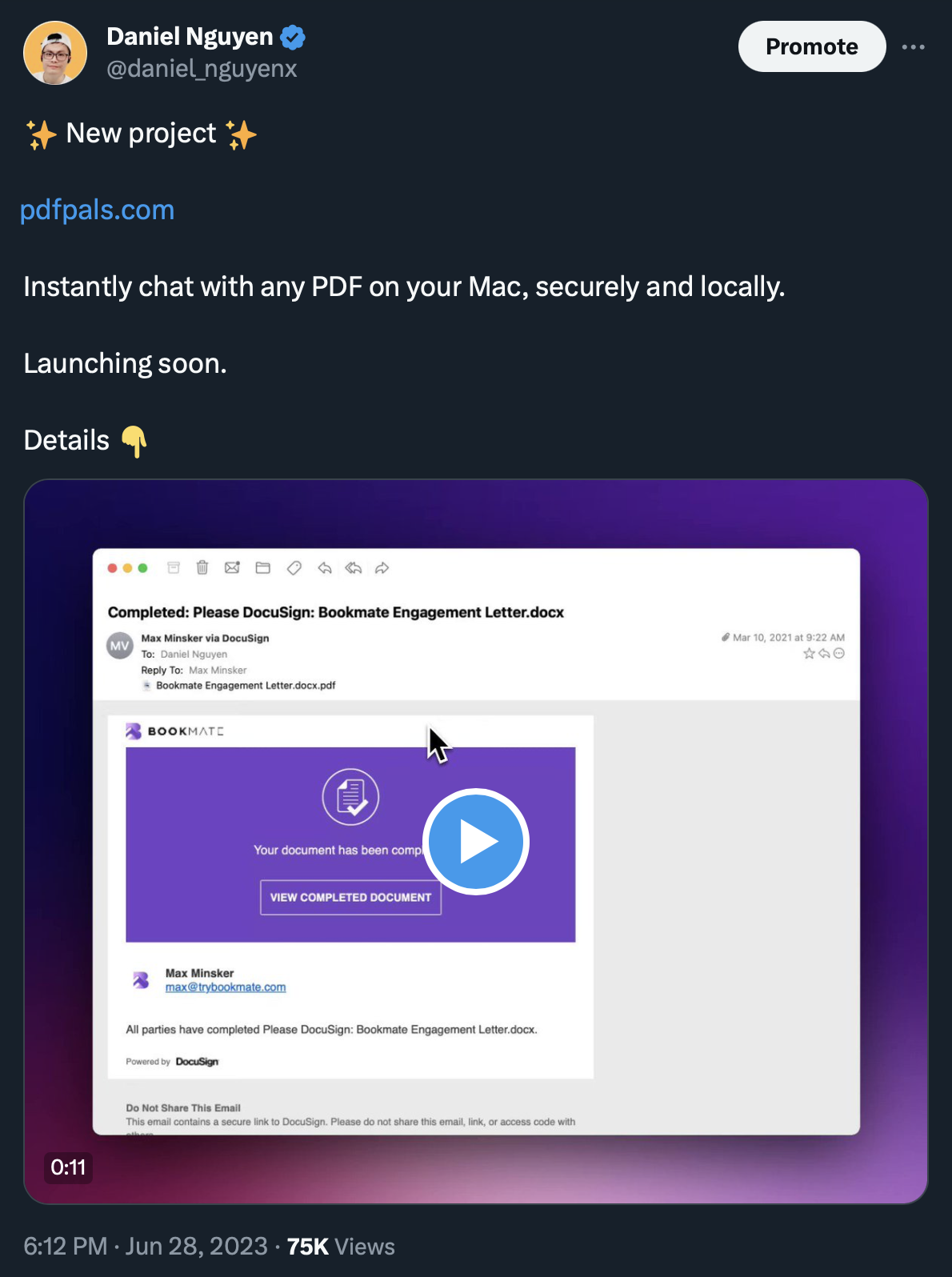
This one is fun. I was dogfooding BoltAI with content from a PDF. Then, a customer asked if they could use it to chat with the PDF. I saw that people wanted a native chat with PDF app.
I set up a presale to validate this idea, and it went viral. I got about $1K in presale revenue. Time to build!
After four months, PDF Pals generated $5.9K in revenue.

Ideal customers
For KTool, my ideal customers are busy professionals who want to keep up with the news without spending too much time on computer screens. The primary acquisition channel is the AppStore.
For BoltAI and PDF Pals, my ideal customers are small business owners who want to integrate AI into their workflow. We acquire our customers primarily through word-of-mouth, paid ads, and building in public on X.
Best marketing decision
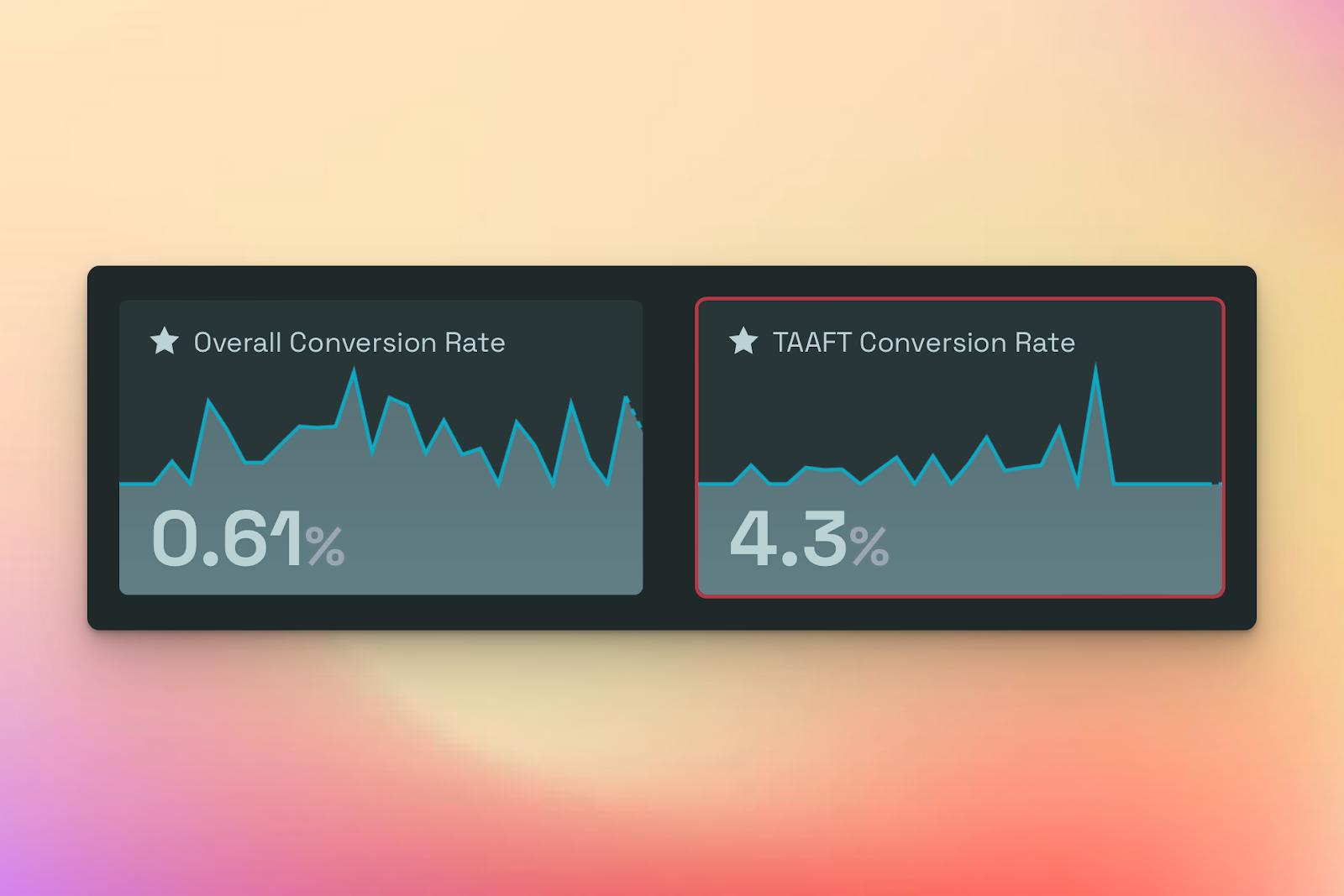
Stepping out of my comfort zone and investing in paid ads was a great decision.
After submitting BoltAI to AI directories, I found that There’s an AI for that performed the best. So, I figured it was best to continue promoting there with pay-per-click ads. Below is the difference in conversion rate (last 30 days):
What's next
- Launch more free tools.
- Submit to the AppStore. It can be a great source of traffic.
- Reach out to AI influencers. I recently started a TikTok channel for PDF Pals, and the result was promising!
Discuss this story.
The Tweetmaster's Pick 🐦

I post the tweets indie hackers share the most. Here's today's pick:

Enjoy This Newsletter? 🏁
Forward it to a friend, and let them know they can subscribe here.
Also, you can submit a section for us to include in a future newsletter.
Special thanks to Jay Avery for editing this issue, to Gabriella Federico for the illustrations, and to Jouni Flemming, Darko, Susie Ippolito, and Sveta Bay for contributing posts. —Channing
