What's New: Telegram continues its gaming push
(from the latest issue of the Indie Hackers newsletter)
Here's what you'll find in this issue:
- Telegram releases the “largest update in the history of mini apps."
- The largest copyright-free AI training dataset is out.
- $4M ARR. Laura Roeder built, then sold, her social media tool for small businesses.
Discover the perfect name for your next startup with One Word Domains. We’ve curated a list of 1,381,826 available one word domains, all brandable and memorable. Plus, use DomainsGPT, our AI-powered name generator, to easily brainstorm unique ideas that stand out. Find your ideal domain today! #ad
Telegram continues its gaming push 🎮

You may not realize just how popular Telegram is. With 950M monthly active users, it is the fourth most popular messaging app in the world. And, with 50M monthly downloads (more than any other messaging app), it doesn't seem to be slowing down anytime soon.
However, Telegram doesn’t want to be just a messaging app. Its true goal is to be an “everything” app, much like WeChat: A place where you can keep in touch with your friends, send payments (mostly in crypto), and play games.
Telegram has just released a huge mini app update, making it even more appealing for founders to build on top of the platform.
Applications in minutes, not months ⏰
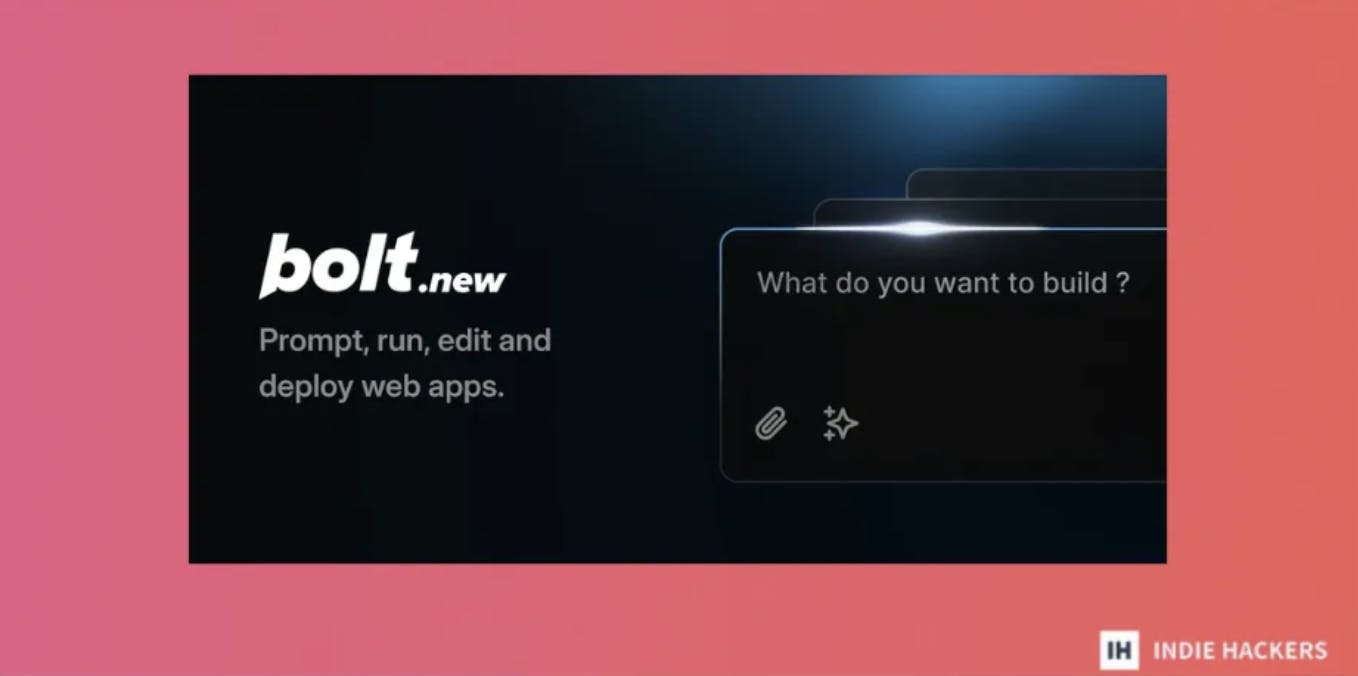
This issue is sponsored by StackBlitz
With Bolt, you can prompt full-stack web applications into existence, see them executed in real time, debug errors as they occur, and deploy a fully functional application, all without ever leaving your browser or personally writing a single line of code (unless you want to, of course)!
The largest ever copyright-free AI training dataset 🤖
AI company Pleias has published the massive copyright-free dataset that it uses to pretrain its language models.
Sourced from financial and legal documents, open source code, academic journals, and public domain publications, Pleias says it is the largest entirely permissible multilingual dataset available.
The dataset is designed for training generalist models, which can be used for all kinds of queries, plus tasks like writing and coding. Although it's mostly made up of English-language text, the dataset also contains a substantial amount of information in other languages, particularly French and German.
A social media tool for small businesses 🛠️

Laura Roeder started out as a freelance designer and web developer. As social media was becoming a thing, many of her clients began asking for her advice about it. So, she transitioned into social media consulting, including training small businesses on leveraging social media platforms.
Laura eventually needed to automate the content sharing process that she already taught in her courses, so in 2014, she cofounded MeetEdgar with her husband, Chris. They invested a lot of money in paid acquisition to attract their initial customers, which is unusual for a bootstrapped company to do.
But it paid off: In under three years, MeetEdgar hit $4M ARR.
Enjoy this newsletter? 🏁
Forward it to a friend, and let them know they can subscribe here.
Also, you can submit a section for us to include in a future newsletter.
Special thanks to Jay Avery for editing this issue, to Gabriella Federico for the illustrations, and to Stephen Flanders, Katie Hignett, and Darko Gjorgjievski for contributing posts. —Channing
