What's New: The reality for small businesses in 2024
(from the latest issue of the Indie Hackers newsletter)
Here's what you'll find in this issue:
- In 2024, small businesses are surviving, not thriving.
- Strava's API changes could kill thousands of third-party fitness apps.
- $40K MRR with a tech trends newsletter. Dru Riley leveraged word-of-mouth to grow quickly.
This issue is sponsored by Nume, the AI CFO every founder needs. Ask any financial question and get instant, actionable insights. From beautiful reports to real time alerts, Nume handles the numbers while you focus on growing your business. #ad
The reality for small businesses in 2024 👀
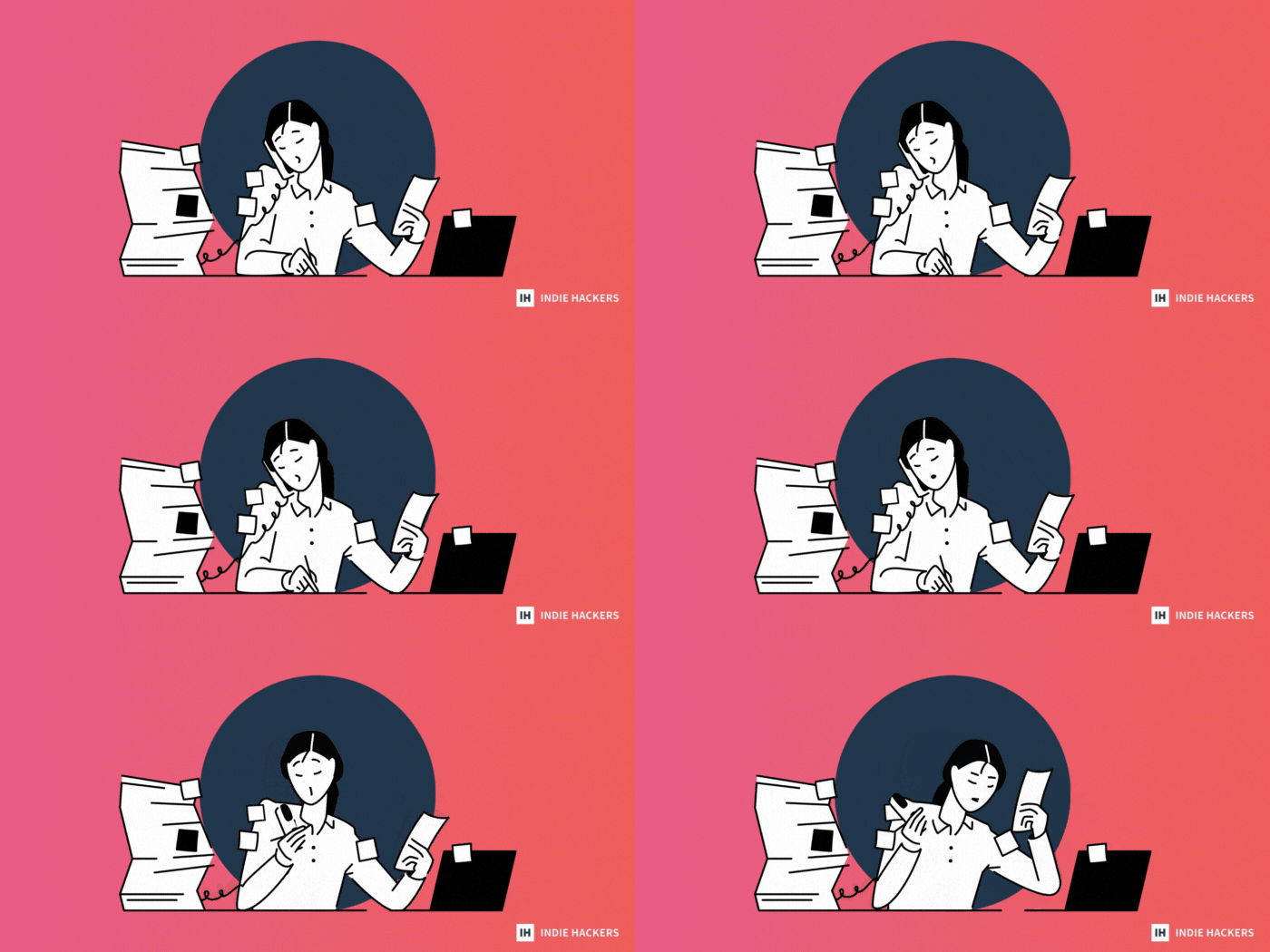
The economy might look better on paper; inflation’s cooling, interest rates are dropping, and the labor market’s loosening up. But, for small businesses, it still feels like walking a tightrope.
Small business owners across the US are dealing with rising costs, supply chain issues, and razor-thin margins, and some are just barely holding on.
But all is not lost. Here's what small business owners are banking on.
Strava is walling off its API ❌
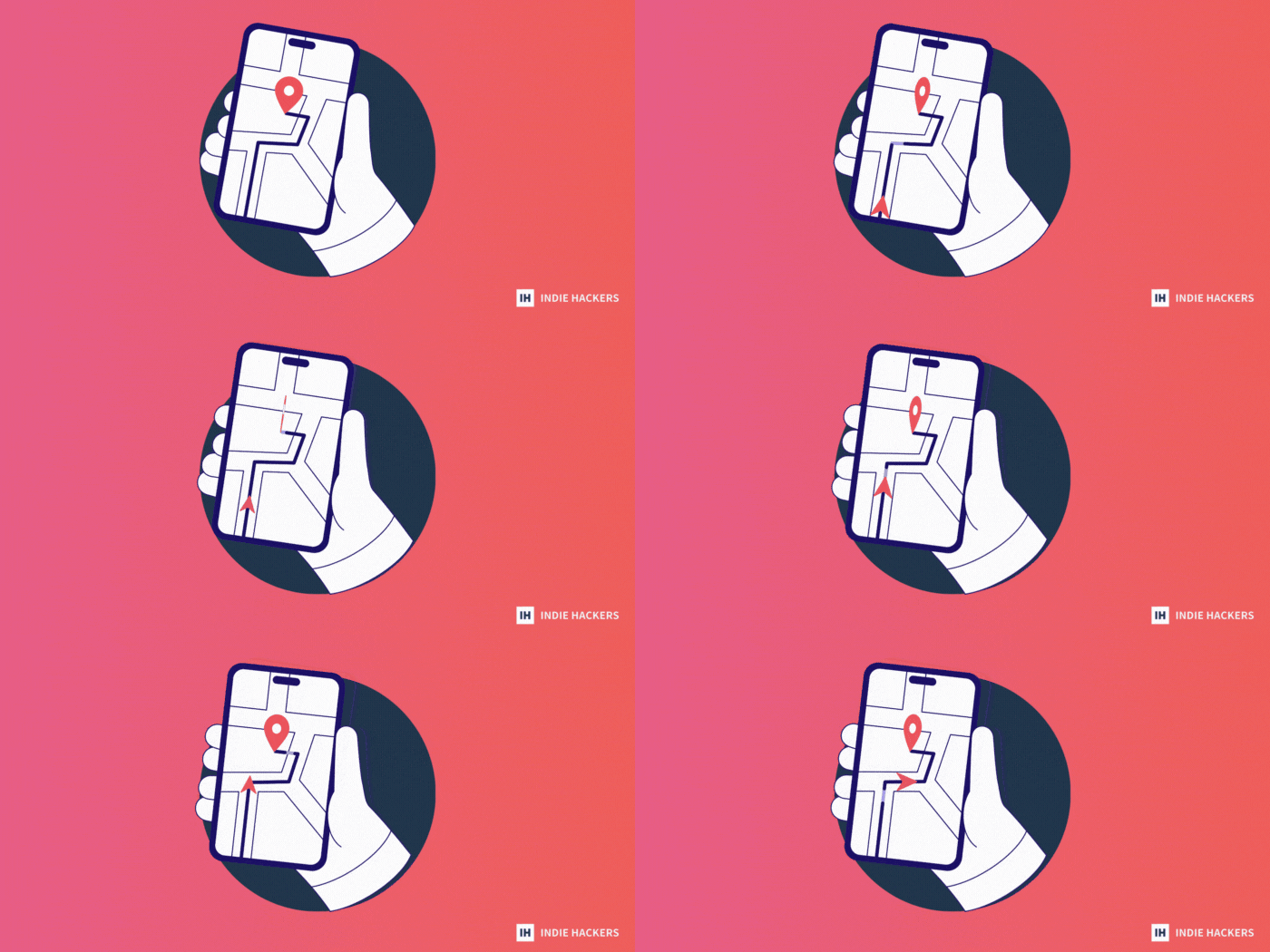
Bad news for anyone building a fitness app: Strava is now restricting the data that third-party apps can access and show.
For those unaware, Strava is one of the largest fitness apps in the world, sporting a cool 120M users. People love it for a few reasons: First, it acts as a kind of fitness social network, allowing users to post their workouts and comment with their friends. Second, it’s a hub for all of their fitness data.
Because there are now so many different fitness wearables that aren’t inherently compatible, people use Strava as their fitness home base.
But now, the company's latest update has caused an uproar online.
Landing Page Hot Tips 🔥

Strengthen your landing page with Rob Hope's design, development, and conversion tips!
Start from the beginning, again.
- Who is your target audience?
- What is their problem?
- How does your offering solve it?
- What do they need to see and read to be persuaded to choose you?
An annual check-in on the above is a healthy exercise to ensure that your landing page hasn’t strayed from its original goals.
Reports on the latest trends in tech and startups 🔎
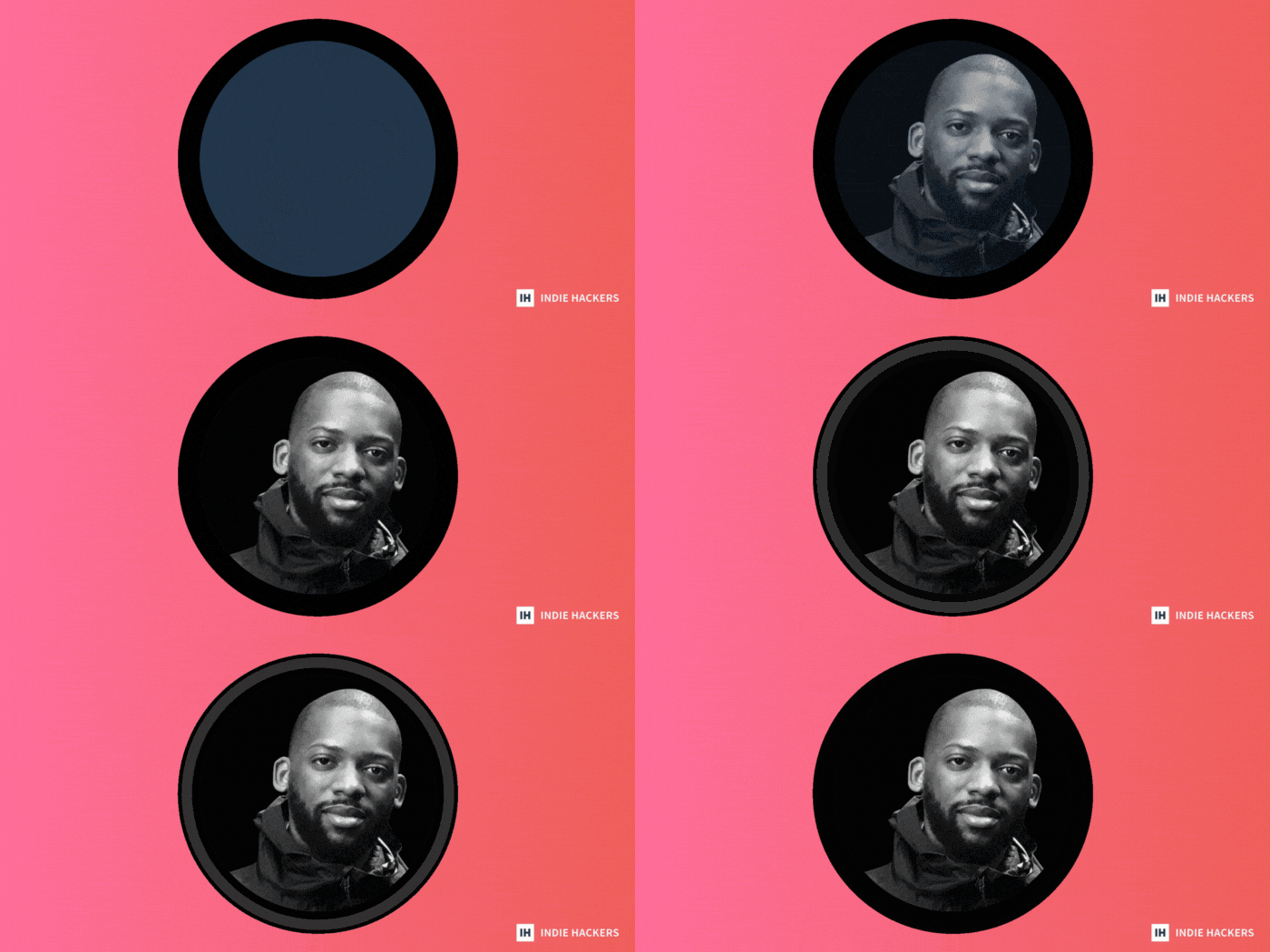
Dru Riley saved up about $250K to give himself time to try out a bunch of ideas until something worked. However, it wasn’t until the end of the second year that he felt the urgency to start shipping things that would actually get some traction.
He didn’t spend much time strategizing or doing user research. Instead, he followed his gut and started publishing what he thought would make for engaging reading.
For the first four editions, he didn’t even collect email addresses. He just made tweet threads out of the reports, and tagged the relevant people to attract attention and garner retweets.
Enjoy this newsletter? 🏁
Forward it to a friend, and let them know they can subscribe here.
Also, you can submit a section for us to include in a future newsletter.
Special thanks to Jay Avery for editing this issue, to Gabriella Federico for the illustrations, and to Michal Kankowski, Stephen Flanders, and Rob Hope for contributing posts. —Channing
