What's New: Your first 10, 100, and 1K customers
(from the latest issue of the Indie Hackers newsletter)
Have you hit these exciting customer milestones? If not, here's what works:
- tl;dr: 10 customers: Cold outreach and leveraging your network. 100 customers: Social media and word-of-mouth. 1K customers: SEO.
- When starting a new project, don't overlook the discovery phase. Set a clear vision, do research, and prototype with the user at the forefront.
- $45K MRR in two years, and Tony Dinh still enjoys juggling multiple products. But pricing drama on X forced him to sell one of them.
SaaS products increase revenue by up to 20% when preventing account sharing. Use Rupt to find people who already use and love your product, and convert them from account sharers to happy paying customers. #ad
Want to grow your business? Try running a promo in the Indie Hackers newsletter to get in front of nearly 70,000 founders.
Hitting Your Acquisition Milestones 🌟

Here's how indie hackers have hit their customer acquisition milestones!
First 10 customers
tl;dr: Cold outreach and leveraging your own network. Beyond that, posting on Indie Hackers, Reddit, and Product Hunt have helped, too.
Marie Martens:
We would send DMs to people we found on Product Hunt who upvoted tools like Tally.
Eric Alli:
I reached out to contacts in my LinkedIn and X networks who had expressed a need for a website solution like mine.
Marek Piechut:
We just got on the phone, and in a car, and started visiting potential clients.
Matthew Pierce:
Our first 10 customers came from existing clients and friends of friends within our first month. Word-of-mouth spread through my wife's network of clients and industry peers.
Wang Legolas:
We located a group of app enthusiasts, and shared a sincere, detailed post explaining why we were motivated to create an AI journal app, which was a unique offering at the time. We actively engaged in the comments section after publishing the post.
Matthew BF:
Reddit was fantastic for early users. My suggestion is to write about why you're building your product, what led you to work on it, and things you've learned.
First 100 customers
tl;dr: Posting on your socials pushes the needle most, followed by word-of-mouth and Product Hunt.
Jayaprasad Mohanan:
For my product, tweets and targeted hashtags landed us the first 100.
Steven Goh:
About the same time we started cold emails, we also began investing in SEO. I’d say at least 30-50% of our 11th-100th customers began streaming in from SEO.
Courtland Allen:
I submitted the site to Hacker News, where it stayed in the top three for over 24 hours. The traffic was unreal. I racked up something like 570 mailing list subscribers, and 156K pageviews from 43K unique visitors, in under two days!
First 1K customers
tl;dr: SEO is a long game that often pays off on the way from 100 to 1K customers.
Steven:
70% of my customers are SEO-inbound. The next big inbound source (15%) is paid user acquisition (newsletters, ads, etc). 10% of customers are still from the remnants of our cold email campaign blast at the start, and the rest are usually word-of-mouth.
Matthew Pierce:
We ran Clubhouse rooms and networked on Instagram.
Wang:
To be candid, the primary factor in our case was time. Our user count grew organically.
Discuss this story.
In the News 📰

from the Growth Trends newsletter
📱 Using WhatsApp to create new experiences.
🤖 Transforming search and advertising with generative AI.
🧵 Is Threads still a threat to X? Here are the numbers.
🎯 Nail your launch with competitive research.
👀 Gen Z falls for more online scams than their boomer grandparents do.
Check out Growth Trends for more curated news items focused on user acquisition and new product ideas.
Seven Steps to Successful Discovery ⛵️

by JD Redy
Embarking on a new project is exhilarating, like setting off on a new adventure. But the success of your adventure largely hinges on the discovery phase. I've navigated through many, and today, I'm sharing my roadmap for a foolproof discovery journey.
Discovery dance
Here's what you need to consider:
- Clear vision, clearer objectives: Your starting point? A crystal-clear vision. Ask yourself, "What am I aiming for?" This clarity ensures that every subsequent step is in the right direction.
- Assemble your dream team: You need the right mix of thinkers, planners, and doers. Their collective insights can be the difference between hitting or missing the mark.
- Immersive market research: Immerse yourself in understanding the competition, emerging trends, and hidden gaps. This isn't just groundwork, it's building the foundation.
- The user at the forefront: The heart and soul of any project is its end users. Sketch detailed user personas, decoding their expectations, aspirations, and potential roadblocks.
- Prototyping: Bring the idea to life in a raw, tangible form. It's the project's first breath.
- Valuable feedback is gold: Here, turn into a critic and invite others to do the same. Testing the prototype and gathering diverse feedback ensures that you're on the right path.
- The power of iteration: Refine. Tweak. Perfect. Based on insights, fine-tune the prototype, ensuring that it's not just good, but exceptional.
Further resources
This article on the software development lifecycle discovery phase is a must-read for anyone keen on diving deeper into the nuances of effective discovery.
In essence, the discovery phase is the compass, guiding the ship through uncertain waters towards success. Equip it well, and the journey ahead is sure to be smooth.
Discuss this story.
See What Drives Startup Founders Forward 🎞️

This issue is sponsored by Mercury
With 90% of startups failing, what makes a founder want to embark on the startup journey?
We pull back the curtain on what drives Gagan Biyani, cofounder and CEO of Maven, and four other founders to bring their visions to life. Watch the videos.
Building an Audience While Juggling Products 🤹

by Tony Dinh
Two years ago, I quit my job to become a full-time indie hacker. Today, I'm at ~$45K MRR. Indie hacking is the best decision I’ve ever made. Working for myself gives me freedom I’ve never experienced before.
The overview
In the past two years, I have:
- Created four small, successful products.
- Built an audience of 97K followers on X.
- Launched a newsletter with 6K+ subscribers.
- Survived drama that almost killed my business.
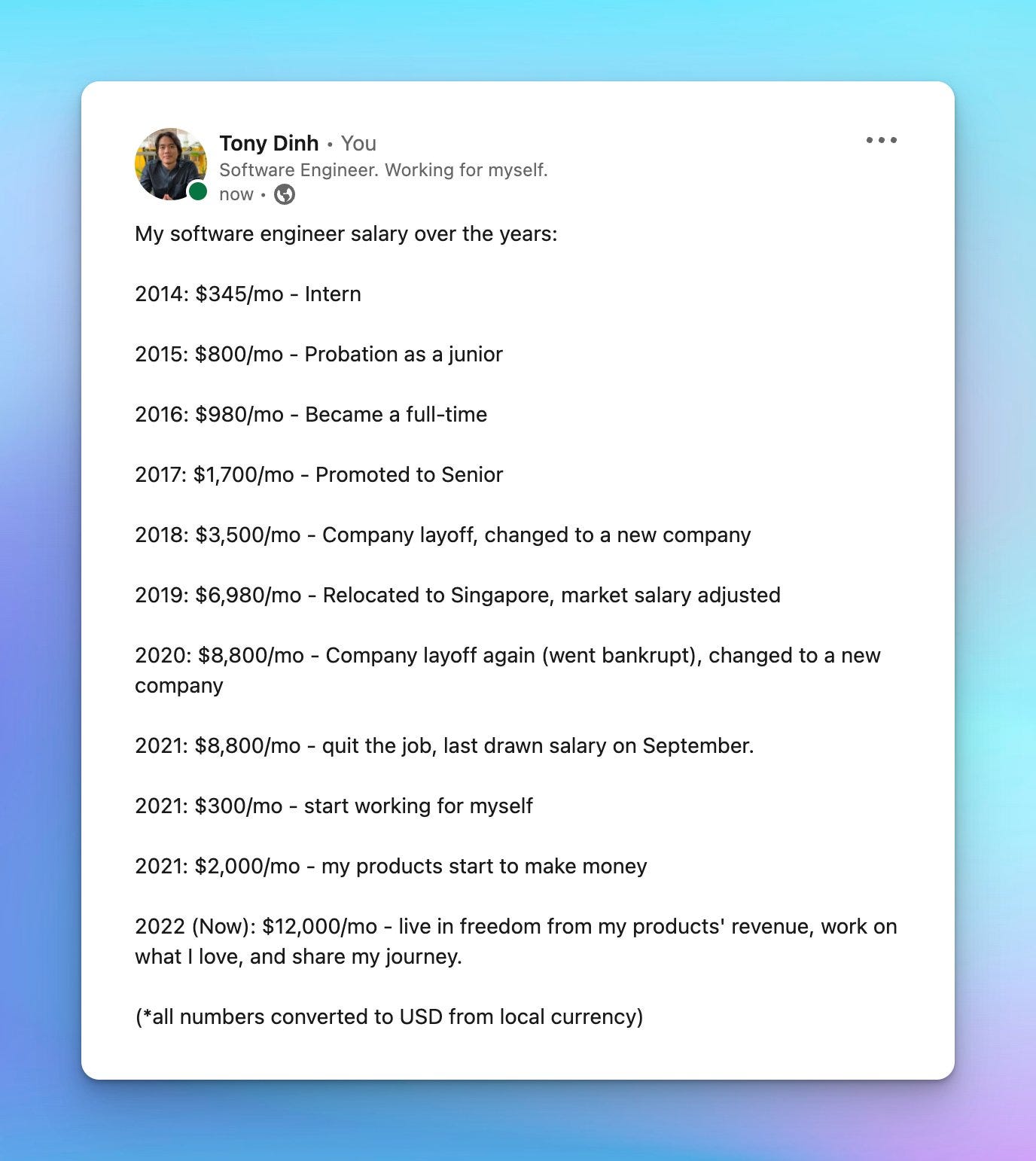
Before quitting my job, I was a software engineer with seven years of experience:
Indie Hackers
When COVID-19 hit, I was working remotely from a foreign country. It was incredibly boring.
I discovered Indie Hackers, and started listening to the Indie Hackers Podcast every day. I got really inspired by the stories of successful indie hackers, like Pieter Levels, Kyle Gawley, Jon Yongfook, and many more.
This led me back to my passion: Building software products.
Failure and success
My first project was a log viewer macOS app, and I worked on it for six months. Then, I got bored and abandoned the project.
It took me a while to recover from my first failure. About a month later, I decided to give it another try, and built the first version of DevUtils in two weeks.

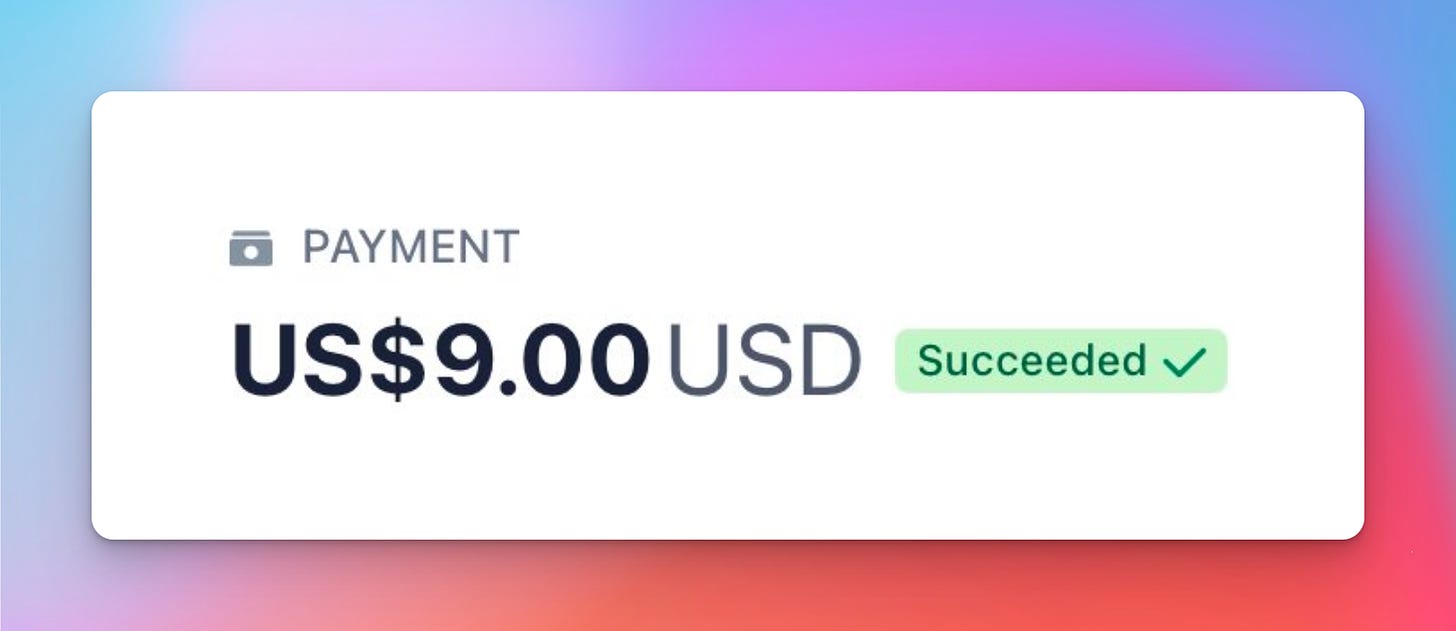
I posted the app on Hacker News, and made it to the top. This led to my first online dollar(s)!
Growing on X
I was looking for a long-term distribution channel, and decided to try to become an influencer on X. I started doing a lot of fun things using my coding skills.
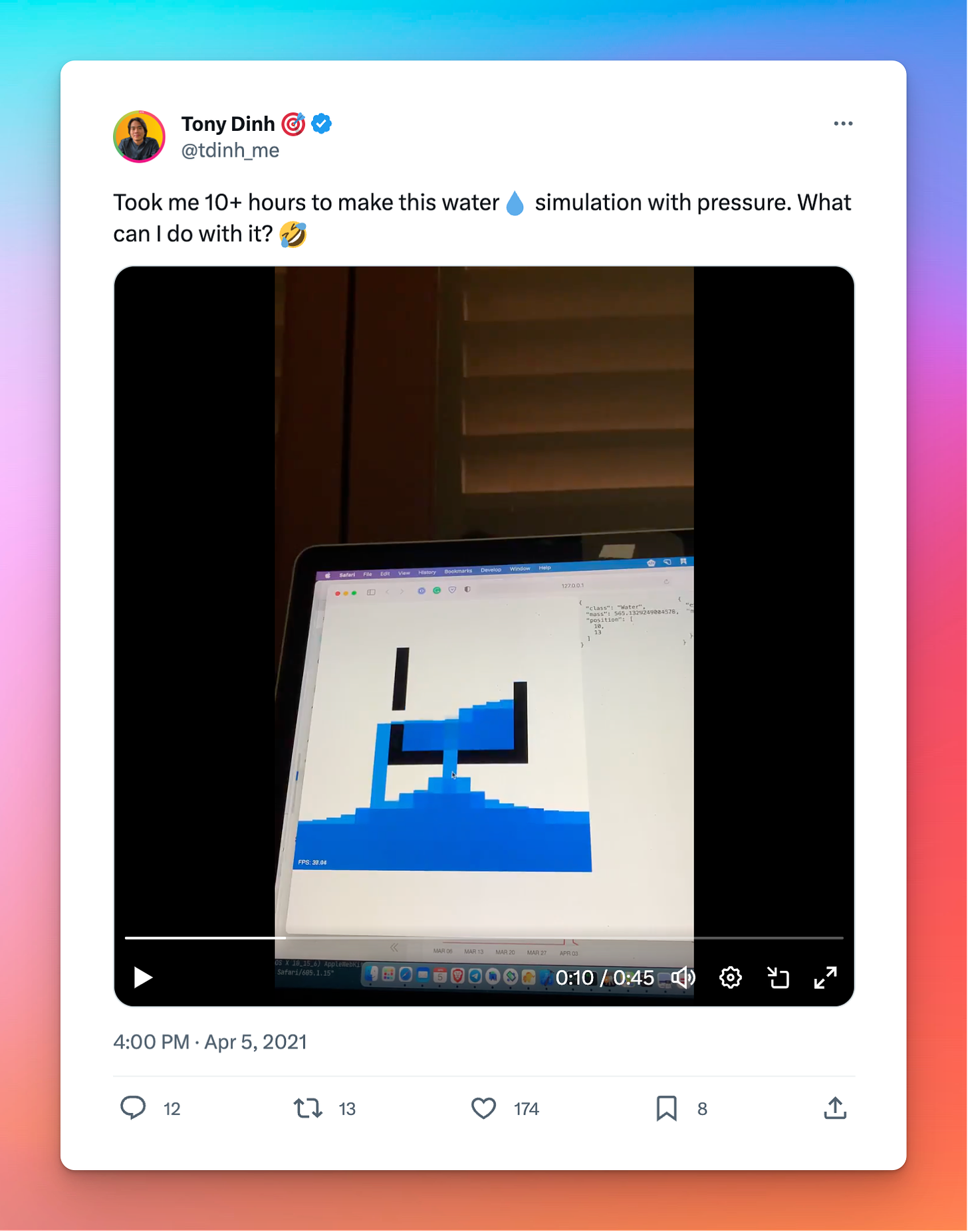
For example, this experiment is my first ever “viral” tweet, with 100+ likes:
My X strategy was:
- Build interesting things and share them.
- Engage with other people.
- Write threads.
- Use lots of memes and jokes.
- Be interesting and nice.
The road ahead
After that, I built (and later sold) Black Magic, Xnapper, and TypingMind.
I officially quit my job in late September 2021, with two years of savings.
Around September 2022, something magical happened: I was invited to the Indie Hackers Podcast, and it was like a dream come true!
Drama and a forced sale
Black Magic uses the X API. Earlier this year, it was announced that the API would no longer be free.
Black Magic was at $14K MRR at the time, and X's API was going to cost $42K per month. I had to either shut down or sell. I sold Black Magic for $128K. You can read the whole story here.
Although I no longer own Black Magic, I still love the product and use it every day.
Advice for indie hackers
- If you plan to work alone like me, try to become a generalist: Know a bit of everything.
- Build unfair advantages for yourself: I consider my coding skills to be an unfair advantage; I can build apps very fast because I’ve been doing it for years. If you don’t have any unfair advantages, find or build some today.
- Build an audience: Anything you do will be much easier if you have a solid audience.
- Ship early, ship small, ship frequently.
- When building product, focus on the core value it brings to the customer.
- Be patient and be prepared for luck. It’s a long game.
Discuss this story.
The Tweetmaster's Pick 🐦

I post the tweets indie hackers share the most. Here's today's pick:

Enjoy This Newsletter? 🏁
Forward it to a friend, and let them know they can subscribe here.
Also, you can submit a section for us to include in a future newsletter.
Special thanks to Jay Avery for editing this issue, to Gabriella Federico for the illustrations, and to James Fleischmann, Darko, JD Redy, and Tony Dinh for contributing posts. —Channing
