When Development Efficiency Is Killed by Environment Setup: How We Rebuilt Productivity with CLAWCLOUD RUN
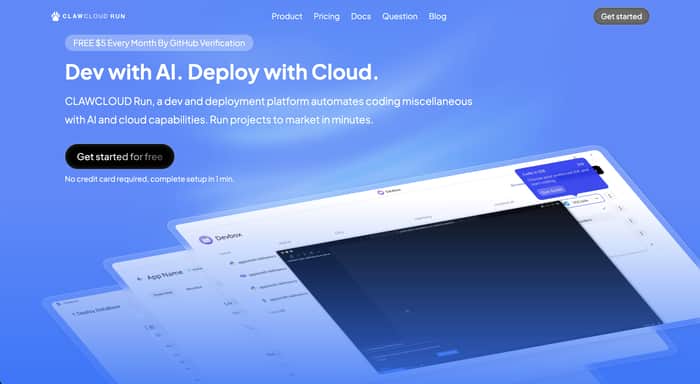
A Developer’s Day: From Enthusiasm to Frustration
Imagine this scenario: you have a brilliant idea and can’t wait to start coding. But when you boot up your computer, you discover you must first spend three hours configuring your development environment—installing dependencies, debugging database connections, and resolving version conflicts. Then you’re forced to coordinate servers for integration testing, wait for operations approval to access resources, and finally spend time repeatedly tweaking YAML files in a convoluted CI/CD pipeline. By the end of the day, you’ve written only about 50 lines of production code while wrestling with 20 environment-related issues.
This isn’t a made-up story. According to JetBrains’ Developer Ecosystem Survey, nearly 40% of developers report that their companies do not measure developer experience or productivity. A survey from Retool found that software engineers have only about 10 hours per week of “deep work” time, with the rest eaten up by distractions. Similarly, GitLab’s DevSecOps Survey revealed that roughly 47% of developers have experienced project delays due to failures in the development environment, CI/CD pipeline, or deployment environment.
The “Triple Dilemma” of Existing Solutions
Developers today primarily rely on three approaches:
- Local Development + Virtual Machines:
Manually configuring environments with hard-to-reuse dependencies becomes the norm. It’s often a case of “works on my machine during self-tests, but falls apart in integration.” - Traditional Containerization:
Involves writing Dockerfiles and K8s YAML files, which introduces a steep learning curve and long debugging cycles. - Public Cloud Managed Services:
Typically, resource utilization hovers below 20% (per industry averages), while the control plane components add extra costs.
For example, consider an e-commerce company: in its 200-node K8s cluster, 72% of pods have a daily CPU utilization below 10%, yet the company still shells out 180,000 yuan per month for cloud services. Worse still, the development team requires three dedicated operations personnel to handle deployment issues, with each new service taking an average of 2.3 days to go live.
ClawCloud Run’s “Brute Force” Approach: Encapsulating Complexity in a Black Box
When designing ClawCloud Run, we adhered to one guiding principle: developers should only focus on the code. That meant conquering three major challenges:
1. Atomic Environments: From “Scraps” to “LEGO Blocks”
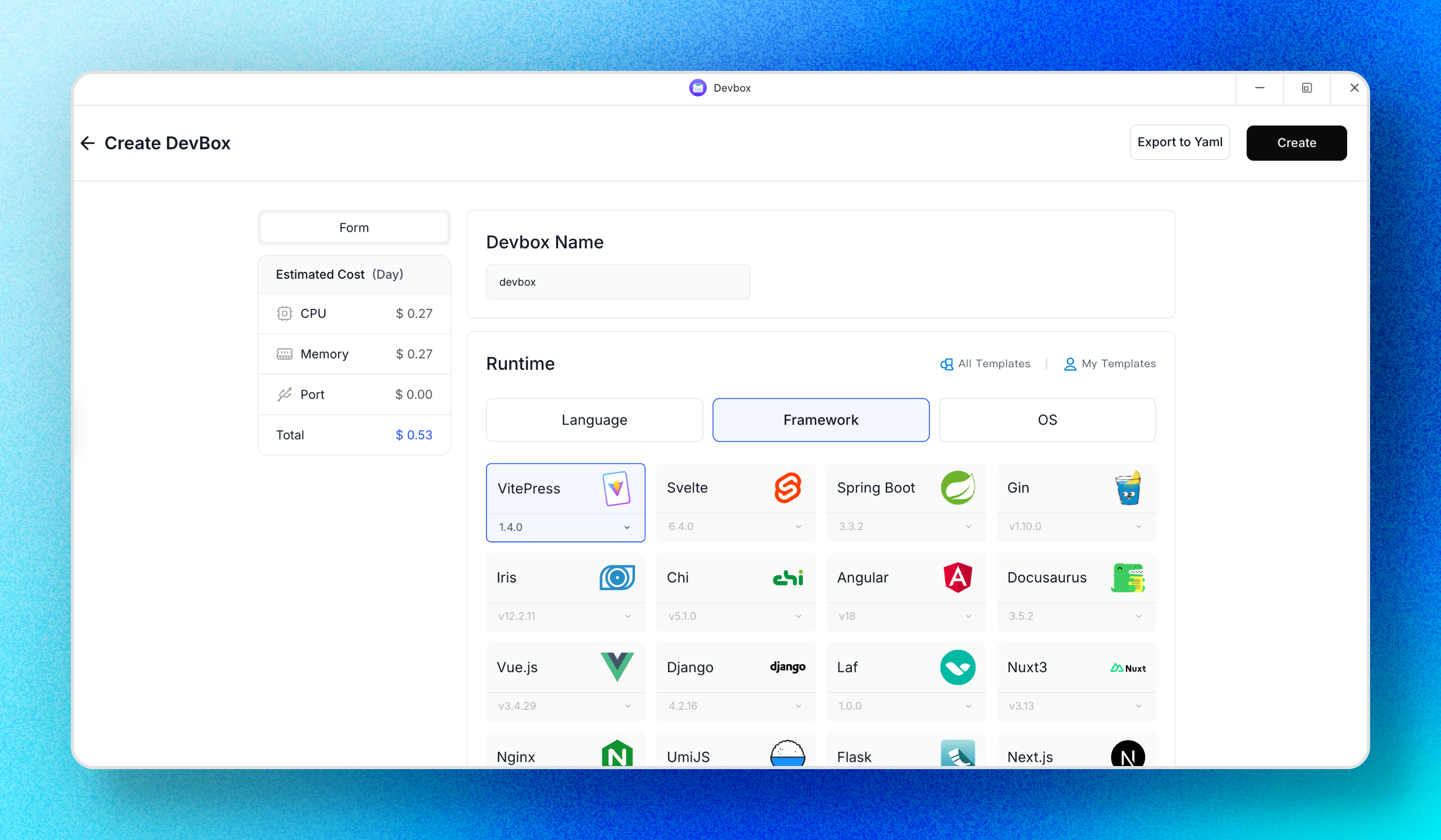
In traditional development and deployment workflows, environment components are scattered and disjointed, making system-wide coordination a headache. Devbox embodies an “atomic environment” philosophy by breaking down the operating system, runtime, libraries, network configurations, and more into discrete, standardized “atomic modules.”
- Modular Design:
Like LEGO blocks, each small module can be snapped together freely. Whatever environment you need, you can quickly assemble the required components to build a tailored development or testing environment. - Unified Management and High Reusability:
This design ensures consistency across environments while significantly boosting resource utilization. Team members can share these standardized modules, avoiding the need to reinvent the wheel with every setup and enabling them to focus on core business logic.
2. Deployment Inversion: Ditching the CI/CD Pipeline
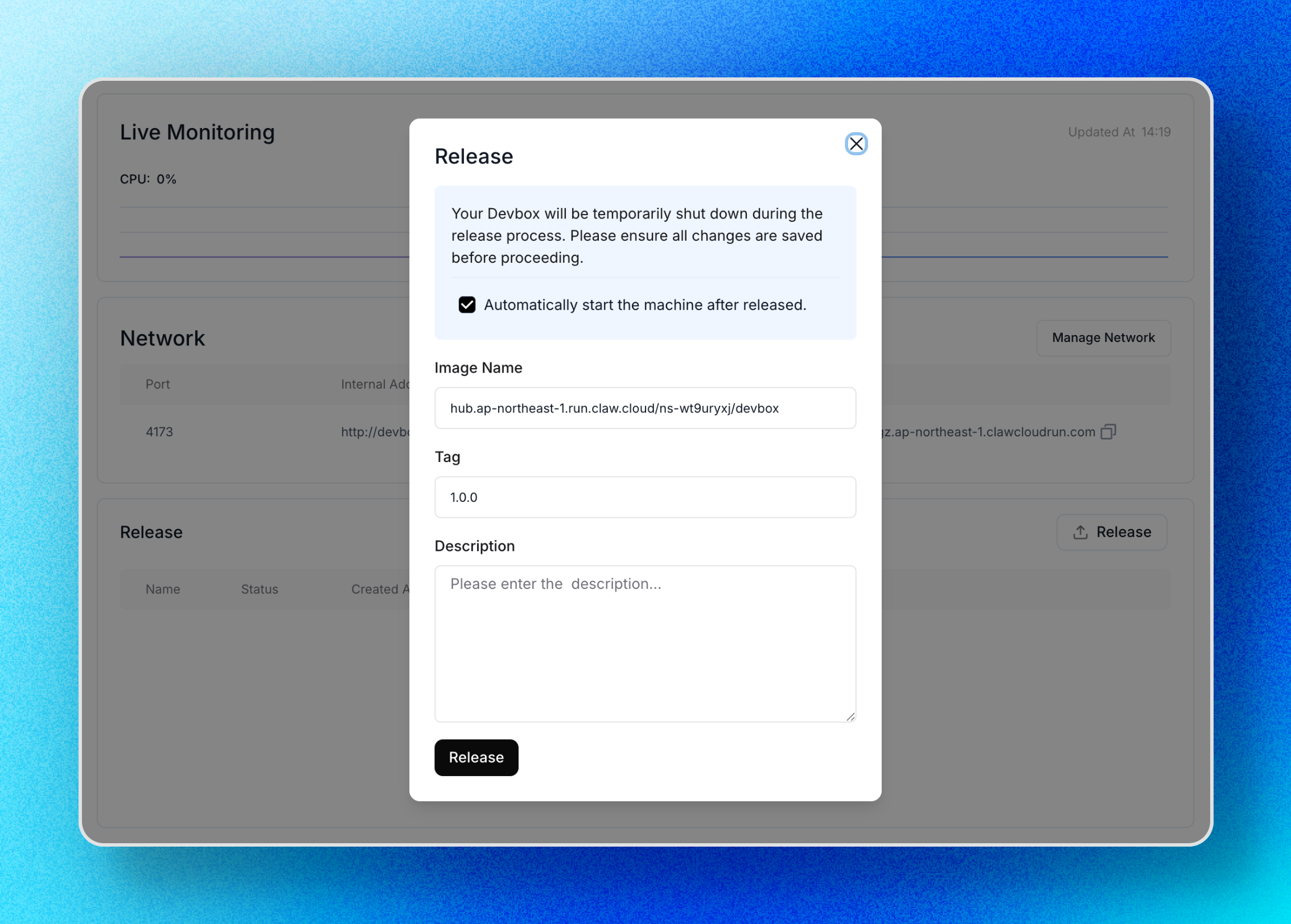
After deconstructing the deployment processes of 537 real-world projects, we found that 90% of CI/CD configurations effectively managed two tasks: building images and updating K8s resources. Devbox offers a different deployment philosophy:
- Direct Deployment, Instant Go-Live:
Our system eliminates the need for convoluted pipeline configurations. By simply inputting the necessary version information, the system automatically handles building, packaging, and deployment in the background. - Zero Perception Operations:
Even if you’re unfamiliar with Dockerfiles or Kubernetes, Devbox delivers one-click deployment. The entire process is encapsulated within an intuitive interface that truly lets you “write code, click a button, and go live.” - High Success Rate:
Traditional CI/CD pipelines often succumb to configuration errors or version mismatches. With its robust automation and intelligent error notifications, Devbox significantly reduces deployment risks, ensuring each rollout is efficient and reliable.
3. A Paradigm Shift in Collaboration: Bringing the “Conference Room” into the IDE
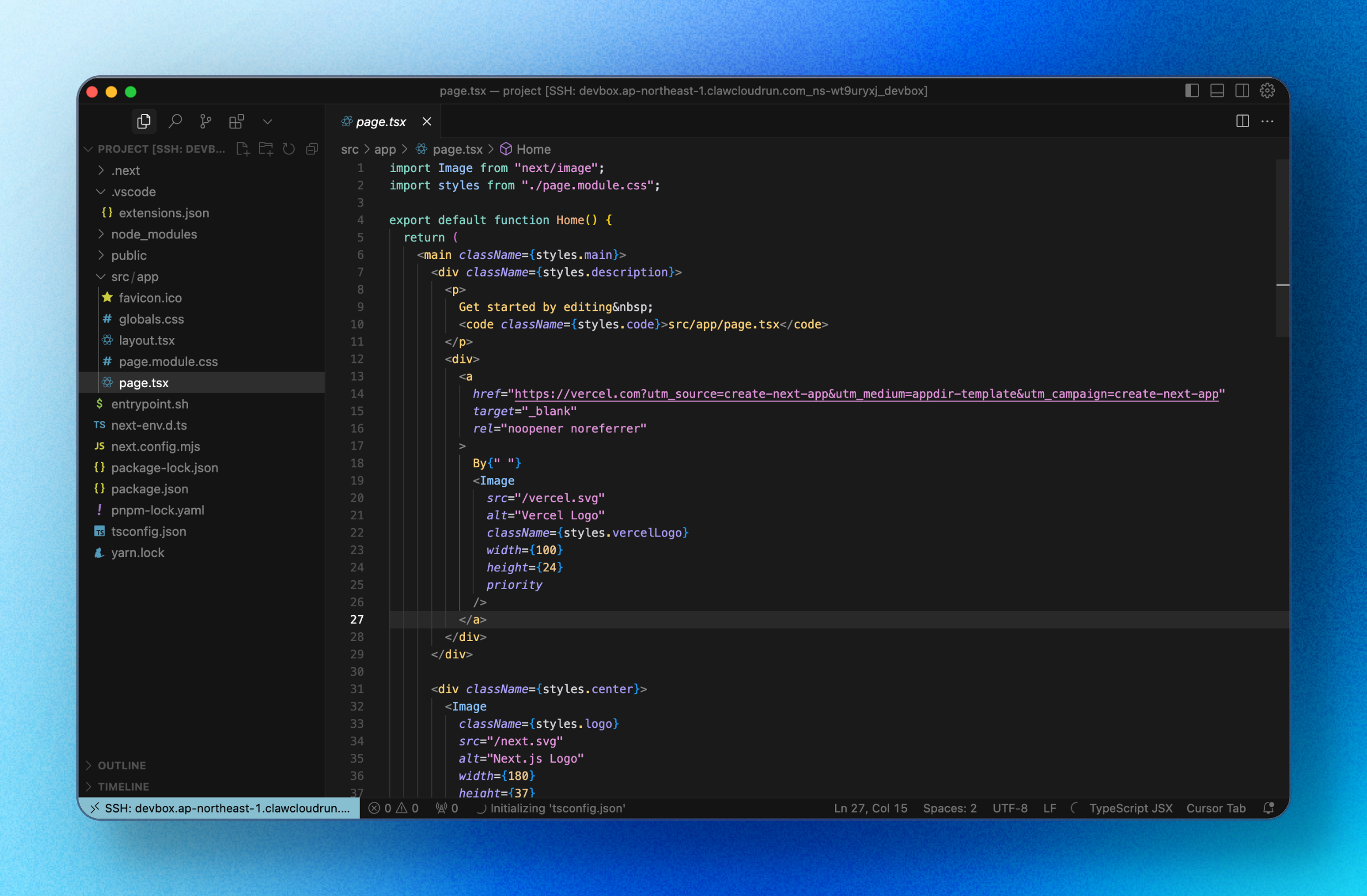
After deeply integrating ClawCloud Run Devbox with tools like VS Code, Cursor, and Windsurf, an unexpected benefit emerged: cross-regional teams organically formed a new mode of collaboration.
- Real-Time Environment Sharing:
When a frontend developer in New York adjusts an API, a backend developer in Los Angeles sees the changes in real time within their IDE. - Secure Boundaries:
By auto-syncing across “development sandbox → pre-production → production,” we eliminate configuration drift entirely.
The “Painful Choice” in Architectural Design
In the early days of development, we faced a key decision: should we push a Web IDE like most cloud providers, or should we embrace the existing workflows of developers? In the end, we chose the latter. In cross-team collaboration, developers often have to switch between various environments, wasting time and causing communication breakdowns. Devbox revolutionized collaboration by:
- Embedded Collaborative Environment:
Through Devbox’s IDE plugins, developers can directly create, share, and manage development environments within the IDE they’re already comfortable with—as if the “conference room” had been built right into your coding workspace. - Real-Time Sharing and Seamless Integration:
Team members can immediately view status updates, debugging information, and logs within the same workspace without needing extra remote collaboration tools. - Lowered Collaboration Barriers:
This design eradicates the common issues that arise from environment discrepancies, allowing teams to focus on business logic and code rather than on cross-platform compatibility or configuration challenges.
The Result Is in the Footsteps of Developers
Since our internal testing began in early 2025, we’ve seen some counterintuitive results:
- 35% of users have never used K8s, yet they’ve successfully deployed production applications.
- 28% of our paying users migrated from AWS/GCP, drawn in by our “pay-as-you-use” billing model.
- The most popular template is Next.js + Tailwind, highlighting the rising trend of full-stack development.
One independent developer commented, “I used to spend 40% of my time fighting with servers. Now, I can launch an MVP in two weeks. More importantly, I can confidently tell my clients, ‘This feature will be delivered by tomorrow.’”
The Future Battlefield: Let Developers “Forget About Infrastructure”
When discussing the future of cloud development and deployment, a bold idea is emerging: if development environments could be as plug-and-play as electricity, why would we care where they run? This is exactly where ClawCloud Run is headed—abstracting computing, storage, and networking to create a unified interface. Developers can describe their needs using declarative code, while the system automatically selects the optimal resource combination.
This paradigm shift offers more than just increased efficiency. For instance, when a gaming company deployed real-time services on 100 edge nodes using ClawCloud Run, their operations team doubled in efficiency, saving 1.2 million yuan annually. Perhaps this proves the point: the best infrastructure is the one developers barely even notice.
ClawCLoud Run:
https://run.claw.cloud/
