When Does Taking a Gold Loan Make Financial Sense?
Borrowing decisions are rarely made in isolation. They usually emerge from a pressing need, an unexpected expense, or a temporary mismatch between available cash and upcoming obligations. In recent years, gold loans have become an increasingly discussed financing option because they combine access to liquidity with the ability to retain ownership of a valuable household asset.
Yet the broader question remains important: when does taking a gold loan actually make financial sense?
The answer is not universal. Gold loans may be appropriate in certain situations, while in others, alternative funding options could align better with long-term financial goals. Recent regulatory measures introduced by the Reserve Bank of India in April 2026 have also strengthened disclosure standards, valuation practices, and borrower safeguards, making transparency an important part of the decision-making process.
Understanding when this borrowing avenue fits into a larger financial plan can help borrowers evaluate their choices with greater confidence.
What Makes a Gold Loan Different From Other Borrowing Options?
Unlike unsecured credit products, a gold loan is backed by eligible gold jewellery pledged as collateral. Loan eligibility is linked primarily to the assessed value of the pledged asset, subject to applicable loan-to-value norms and lender policies.
This structure changes the nature of borrowing and gold loan interest rates.
Instead of relying extensively on income-based underwriting or long credit histories, lenders evaluate the value, purity, and eligible weight of the jewellery being pledged. That distinction often makes gold loans relevant for individuals seeking short-term liquidity while avoiding the sale of long-held assets.
However, the existence of collateral does not automatically make borrowing inexpensive or universally suitable. Borrowers are still expected to review repayment obligations, understand applicable charges, and assess whether future cash flows can comfortably support the commitment. From a financial planning perspective, context matters more than the product itself.
Most of the financial institutions are offering loans through Mobile Apps making it simple process.
Situations Where Taking a Gold Loan May Make Financial Sense
There are circumstances in which borrowing against gold holdings may be a practical option.
One such scenario involves temporary cash flow constraints.
Consider a small business owner waiting for receivables to arrive over the next two months. Another example could be a salaried individual facing an unexpected medical expense before annual bonuses or investment maturities become available. In such cases, a secured borrowing arrangement may serve as a bridge between immediate needs and expected inflows.
Similarly, seasonal working capital requirements may sometimes justify short-term borrowing.
Examples may include:
Medical emergencies
Educational expenses
Business inventory requirements
Temporary household obligations
Bridging delayed receivables
Planned expenditures with anticipated future inflows
The emphasis here is on temporary. Borrowing often makes more financial sense when repayment visibility already exists. A borrower who expects a defined cash inflow within a reasonable period may find secured lending more manageable than someone borrowing without clarity on future repayment capacity.
When a Gold Loan May Not Be the Ideal Choice
Not every financial requirement warrants borrowing against jewellery holdings.
If a borrower intends to fund recurring lifestyle expenses without a realistic repayment strategy, the decision deserves careful evaluation. Long-term obligations financed through short-term borrowing can create pressure over time, especially if interest continues to accumulate.
There are also emotional considerations. Gold jewellery often carries family significance beyond its monetary value. For some households, pledging inherited jewellery may feel uncomfortable, even when the transaction is financially rational.
Borrowers should therefore consider both financial and personal dimensions before proceeding. A useful framework involves asking three questions:
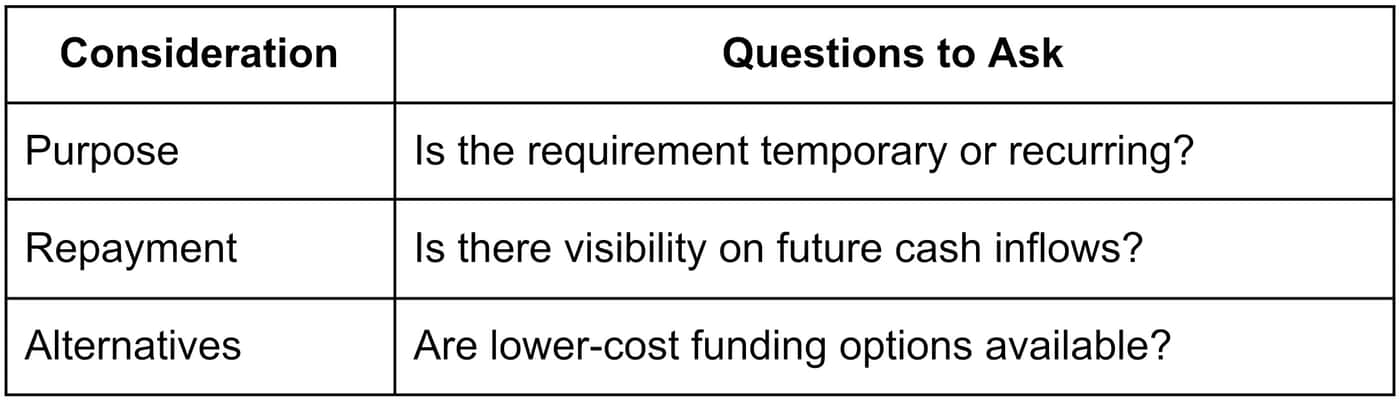
Sometimes, maintaining an emergency fund can reduce the need for secured borrowing altogether. Financial planning generally works best when borrowing remains a supporting tool rather than a recurring dependency.
Cost Considerations Should Never Be Ignored
Borrowers often focus heavily on loan eligibility while paying less attention to borrowing costs.
Yet affordability remains central to sound financial decision-making.
The applicable gold loan interest rate may vary depending on loan tenure, repayment structure, operational considerations, and lender-specific policies.
Borrowers should evaluate:
Interest obligations
Processing charges
Valuation-related expenses
Penal charges
Repayment flexibility
Tenure options
Looking only at the sanctioned amount can sometimes provide an incomplete picture. Borrowing ₹1 lakh and repaying ₹1.08 lakh carries a different implication from borrowing ₹1 lakh and repaying significantly more due to delays or additional charges. The broader cost structure often deserves equal attention. This can be determined using gold loan calculators offered by various lenders on their websites.
How Regulatory Changes Influence Borrower Decisions
The April 2026 RBI framework has introduced additional safeguards within the gold lending ecosystem.
Borrowers today generally benefit from improved transparency regarding:
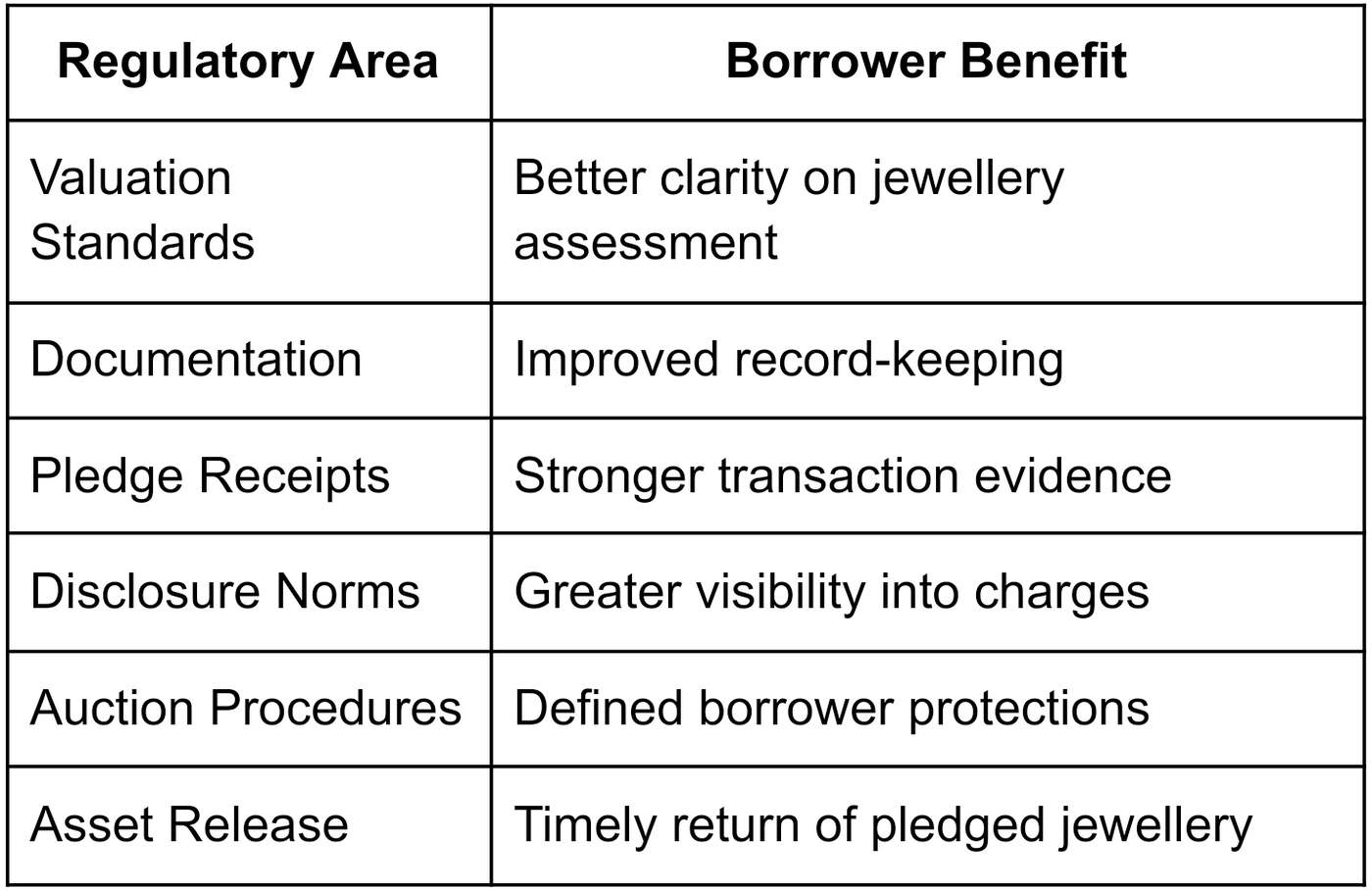
These developments contribute to a more structured borrowing environment.
Still, borrowers should not rely solely on regulations. Reviewing agreements carefully remains important. Questions relating to repayment schedules, applicable charges, and closure procedures should be addressed before accepting loan terms. Transparency works best when both lenders and borrowers actively engage with the process.
Comparing Gold Loans With Other Financing Options
Context often determines suitability. A borrower with jewellery holdings and short-term liquidity requirements may find secured borrowing more aligned with immediate needs. Someone seeking long-term financing for durable consumption, however, may evaluate alternative credit products differently.
The comparison below offers a broad perspective.
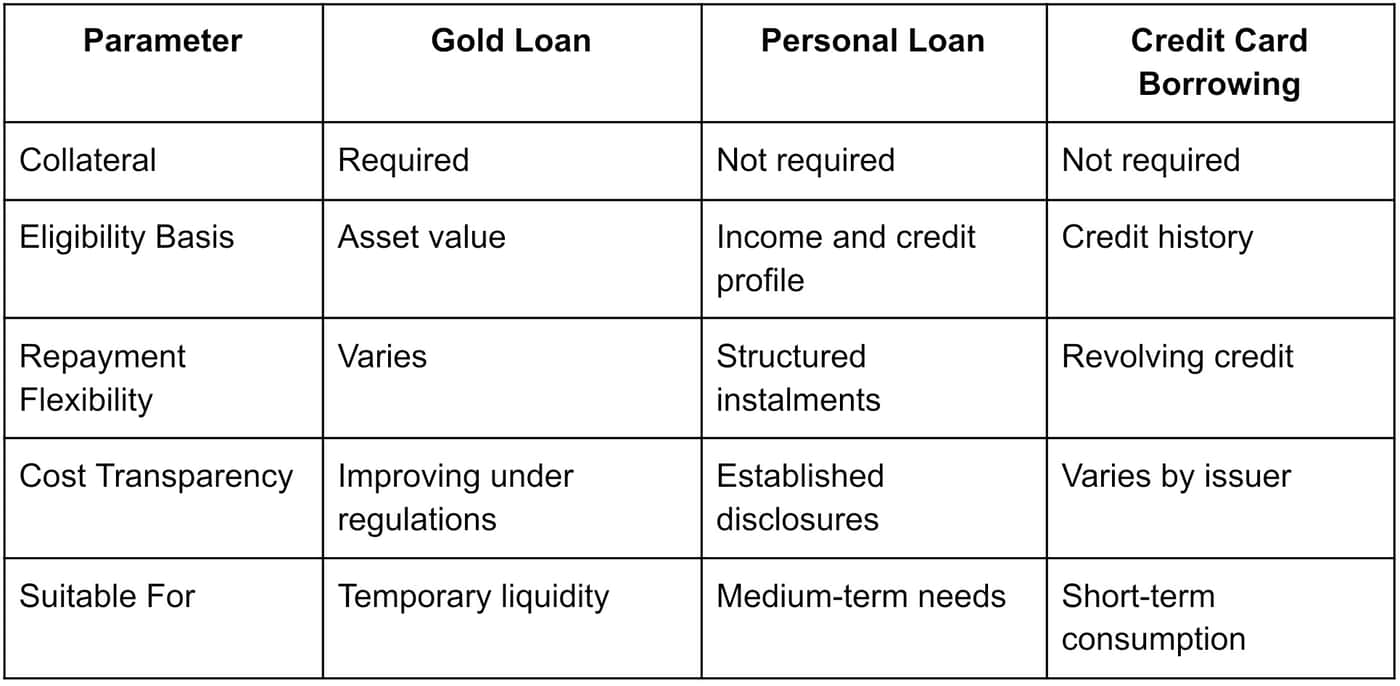
No financing product is universally superior. Suitability generally depends on purpose, repayment capacity, and financial circumstances.
Should Borrowers View Gold Loans as Emergency Funding?
Emergency situations often create urgency. In such moments, borrowers may prioritize availability over affordability. However, financial stress does not eliminate the importance of evaluation. Borrowing against gold holdings may serve a practical purpose when it supports a defined objective and repayment remains realistic.
At the same time, borrowers should avoid treating secured borrowing as a substitute for long-term financial preparedness. Emergency reserves, diversified savings, and prudent budgeting continue to play important roles in household financial stability. Borrowing works most effectively when it complements planning rather than replaces it.
Conclusion
Decision pertaining to gold loan borrowing lacks universal validity as each borrowing decision remains highly subjective. Individuals requiring funds to fulfill temporary liquidity needs benefit from borrowing against eligible jewellery. Yet, borrowing should never occur without thorough evaluations concerning feasibility and affordability of borrowing requirements.

