White-Label Gojek Clone App: A Smart Solution for Multi-Service Startups
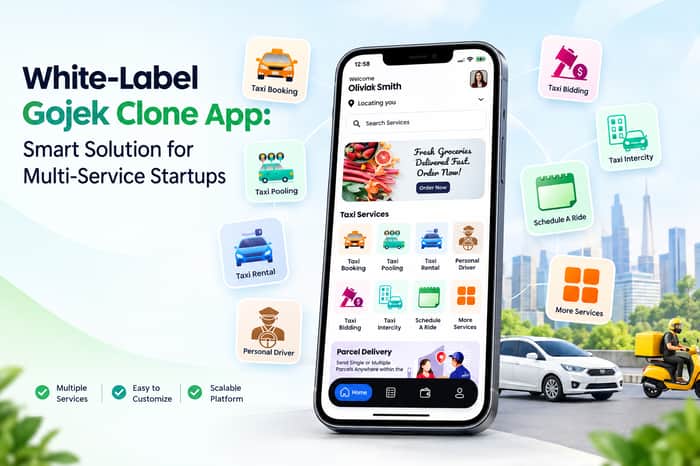
The demand for convenient, app-based services is transforming how people book rides, order food, purchase groceries, request home services, and manage everyday tasks. Instead of using a separate application for every requirement, customers increasingly prefer platforms that bring multiple services together in one place.
This shift has created a strong opportunity for entrepreneurs who want to build multi-service businesses. However, developing a complete platform from scratch can involve extensive planning, design, development, testing, and ongoing improvements. A white-label Gojek clone app provides an alternative approach by giving startups a ready-made foundation for launching a multi-service application under their own brand.
For businesses exploring this model, V3Cube offers a solution designed around the concept of a customizable multi-service platform. The objective is not simply to copy an existing application but to provide entrepreneurs with a foundation that can be adapted to their business model, target market, service categories, and branding requirements.
What Is a White-Label Gojek Clone App?
A white-label Gojek clone app is a pre-developed multi-service application solution that businesses can customize and launch using their own brand identity.
The concept is similar to launching a digital marketplace where customers can access several services from one application. Depending on the business strategy, the platform can bring together categories such as:
- Taxi and ride booking
- Food delivery
- Grocery delivery
- Parcel and delivery services
- Home services
- Beauty and wellness services
- Professional services
- Local shopping
- Other on-demand services
Instead of developing every component independently, entrepreneurs start with an existing application framework and customize it according to their requirements.
The white-label approach can include customization of the brand name, logo, colors, user experience, service categories, business rules, and other platform elements. This allows a startup to create a distinct digital identity while using a proven multi-service application concept.
Why Multi-Service Startups Are Gaining Attention
Consumers increasingly value convenience. When several everyday services are available through one application, users do not have to repeatedly download and manage multiple apps.
For entrepreneurs, the multi-service model can also create opportunities to serve different customer needs through one digital ecosystem.
For example, a customer might use the platform for transportation in the morning, food delivery at lunchtime, grocery shopping later in the day, and a home service in the evening.
This creates multiple touchpoints between the platform and its users.
A multi-service business can therefore focus on building a broader ecosystem rather than depending entirely on a single service category.
However, launching such a platform requires more than simply adding multiple services. The application needs an organized architecture, convenient navigation, appropriate user flows, service-provider management, payment functionality, order or booking management, notifications, and an administrative system.
This is where a white-label solution can become useful.
Why Choose a White-Label Solution?
Building a multi-service application from the ground up requires considerable coordination between business planning and technology development. Entrepreneurs need to consider the customer application, service-provider application, administrative dashboard, backend infrastructure, integrations, security, testing, and future scalability.
A white-label solution provides a starting point for these components.
1. Faster Business Launch
One of the primary advantages of a ready-made solution is that entrepreneurs can begin with an existing application foundation instead of starting every development component from zero.
The business can focus more attention on customization, service selection, marketing, operations, and customer acquisition.
2. Brand Customization
A white-label application allows the platform to be presented under the entrepreneur's own brand.
Brand elements can include:
- Business name
- Logo
- Brand colors
- Application interface
- Service categories
- Content
- Customer-facing communication
This gives businesses the opportunity to create a platform that reflects their own market positioning.
3. Multiple Services in One Platform
A multi-service platform can support several business categories within one ecosystem.
This can help entrepreneurs explore different revenue opportunities instead of restricting the platform to a single service.
The business can decide which services are most relevant to its target customers and configure its offering accordingly.
4. Customizable Business Model
Every market has different operational requirements. A startup targeting one location may need a different service mix from a company operating in another market.
A customizable white-label platform can provide flexibility for businesses to define their service structure and operational processes.
5. Centralized Management
Managing several services independently can become complicated. A centralized administration system can help businesses monitor platform activities from one location.
Depending on the implementation, administrators can manage users, service providers, bookings, orders, services, payments, commissions, and other operational elements.
Key Components of a White-Label Gojek Clone
A successful multi-service platform generally involves several applications and interfaces rather than a single mobile application.
Customer App
The customer-facing application is where users discover and access available services.
Common functionality can include:
- Account registration and login
- Profile management
- Service discovery
- Search and filtering
- Booking or ordering
- Location selection
- Booking status
- Order tracking
- Notifications
- Payment options
- Ratings and reviews
- Booking or order history
- Customer support
The user experience should remain simple even when the platform contains many service categories.
Service Provider App
Service providers need their own interface to receive and manage customer requests.
Depending on the service category, providers may be able to:
- Create and manage profiles
- Set availability
- Receive requests
- Accept or reject jobs
- View booking information
- Update service status
- Manage earnings
- Review transaction history
- Communicate with customers
- Receive notifications
For a multi-service platform, provider workflows may differ from one category to another.
Admin Panel
The administration panel acts as the central control system.
Administrators can use it to manage different areas of the business, such as:
- Customers
- Service providers
- Services
- Bookings
- Orders
- Payments
- Commissions
- Promotions
- Notifications
- Reports
- Platform settings
A well-organized admin panel becomes particularly important as the number of service categories grows.
Important Features for a Multi-Service Platform
A white-label Gojek clone should not focus only on the number of features. The more important question is whether those features support the intended business model.
Location-Based Services
Location functionality can help connect customers with nearby service providers. This is especially important for taxi booking, delivery, home services, and other location-dependent services.
Real-Time Tracking
Tracking can improve transparency for customers and service providers.
For example, customers ordering food or booking a ride may want to know the current status of their request.
Online Payments
Digital payment functionality can make transactions more convenient. Depending on the target market, entrepreneurs can select payment methods suitable for their customers and business requirements.
Push Notifications
Notifications can keep users informed about important events such as booking confirmations, provider acceptance, order updates, promotions, and status changes.
Ratings and Reviews
Ratings and reviews can help create transparency within the marketplace. Customers can provide feedback about their experience, while businesses can use feedback to identify areas for improvement.
Promotions and Offers
Promotional tools can support customer acquisition and retention strategies.
Businesses can create promotional campaigns around particular services, customer segments, or marketing initiatives.
Service Management
Administrators should be able to add, modify, activate, or deactivate services based on business requirements.
This flexibility is particularly valuable for a startup that intends to expand its service portfolio over time.
How a White-Label Gojek Clone Can Support Startup Growth
The biggest advantage of a multi-service model is flexibility.
A startup does not necessarily need to introduce every possible service at launch. Instead, it can begin with categories that match customer demand and operational capabilities.
For example, a business could initially focus on transportation and food delivery. Once the platform develops operational experience, it could introduce grocery delivery, parcel services, or home services.
This phased approach can make expansion more manageable.
The platform can evolve alongside the business.
Start With a Core Service
Launching with too many categories can create operational complexity. A startup can begin with a carefully selected service category or a small group of complementary services.
Understand Local Demand
Different markets have different customer expectations. Entrepreneurs should analyze local demand before selecting services.
Build the Provider Network
A multi-service marketplace depends on service providers. Building a reliable network of drivers, delivery partners, professionals, or merchants is therefore an important part of the business strategy.
Focus on User Experience
A multi-service app can become confusing if navigation is not carefully designed. Service categories should be easy to discover, and individual booking or ordering processes should remain straightforward.
Expand Gradually
Once the initial services are established, the company can consider adding additional categories based on customer feedback and business performance.
White-Label vs. Custom App Development
Entrepreneurs often have to choose between developing an application from scratch and adopting a white-label solution.
Custom development provides extensive control over architecture and functionality. However, it also requires the business to manage the development process from the beginning.
A white-label solution starts with an existing foundation.
This can be useful for entrepreneurs who want to enter the market with a multi-service application while concentrating their resources on customization, operations, branding, and growth.
The right choice ultimately depends on the business's objectives, technical requirements, budget, timeline, and desired level of customization.
How to Build Your Own Multi-Service Business With V3Cube
V3Cube's approach to multi-service application development focuses on giving businesses a foundation that can be adapted to their own requirements.
The process can begin by identifying the target market and selecting the services that the business wants to provide.
The next step is customization.
The application can be aligned with the company's branding and service structure. Entrepreneurs can determine which categories should be included and how customers and service providers will interact with the platform.
The administrative system can then be configured to support the operational requirements of the business.
Testing is another important stage before launch. Customer workflows, provider workflows, booking processes, payments, notifications, and administrative functions should be reviewed to ensure that the platform works as intended.
After launch, the business can monitor customer feedback and operational performance and make improvements as the platform develops.
Security and Compliance Considerations
A multi-service application can process different types of user and transaction information. Security should therefore be considered throughout the development and operation of the platform.
Important areas can include:
- Secure authentication
- Role-based access control
- Data protection
- Secure payment processing
- Access management
- Regular security updates
- Privacy controls
- Secure communication
Businesses operating internationally may also need to consider the privacy and data-protection requirements applicable to their target markets.
V3Cube's application solutions can be designed with privacy and security considerations in mind, helping entrepreneurs build their platform around responsible data-handling practices.
Revenue Opportunities for a Multi-Service Platform
A multi-service business can explore different monetization strategies depending on its services and market.
Potential revenue models include:
Commission
The platform can earn a commission from transactions completed through participating service providers.
Delivery Fees
Delivery-related services can generate revenue through applicable delivery charges.
Service Fees
The platform can apply service fees to selected bookings or transactions.
Subscription Plans
Businesses can explore subscription-based offerings that provide customers with selected benefits.
Promotional Placements
Service providers or merchants may use promotional opportunities to gain additional visibility within the platform.
The appropriate revenue model depends on the business structure, market conditions, service categories, and customer expectations.
Challenges Entrepreneurs Should Consider
Although a white-label application can simplify the technology starting point, entrepreneurs still need to address important business challenges.
Customer Acquisition
A technically strong application needs customers. Businesses should develop a marketing strategy covering digital marketing, local promotion, partnerships, social media, search visibility, and customer referral initiatives.
Service Provider Acquisition
A marketplace needs sufficient providers to deliver services efficiently. Provider recruitment and retention should therefore be part of the launch strategy.
Service Quality
A multi-service platform represents the business brand. Poor service from one provider can affect the customer's overall perception of the platform.
Operational Management
Managing multiple service categories requires clear processes, customer support, provider management, payment reconciliation, and performance monitoring.
Competition
Multi-service businesses operate in competitive markets. Entrepreneurs should identify a clear value proposition rather than simply reproducing an existing platform.
Why V3Cube Can Be a Starting Point for Entrepreneurs
V3Cube focuses on clone-app and on-demand application solutions that allow businesses to build digital platforms around established business concepts.
For entrepreneurs interested in the multi-service model, a white-label Gojek clone can provide a structured starting point for creating a branded application.
The value of the solution is not simply having an application with multiple icons or service categories. The real objective is to create an ecosystem in which customers can conveniently access services, providers can manage their work, and administrators can control the overall operation.
With appropriate customization, entrepreneurs can shape the platform around their own business strategy instead of treating the application as a one-size-fits-all product.
Final Thoughts
The rise of multi-service platforms has created new possibilities for startups and established businesses looking to enter the on-demand economy.
A White-Label Gojek Clone App can provide an efficient starting point for entrepreneurs who want to launch a branded multi-service platform without building every technology component from scratch.
With customer, provider, and admin applications working together, businesses can create a centralized ecosystem for transportation, delivery, food, grocery, home services, and other on-demand categories.
The most successful approach is not necessarily to launch the maximum number of services. Instead, entrepreneurs should identify genuine customer needs, start with suitable categories, build a dependable provider network, prioritize user experience, and expand strategically.
For startups looking to transform a multi-service business idea into a digital platform, V3Cube's white-label Gojek clone solution can serve as a flexible technology foundation for building and customizing their own on-demand business.
Frequently Asked Questions
1. What is a white-label Gojek clone app?
A white-label Gojek clone app is a ready-made multi-service application solution that businesses can customize and launch under their own brand.
2. Which services can be included in a Gojek clone app?
Depending on the business model, services can include taxi booking, food delivery, grocery delivery, parcel delivery, home services, beauty services, and other on-demand categories.
3. Can I customize the white-label Gojek clone?
Yes. A white-label solution can be customized around the business's branding, service categories, user experience, and operational requirements.
4. Does the platform include an admin panel?
A multi-service application typically includes an administrative system for managing customers, service providers, services, bookings, orders, payments, and other platform activities.
5. Can I launch the app under my own brand?
Yes. The purpose of a white-label solution is to allow the business to present the platform using its own brand identity.
6. Is a Gojek clone suitable for startups?
It can be suitable for startups that want to explore a multi-service business model and prefer starting with a ready-made technology foundation rather than developing every component from scratch.
7. Can I add more services later?
A scalable multi-service platform can be structured to support service expansion. Entrepreneurs can begin with selected categories and introduce additional services as their business grows.
8. What are the main revenue models for a multi-service app?
Possible revenue models include commissions, delivery fees, service fees, subscriptions, and promotional opportunities. The best model depends on the services and target market.
9. What should I consider before launching a Gojek clone app?
Entrepreneurs should evaluate customer demand, service categories, provider availability, competition, operational requirements, marketing strategy, technology requirements, and applicable legal and privacy obligations.
10. Why choose V3Cube for a white-label Gojek clone?
V3Cube provides clone-app and on-demand application solutions that can give entrepreneurs a technology foundation for building and customizing their own branded multi-service platform.
