Why “AI-Powered Wellness” Is Broken — And How CureNatural Rebuilt Intelligence for Natural Health
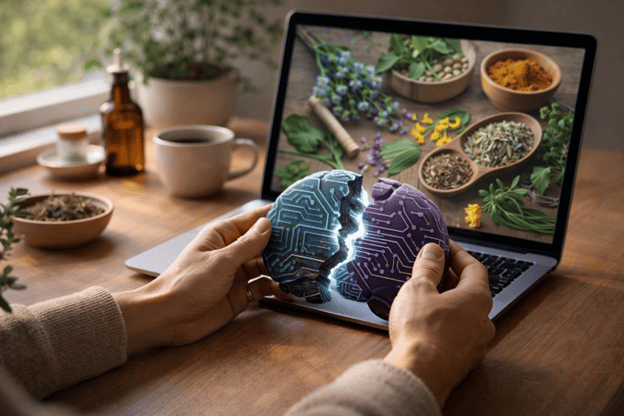
“AI-powered wellness” sounds impressive. It also tells you almost nothing.
In practice, most wellness apps that claim AI fall into one of three buckets. Chatbots giving generic advice. Recommendation engines dressed up with machine-learning language. Or worse, systems that confidently generate health guidance with no understanding of biology, timing, or individual variability.
That approach works for movie recommendations. It fails for health.
Natural health systems like Ayurveda are not fuzzy lifestyle philosophies. They are rule-dense, timing-sensitive, and highly individual. The same food can nourish one person and aggravate another. The same herb can heal at one time of day and disrupt digestion at another. Any system pretending that a free-form AI model can “figure this out” on the fly is either naïve or reckless.
That is why we stopped trying to make wellness apps smarter by adding more AI. Instead, we rebuilt intelligence itself.
The real problem with AI-powered wellness
Most AI in wellness is optimized for output, not understanding.
Large language models are excellent at sounding confident. They are terrible at knowing when they should not speak. In health, that distinction matters. A hallucinated answer is not a harmless bug. It is misinformation delivered with authority.
Wellness also has a structural problem that AI struggles with. Human biology is contextual. Time matters. Sequence matters. Preparation matters. Digestion strength matters. You cannot shortcut that with probabilistic text generation.
So the issue is not that AI is bad. The issue is that unbounded AI is misapplied.
From artificial intelligence to assistive intelligence
At CureNatural, we stopped asking, “How do we add AI?” and started asking, “Where does intelligence actually belong?”
The answer was constraint.
Instead of letting a model invent advice, we built a bounded system. Clear inputs. Defined outcomes. Guardrails everywhere. Assistive Intelligence, not artificial authority.
Our system does not diagnose. It does not replace practitioners. It does not generate infinite recommendations. It works within a finite, structured decision space grounded in Ayurvedic principles.
That means the intelligence layer helps users navigate complexity rather than pretending complexity does not exist.
Why constraints scale better than creativity in health
Indie builders know this instinctively. Software scales when rules are explicit, not implied.
In natural health, constraints increase trust. When users know why a recommendation exists, when it applies, and when it does not, they follow it. When advice feels magical or vague, they abandon it.
Assistive Intelligence shines here. It supports decision-making without overriding human judgment. It educates instead of dictating. It respects the fact that health is a process, not a prompt.
Intelligence is not automation
The biggest myth in wellness tech is that more automation equals better outcomes. In reality, the goal is alignment.
Natural health is about rhythm, digestion, recovery, and adaptation. Technology should help people understand those patterns, not replace them with a chatbot personality.
That philosophy extends beyond the app itself into education. Platforms like the CureNatural ayurveda courses exist because intelligence without understanding is brittle. Teaching users how and why recommendations work makes the system stronger over time.
The future of wellness tech
AI will absolutely play a role in health. Just not as an oracle.
The future belongs to systems that know their limits. Intelligence that assists, not dominates. Technology that respects biology instead of flattening it.
There is nothing artificial about natural health. But there is intelligence. And when it is built with intention, structure, and humility, it actually works.


This really resonates. A lot of AI-powered wellness feels confident, but not grounded — especially when context and timing actually matter more than answers.
I like the shift from trying to make AI creative to making it constrained. In health, guardrails build trust faster than smart-sounding outputs.
Framing this as assistive intelligence instead of automation feels like the right direction, not just for wellness, but for many domains where judgment matters.
Interesting approach
I too have seen this with most AI wellness tools I have tried. They may seem confident, but in reality, they are void of substance. ~
They are able to answer promptly, but their quality of response is poor.
The frame I found helpful was "Bounds before Brains". If you do not define very clearly when the system is supposed to be active, when not to be active, and what inputs are really relevant, you will just produce a lot of eloquent noise.
What I would like to know is how did you determine which constraints were most important initially?
Biology has many truths: timing, dosage, context, constitution. Were you working from a single axis (timing) initially or did you layer in axes as you went along?
As I have found, users trust your systems more when you provide them with a visual representation of what they cannot do. By providing a visual example of this, you will build more confidence with the user than providing them with another recommendation.