Why anan bear tours wrangell limit trail groups to just 12 people at a time
Key Takeaways
Expect a hard cap of 12 people on the Anan Creek trail at any one time — the Forest Service built this rule around a narrow gravel path, not around crowd control for its own sake.
Book Anan bear tours Wrangell trips with a clear head about season timing — the salmon run in July and August is what actually pulls bears close to the platform, not the calendar date alone.
Understand why small groups produce calmer bears — fewer bodies on the trail means less noise, less scent disturbance, and more natural feeding behavior right in front of you.
Plan the boat ride as part of the experience, not just a shuttle — the run through the Tongass National Forest often turns up eagles, seals, and even whales before you ever reach the observatory.
Pack for a guided, rule-bound outing — bear spray, trained guides, and strict no-food policies on the trail are what keep both the bears and the visitors safe at close range.
Compare the viewing setup here to bigger-name bear destinations before you book — the tight group limit at Anan trades sheer visitor volume for a closer, quieter, more personal encounter.
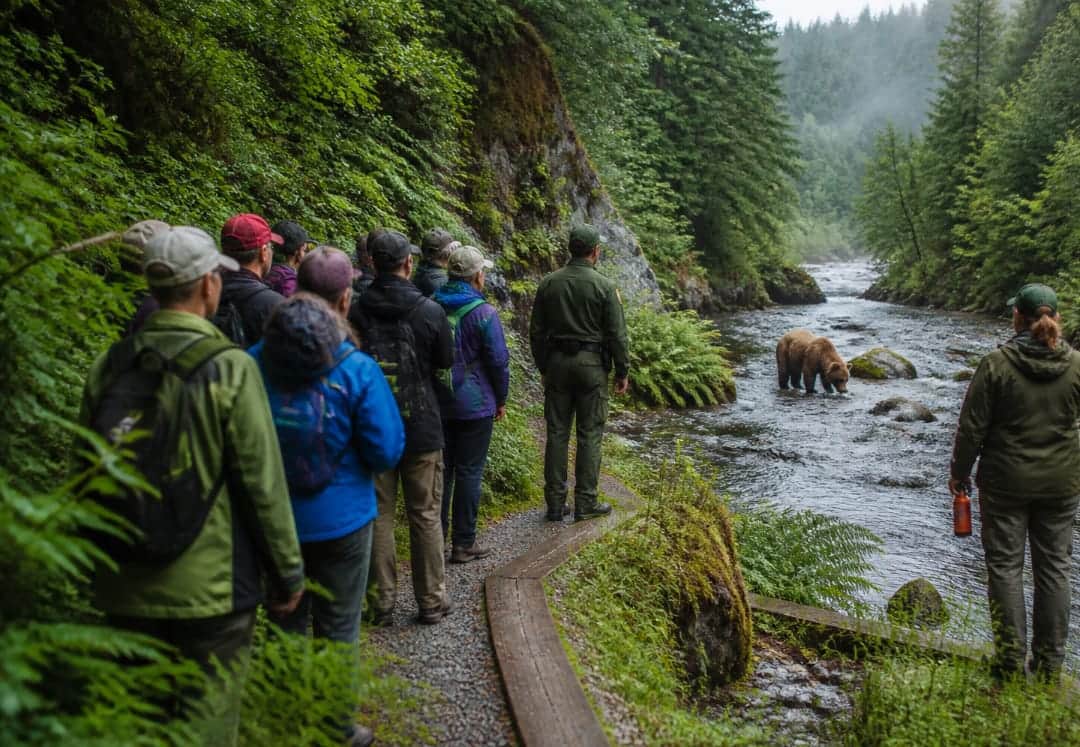
Twelve people. That's the hard ceiling on a gravel path in the Tongass National Forest where brown bears the size of small refrigerators wade through a salmon stream, close enough to hear them chew.
Anyone researching Anan bear tours Wrangell runs into this number fast, and it isn't arbitrary. The trail out to the observatory is narrow, the bears are habituated but not tame, and the Forest Service has spent years figuring out exactly how many humans can stand on that path before the whole calm balance falls apart. Push past that limit, and you don't just crowd the view — you change how the bears behave, where they feed, and whether a mother with cubs feels safe enough to stay near the creek at all.
Here's what most people miss: the group cap isn't about convenience. It's wildlife management, built on decades of watching what happens when too many boots hit that gravel at once.
The Anan Creek Bottleneck: Why This Rule Exists in the First Place
Picture a July afternoon: salmon stacking up in the creek, a sow black bear working the near bank, and a line of visitors bunched at a narrow pinch point in the trail waiting for a clear moment to pass. That's the reality at Anan almost every open day of the season, and it's exactly why the Forest Service caps trail groups at 12. Too many bodies on that gravel path at once and you've got a crowding problem in an area where bears — not people — have the right of way. Groups booking Anan bear tours Wrangell operators run larger than 12 simply get split, no exceptions.
A Narrow Gravel Trail in Grizzly and Black Bear Country
The half-mile route isn't wide. It's compacted gravel and wood-plank bridges, comparable to a sidewalk, but it runs straight through active feeding country where both grizzly and black bears pass within feet of hikers. A crowd of 30 moving as one mass would spook bears off the creek or, worse, box one in against the group. Twelve is the number that keeps movement predictable.
What the Forest Service Actually Regulates at This Site
Beyond group size, the agency manages permits, seasonal dates, and observatory capacity — all designed around one goal: keeping the bear viewing sustainable without turning the creek into a crowded spectacle.
Inside the Anan Wildlife Observatory Experience
Twelve people. That's the cap on the trail at any given moment, and it's not arbitrary. Anan sits deep in the Tongass National Forest, and the U.S. Forest Service set that number based on decades of watching how black bears — and the occasional grizzly passing through — respond to foot traffic near a working salmon stream. Bigger groups on Anan bear tours Wrangell operators run get split into two waves rather than crammed onto the boardwalk together.
The Boat Ride Through the Tongass National Forest
Getting there takes about an hour each way by boat, cutting through channels lined with old-growth spruce and hemlock. Guides use the ride to set expectations: eagles overhead, seals hauled out near the creek mouth, sometimes whales blowing in the distance. The covered, heated cabin makes the crossing tolerable even on a gray, drizzly day — and Southeast Alaska produces plenty of those.
What Happens Once You Reach the Viewing Platform
From the dock, it's a short staircase and roughly a half-mile walk on packed gravel and wood-plank bridges — nothing technical, comparable to a sidewalk. Once at the platform, guests get about three hours watching bears work the creek for salmon. No food allowed on the trail. None. That single rule keeps bear behavior predictable and keeps the platform safe for everyone standing on it.
How Group Limits Change the Way You See Bears
Ever tried watching a grizzly fish a creek while thirty other people shuffle, whisper, and jockey for a photo angle? It doesn't work. That's the whole reason Anan bear tours Wrangell operators cap trail access at 12 people at a time — bears in the Tongass rainforest read a crowd the same way they read a threat.
Comparing Anan's Small-Group Model to Bigger Viewing Sites
Compare that to somewhere like Katmai National Park, where platform viewing at famous falls can pack in dozens of visitors shoulder to shoulder during peak salmon runs. Or think about bigger tourist draws tied to Yellowstone, where wildlife pull-offs turn into roadside traffic jams. Anan doesn't work that way. Guides split larger parties into two smaller groups, staggering the half-mile walk so no single wave of noise and movement rolls toward the observatory at once.
Why Fewer People on the Trail Means Calmer Bears
Smaller numbers mean calmer animals — both black and brown bears feeding on salmon tend to stay put rather than bolting for the tree line. That matters near an active feeding creek, where a spooked bear can mean a wasted trip for everyone waiting behind. Fewer bodies also means:
Less scent and noise disturbance near the water
Better sightlines for photos without a wall of people blocking the view
Guides can react faster if a bear approaches the trail
The math is simple: fewer people, steadier bears, better viewing for everyone on the trail.
Planning Around the Season, Permits, and Access Rules
Two months. That's the entire window — July and August — when the U.S. Forest Service allows foot traffic into the Anan Wildlife Observatory in the Tongass National Forest. Outside that stretch, the trail and platform sit closed, permits aren't issued, and no amount of planning gets a boat there for a landing. That narrow calendar is exactly why Anan bear tours Wrangell operators book up fast, and why waiting until the week before a trip is a gamble most travelers lose.
Permits control everything at this site. The Forest Service caps daily visitor numbers, and guided outfitters hold reserved slots that individual travelers can't access on their own. A private boat and a wish don't get you onto the trail — you need a permit tied to a licensed guide.
When the Salmon Run Brings the Best Viewing
Pink salmon push into Anan Creek by mid-July, and that's when black bears — and a smaller, resident group of coastal grizzly bears — start showing up in real numbers. Viewing peaks late July through mid-August, when fish density is highest and bears spend hours at the falls instead of passing through.
Guides, Bear Spray, and What Keeps a Group Safe
Every guide carries bear spray and a rifle, trained to read bear behavior and move a group calmly. That's not a scare tactic — it's standard country practice anywhere brown bears and people share tight space.
What to Expect Before You Book a Trip to Anan Creek
Here's a myth worth killing right now: this isn't a zoo exhibit where bears show up on cue. Anan bear tours Wrangell trips run through Tongass National Forest, and the bears — black and the occasional grizzly working the same creek — come and go based on salmon runs, not tour schedules. Anyone expecting a guaranteed lineup like a wildlife park in Yellowstone or a captive setup with a panda or a polar bear pacing behind glass is thinking about this wrong.
Packing, Timing, and Realistic Expectations for First-Timers
Pack for wet feet and cool air, even in July. The rainforest floor stays damp, and temps rarely climb high despite the season.
Footwear: waterproof boots, not sandals
Layers: rain shell over fleece, no cotton
Camera gear: a zoom lens beats getting closer on foot
Food: none allowed past the trailhead — eat before or after
Realistically, the best viewing window sits in late July through August, when salmon are running thick and bears are fishing hard. Don't expect a mountain-lodge level of comfort out here — this is a working observatory in wild country, not a resort. Set expectations low on luxury, high on wildlife, and the trip delivers.
Frequently Asked Questions
What makes Anan bear tours in Wrangell different from other bear-viewing spots in Alaska?
Anan Creek sits inside the Tongass National Forest and draws both black bears and brown bears to the same salmon run, which is rare. Compare that to Katmai's famous falls or a Yellowstone-style overlook — Anan gets you closer, on a boardwalk built specifically for this, with far fewer people than the bigger-name parks.
Do you need a permit to visit Anan Wildlife Observatory?
Yes. The Forest Service caps daily visitors and requires a permit during peak season, and a licensed guide service handles that paperwork for you. Realistically, showing up without a booked tour and expecting a permit on the spot just doesn't work in July or August.
When is the best season for Anan bear tours Wrangell operators run?
July and August, hands down. That's when the salmon are running thick enough to pull bears in close, and the pink and coho runs peak right when black bears and the occasional brown bear (some visitors still call them grizzly, though coastal brown bears are the correct term here) show up to feed.
Will I see black bears, brown bears, or both?
Both — that's what sets this spot apart. Black bears tend to dominate the lower creek, while brown bears — bigger, and generally more dominant — push in when they want prime fishing water. It's not staged; it's wild animals sorting out territory over salmon.
How far is the walk from the boat landing to the viewing platform?
Around half a mile on a gravel-and-boardwalk path, with a short staircase near the start. It's an easy walk for most people — nothing close to a mountain trail or a steep summit push — but guides do ask everyone to stay close as a group for safety.
Are bear attacks a real concern on these tours?
Guides carry bear spray and rifles and are trained specifically to keep distance and read bear behavior before it becomes a problem. In the observatory's history, serious incidents are extremely rare precisely because of that training and the strict no-food rule on the trail. Still, this is wild country — not a zoo enclosure — and guests are expected to follow every instruction immediately.
Can kids come on an Anan bear tour?
Technically yes, but most guides recommend nothing younger than five. A mother bear with cubs can react unpredictably to unfamiliar sounds and smells, including a fussy toddler, so smaller kids add risk that isn't worth it for a few extra photos.
How long is the whole trip, boat ride included?
Plan on five to six hours total. That's roughly an hour each way by boat plus about three hours actually at the observatory, which is plenty of time to watch feeding patterns shift as the tide and salmon movement change through the afternoon.
What should I pack for an Anan bear tour?
Layers, a rain jacket, and a camera with a decent zoom — Southeast Alaska weather flips from sun to rain-forest drizzle without warning. Food isn't allowed at the observatory or on the trail, so eat before you land and pack any snacks for the boat ride only.
Is Anan better than viewing bears near Ketchikan or other Southeast Alaska villages?
It depends on what you want. Anan offers a genuine observatory setup with consistent bear traffic and no floatplane requirement to reach it, while some Ketchikan-area options run differently. For boat-based access straight out of a small coastal village with Tongass rainforest scenery the whole way, Anan is hard to beat.
Twelve people on a gravel trail doesn't sound like much of a rule. But it's the reason Anan still works the way it's supposed to — bears feeding without tension, guides staying alert instead of managing a crowd, and visitors actually getting a clear view instead of a shoulder-to-shoulder scramble. That cap isn't red tape. It's what keeps a wild feeding ground wild.
Realistically, the trail limit shapes everything else about the trip — the boat timing, the group splits, even how guides read the bears once you're standing at the platform. None of that happens by accident. It happens because the Forest Service built this site around restraint, not volume.
Anyone weighing Anan bear tours Wrangell against a bigger, busier wildlife stop should ask one honest question: do you want to see bears, or do you want to see bears clearly, calmly, and close? If it's the second one, plan your July or August window now — permits and boat seats fill fast once the salmon run peaks, and this isn't a trip you book last minute.

