Why does one quick check become 20 minutes?
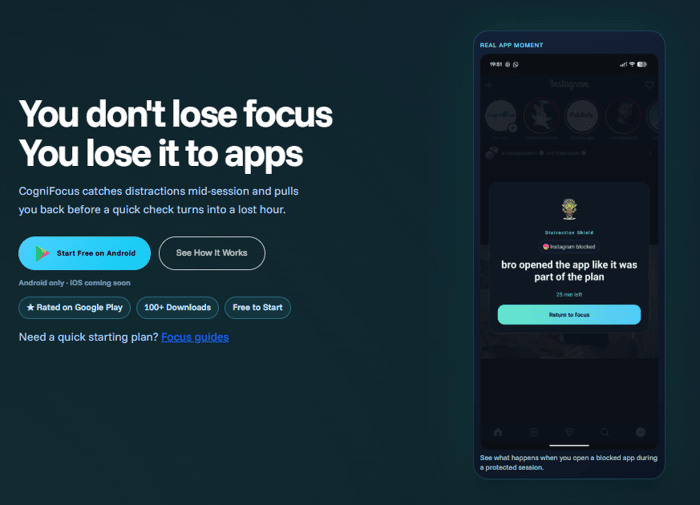
While building CogniFocus, I realized most people don’t consciously decide to stop focusing.
It usually starts with “I’ll check one thing,” and then suddenly 15 minutes disappear. The dangerous part is how automatic it feels. You don’t intentionally quit the session; your brain just slowly drifts away from it.
That changed how I think about focus apps. A timer can track time, but it doesn’t react when your attention starts slipping. So, I started building around interruption recovery and attention protection instead of only counting minutes.
Curious if others experience the same thing too or if it’s just me?

This is a sharper insight than the usual focus-app framing. Most tools treat focus like a timer problem, but what you’re describing is more about interruption recovery: the moment where attention starts leaking before the user fully notices they’ve left the task.
That distinction could make CogniFocus more interesting if you build around the “drift moment,” not just sessions, streaks, or blocked apps. The product would feel less like another Pomodoro tool and more like a lightweight attention protection layer.
One thing I’d watch is the CogniFocus name. It explains the category, but it also sounds close to many cognitive/focus tools. If the product becomes more about recovery, attention support, and mental-state protection, Lyriso.com would give it a softer and more ownable wellness direction.