Why Gamers Are Switching to Dedicated Top-Up Platforms Instead of App Store Purchases
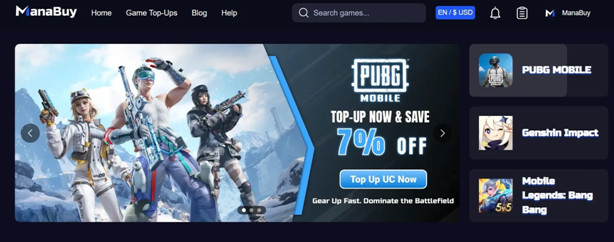
Mobile and PC gaming have become dominated by live-service titles that rely on in-game currencies — Diamonds, UC, Shards, Jade — to unlock everything from cosmetics to battle passes. For years, the default way to buy these currencies was through official app store purchases or a publisher's own payment gateway. But a growing number of players are shifting toward dedicated top-up platforms instead, and the reasons go beyond simple convenience. Services like ManaBuy have built entire businesses around solving the friction points that native purchase flows leave unaddressed.
The Core Problem With Native In-Game Purchases
App store and publisher-native purchase systems work, but they carry a handful of recurring issues that add up over time for active players:
- Regional pricing inconsistencies, where identical currency bundles cost noticeably different amounts depending on your account's registered region
- Limited payment method support, particularly in regions without widespread credit card penetration
- Store processing delays during high-traffic periods, such as major content updates or global events
- App store commission markups, which can quietly inflate prices compared to direct purchasing
- No visibility into bonus promotions until you're already inside a specific storefront's checkout flow
For casual players who top up occasionally, these issues are minor annoyances. But for players who regularly invest in seasonal content, event bundles, and battle passes across multiple titles, the cumulative friction becomes a real cost — both in money and in missed time-limited content.
What a Game Top-Up Platform Actually Does
At its core, a game top-up platform acts as an intermediary that purchases in-game currency in bulk and passes savings and speed on to individual players. Instead of routing every transaction through a single app store's payment infrastructure, these platforms:
- Aggregate multiple payment methods — cards, e-wallets, and regional payment gateways — into a single checkout experience
- Display bundle pricing transparently before you commit to a purchase
- Deliver currency directly to your game account using only your Player ID or UID, without requiring login credentials
- Support a wide range of titles simultaneously, so players juggling multiple live-service games don't need separate accounts or apps for each one
- Process transactions quickly, often within minutes, since the platform isn't bottlenecked by a single storefront's traffic
This model has become particularly popular among players of titles like Mobile Legends: Bang Bang, PUBG Mobile, Honkai: Star Rail, Genshin Impact, and Free Fire, where premium currencies are central to nearly every meaningful in-game purchase.
Security Considerations Worth Understanding
A common concern with third-party top-up services is security, and it's a valid one worth addressing directly. Legitimate platforms never ask for your account password or login credentials. Instead, they rely exclusively on the public identifiers your game already displays — a Player ID, UID, or Zone ID — to route currency directly to your account through the game's own official server-side systems.
Before using any top-up platform, it's worth checking for:
- Clear, itemized pricing with no hidden fees revealed only at checkout
- A support channel that responds to delivery issues in a reasonable timeframe
- No requirement to install unfamiliar software or browser extensions
- Positive, verifiable player feedback across multiple sources rather than only testimonials on the platform's own site
Why This Model Is Gaining Traction
The rise of platforms built specifically around multi-game top-ups reflects a broader shift in how players manage their gaming spend. Rather than treating each title's currency purchase as an isolated transaction locked inside that game's own storefront, players increasingly want a single, consistent purchasing experience across their entire game library — one with transparent pricing, fast delivery, and support for payment methods that actually work in their region.
This is especially relevant for players outside markets with strong app store payment infrastructure, where regional pricing and limited payment options have historically made native purchases more expensive or, in some cases, entirely inaccessible.
Final Thoughts
As live-service games continue to dominate mobile and PC gaming, the way players purchase in-game currency matters more than ever. Dedicated top-up platforms address real friction points — pricing transparency, payment flexibility, and delivery speed — that official storefronts haven't fully solved. For players managing currency across several titles at once, consolidating top-ups through a single trusted platform increasingly makes more sense than navigating a different payment flow for every game.
FAQ
Are game top-up platforms safe to use? Reputable platforms only require your in-game Player ID or UID, never your account password, making them safe when that distinction is respected.
Why are prices sometimes different between a top-up platform and the official app store? Platforms often avoid app store commission markups and regional pricing inconsistencies, which can result in more competitive pricing.
Do top-up platforms support multiple games? Many do, allowing players to manage currency purchases for several titles through a single service instead of separate app store transactions per game.
How long does delivery typically take? Most transactions complete within a few minutes, though this can vary slightly depending on the specific game and server load.
What information do I need to provide to complete a top-up? Typically just your Player ID, UID, or Zone ID — whatever identifier the specific game uses to locate your account.
