Why Granular Categorization is the Secret to Real Productivity (and How Oria Masters It)
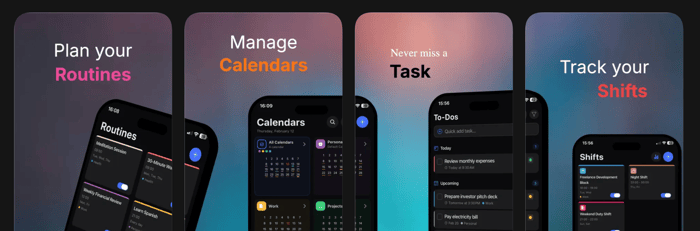
As founders and makers, our lives aren't just one linear path. We juggle side projects, main hustles, fitness routines, shifts, and personal habits. The problem with most calendar apps? They either force everything into one messy view or keep things so separated that you lose the big picture.
I built Oria to solve this "calendar chaos" by providing a luxury we often overlook: Granular Control with Unified Visibility.
The Problem: The "Everything Everywhere" Mess
When you put your gym routine, your deep-work coding sessions, and your retail shifts into a single calendar without proper boundaries, your brain treats them as a wall of noise. Context switching becomes harder because the visual hierarchy is missing.
The Oria Solution: Topic-Based Calendars
Oria allows you to create dedicated calendars for every specific part of your life.
- Customization per Topic: You can tailor each calendar to fit the nature of the tasks within it.
- Targeted Assignments: Whether it’s a recurring routine, a one-off event, or a complex work shift, you can assign it exactly where it belongs. No more "work" tasks bleeding into "personal" space unless you want them to.
The Luxury of the Unified Timeline
The real magic happens in the Unified Timeline. While your data is meticulously categorized behind the scenes, Oria brings it all together into a clean, minimalist flow.
You get the best of both worlds:
- Deep Detail: The ability to categorize your time down to the smallest detail.
- Simple Management: Seeing the entire flow of your day in one simple, elegant interface.
Managing your time shouldn't feel like a chore. It should feel like a well-orchestrated symphony where you are the conductor. By separating the "noise" into topical calendars and viewing the "music" in a single timeline, you regain mental clarity.
If you’re tired of rigid scheduling and want a more fluid, categorized way to manage your life, check out Oria on the App Store.
I'd love to hear how you guys handle the balance between detailed tracking and simple overviews!

The core tension you are describing - granular separation vs. unified visibility - is actually the exact same problem that shows up at the operational layer for solopreneurs, not just the calendar layer.
Clients live in one tool, projects in another, tasks in a third, revenue in a spreadsheet. Everything is 'granularly categorized' in the worst way - separated without any connection.
I have been building a Solopreneur Notion OS that applies this same principle to databases instead of calendars: 6 linked databases (clients, projects, tasks, revenue, decisions, weekly review) that are each their own domain but connected through relations. The unified view is a master dashboard that pulls across all of them. Same philosophy - separate the categories, unify the view.
I'm curious about your target user. Oria looks like it handles irregular shift workers really well. Do you find solopreneurs (who set their own unstructured hours) use it differently than someone juggling work shifts and personal routines?