Why I Bet on Sugarcane When Everyone Told Me to Play It Safe
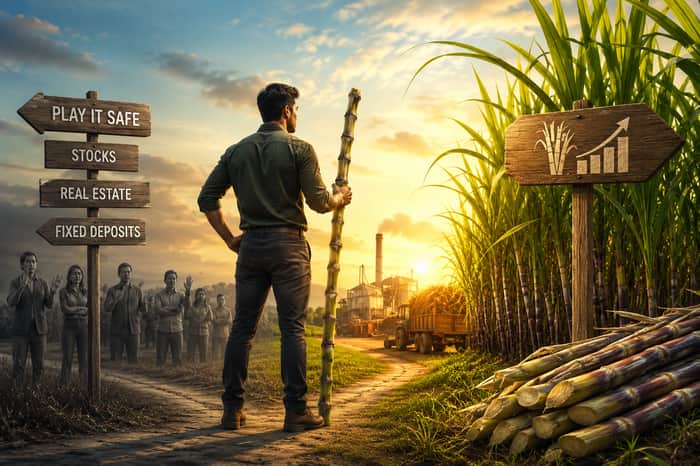
When most people think about farming decisions, they assume it’s simple:
Pick a crop. Grow it. Sell it.
But in reality, every crop is a bet.
A bet on weather, market prices, soil condition, and time.
When I chose to focus on sugarcane, it wasn’t the obvious choice. Many advised against it—too long, too risky, too dependent on external factors.
But over time, I realized something important:
Some crops don’t just give you yield—they give you stability, if you understand them right.
1. The Problem With Short-Term Crops
Earlier, I leaned toward crops with quicker returns.
They felt safer:
- Faster harvest
- Faster money
- Less waiting
But the hidden downside was:
- Constant replanting
- Higher labor frequency
- More frequent input costs
- Unpredictable income cycles
It felt like I was always starting from zero.
That’s exhausting—both financially and mentally.
2. Sugarcane Is a Long Game
Sugarcane forced me to slow down.
Unlike short-duration crops:
- It takes longer to mature
- It requires planning ahead
- You don’t see immediate returns
At first, this felt uncomfortable.
But then I noticed something different:
Once established, sugarcane provides:
- Consistent growth over time
- Predictable harvesting cycles
- Better planning visibility
It shifted my mindset from:
“What will I earn this season?”
To:
“What system am I building over time?”
3. It Creates Multiple Value Streams
One thing that surprised me about sugarcane was how versatile it is.
It’s not just about selling raw produce.
There are multiple outputs:
- Direct supply to mills
- By-products like bagasse and molasses
- Potential for value-added products
This creates flexibility.
Instead of depending on one income source, you start seeing layers of opportunity.
And in farming, diversification reduces risk.
4. Soil and Resource Efficiency Matters More Than You Think
Sugarcane also changed how I looked at resource usage.
Yes, it requires water and care—but when managed properly:
- It makes efficient use of land over a longer period
- Reduces frequent soil disturbance (compared to repeated short crops)
- Allows better planning of irrigation and inputs
Combined with practices like crop rotation and organic inputs, it becomes part of a larger sustainable system, not just a standalone crop.
5. The Risk Is Real—But So Is the Control
Let’s be honest—sugarcane is not risk-free.
There are challenges:
- Market dependency
- Weather impact
- Price fluctuations
But here’s what I learned:
Risk doesn’t disappear by choosing “safe” crops.
It just changes form.
With sugarcane, the key is:
- Planning cycles properly
- Managing inputs carefully
- Understanding your local conditions
Once you do that, the unpredictability becomes manageable.
What Changed for Me
After working with sugarcane more intentionally:
- My income cycles became more predictable
- Planning improved across seasons
- I started thinking in systems, not just crops
- Farming felt less reactive and more structured
It wasn’t about one crop being better than another.
It was about choosing a crop that aligns with how you want to farm.
Every farmer eventually faces this question:
Do I optimize for speed, or do I build for stability?
Sugarcane pushed me toward stability.
It taught me patience, planning, and long-term thinking—things that don’t show up immediately in numbers, but matter over time.
And sometimes, the decisions that look risky in the beginning are the ones that bring the most clarity later.
If you want a more detailed understanding of sugarcane farming, its benefits, and how to approach it practically, I’ve explained it in depth here:
Sugarcane Farming & Its Benefits
This covers the full picture—from basics to real-world application.
