Why I Fired My First Customer and What It Taught Me About Focus
I know this sounds weird, but yeah — I actually fired my first customer.
When you're just starting out, landing your first customer feels like hitting gold. You’ve got validation, a tiny trickle of income, and a story to tell. That’s why firing my very first paying customer felt like a wild and scary decision at the time.
But it turned out to be one of the best decisions I’ve made.
Let me tell you why — and what it taught me about focus, boundaries, and building something sustainable.
How It All Started: My First Customer
I was in the early stages of building a SaaS app using a no-code platform. Nothing fancy, just trying to solve a real problem with a simple internal tool. I’d been tinkering with ideas, testing workflows, and slowly shaping a product that could actually help people.
Then, someone from a small business reached out. They needed a custom app to manage their internal operations. It felt like a perfect match. They seemed excited. I was excited. And hey — a paying customer!
This was the first time someone was willing to pay for something I built. I didn’t even think twice. I said yes. I was ready to go all in.
Things Started Getting Messy
Within a week, the excitement started to fade.
Here’s what started happening:
-
Constant change requests: “Can we add this feature?” “What if this screen looked different?” “Can we connect this to XYZ tool?”
-
No clear requirements: Every week the scope changed. It felt like building a plane while flying it.
-
Time sinks: I was spending hours on calls, tweaks, and troubleshooting — and not building anything scalable.
-
No boundaries: I hadn’t set clear expectations. They assumed I’d be available round-the-clock.
At first, I thought — this is just how customers are. Maybe I need to “over-deliver” to keep them happy. So I kept adjusting, bending over backward, and trying to please.
But deep down, I knew something was off.
The Breaking Point
One day, they asked me to completely redesign the app to suit a new process they were trying out.
It had nothing to do with the original idea we discussed. I realized I was no longer building my product. I was basically freelancing — but for peanuts, and without clear scope or end in sight.
That was my wake-up call.
I wasn’t building a SaaS business anymore. I was building their custom solution… on my time, with my energy, and without any real long-term value for myself.
So I took a deep breath, sent a polite email, and ended the engagement.
It wasn’t easy. I was worried I’d made a mistake. What if no one else wanted to pay me? What if I’d just burned my only shot?
But the relief I felt afterward told me I did the right thing.
What I Learned (The Hard Way)
Looking back, here are the biggest lessons I learned:
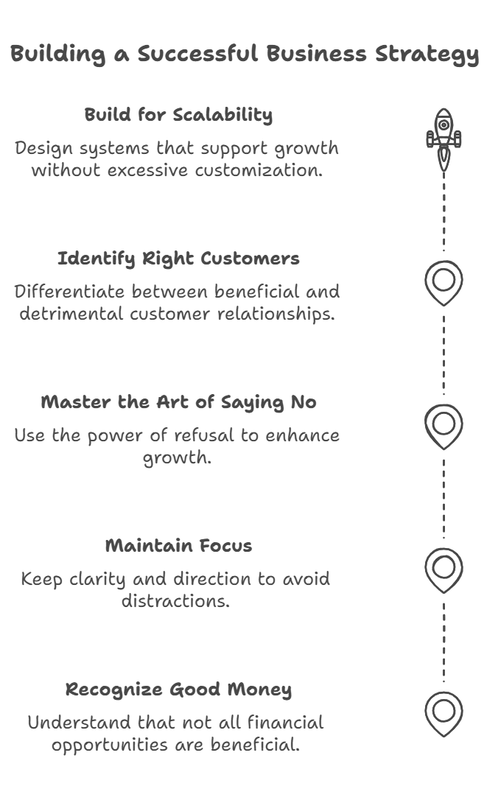
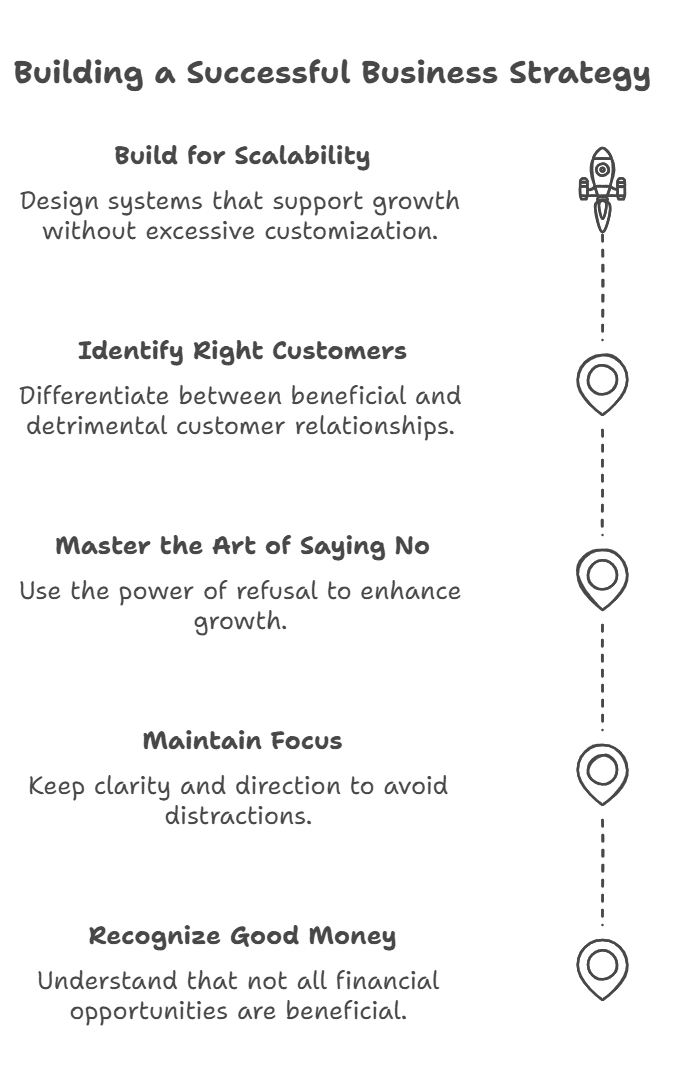
1. Not all money is good money
Just because someone’s paying you doesn’t mean it’s a good deal. That first customer took way more than they gave — in time, energy, and focus.
2. Focus is everything
Early-stage products need clarity. Every distraction slows you down. That customer pulled me in five directions before I even had product-market fit.
3. It’s okay to say no
As a founder, saying no is a superpower. I used to think saying yes meant growth. But honestly, saying no helped me grow faster.
4. You need the right customers
There’s a big difference between customers who use your product and those who want to reshape it for their own use case. The former help you grow; the latter burn you out.
5. Build for scalability, not customization
Unless you’re deliberately building a service business, heavy customization will kill your momentum. Focus on reusable components and repeatable features.
What Happened After That
After I let go of that customer, things changed fast.
I had more time to refine the core product. I focused on solving one specific problem really well — and that made it easier to communicate value to future customers.
Eventually, I started getting interest from people who actually wanted what I was building, not what they could make it into.
Subtle mention here — building apps using a no-code platform (I used Fuzen.io, by the way) allowed me to iterate fast, experiment, and test ideas quickly without going back to code each time. That flexibility helped me a lot in the early stages.
Why Founders Struggle With Focus (And How to Avoid It)
If you’re in the early stages, you’ve probably heard this advice: focus, niche down, stay lean — but it’s hard to do when you’re hungry for growth.
And I get it. Early-stage founders often say yes to anything that looks like traction.
But here’s something to remember:
A misaligned customer will cost you more than no customer at all.
In fact, according to a First Round Capital study, startups that focused on a narrower niche in their early days grew 2x faster than those trying to serve everyone.
More focus = faster validation, clearer messaging, and a better product.
How I Stay Focused Now
Since then, I’ve made a few simple changes:
-
I define my ideal customer clearly — and stick to that.
-
I qualify leads before saying yes.
-
I set boundaries and expectations up front.
-
I avoid one-off custom features unless they align with my product roadmap.
-
I use fast, modular tools (like no-code platforms) to prototype and test ideas without going off track.
Honestly, just saying “no” more often has helped me say “yes” to the right things.
Final Thoughts
Firing my first customer felt like a failure at the time — but now, I see it as a milestone.
It forced me to get clear about what I was building, who I was building it for, and how I wanted to grow.
So if you’re feeling stuck, pulled in too many directions, or just uneasy about a customer relationship — it’s okay to pause and ask: Is this helping me grow or just keeping me busy?
Sometimes, growth begins with subtraction.
Let’s Talk
I’m curious — have you ever fired a customer or walked away from a deal that didn’t feel right? How did you handle it?
Would love to hear your stories.
Happy building 🚀
LinkedIn - https://www.linkedin.com/in/girishgilda/
X- https://x.com/GirishGilda99

This is a fantastic read! It really highlights an important lesson—focus is everything in the early stages of building a business. Saying “no” to misaligned customers can actually accelerate growth rather than slow it down.
I especially love the takeaway: “A misaligned customer will cost you more than no customer at all.” So true!
For anyone starting a SaaS, this is a must-read. Thanks for sharing your experience, Girish! 🚀
thanks a lot for sharing this, as a founder with no users yet (still setting up the MVP) it is very refreshing to hearing that perspective. Especially during the brand building phase we do not want to lose our vision or create a customer base that is not fitting our "vibe". Also helps to keep the mental health up during this stressful time to know you have customers you have common ground with..
So here is my story from a few years back. At the time, I was running a small but growing SaaS business. Like many founders, I believed that every customer mattered and that success meant keeping them all happy. But then came John—the customer who changed my perspective forever.
John signed up for our service and, within hours, started bombarding our support team with emails. At first, it seemed like he was just an engaged user, but soon, his messages took a different tone.
He demanded custom features that no one else needed.
He expected instant responses at all hours of the day.
He frequently threatened to leave if we didn’t prioritize his requests.
At first, we tried to accommodate. After all, customers are the lifeblood of any business, right? But as time went on, supporting John became a full-time job.
One evening, John sent a particularly aggressive email. He was furious that we hadn't built a custom workflow just for him, despite the fact that he was on our lowest-tier plan. His email ended with, “If you don’t fix this by tomorrow, I’ll leave—and I’ll make sure everyone knows how terrible your company is.”
That was it. I realized that keeping John wasn’t worth it.
Just yesterday had this experience, although it wasnt my first customer, but it was my biggest.
He was about 50% of my MRR, and kept asking for features which didnt suit my ICP.
I spent over a month building out a big feature he really wanted to replace one of his other apps in his workflow.
After delivering the feature he went great! Now lets be business partners, give me 6% of all future revenue and I will keep paying you $500 per month….
I fired his ass so fast.
Lets all protect our focus and not become freelancers for pennies lol.