Why I stopped using Google Analytics (and what I built instead)
I want to be clear: Google Analytics is an incredible product. The engineering behind GA4 is genuinely impressive. This isn’t a rant.
But I stopped using it. And here’s what happened.
As a solo founder, I spent more time configuring GA4 than actually learning from it. Custom dimensions, conversion events, attribution models, it all requires real expertise. Every time I opened it, I felt like I needed a certification just to find what I was looking for. So I opened it less and less. Maybe once a month. And a dashboard you check once a month is basically useless.
Then there was the fragmentation. GA4 doesn’t do heatmaps. It doesn’t do session replay. So I was paying for Hotjar alongside it. Two tools. Two dashboards. Two JavaScript snippets on my site. And zero connection between them. I could see traffic go up in GA4 and someone rage-click on my pricing page in Hotjar but connecting those dots required manual work I rarely did.
And then the privacy issue surprised me. I added a cookie consent banner and my analytics data immediately became unreliable. Around 40% of my European visitors rejected cookies. That meant 40% of my traffic was simply invisible. I was making decisions based on data that systematically excluded a huge chunk of my audience.
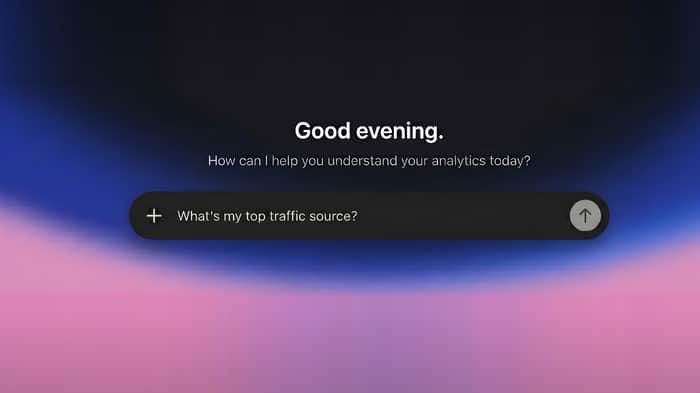
So I built Zenovay. One dashboard with traffic analytics, heatmaps, session replay, AI insights where you can literally ask questions about your traffic in plain English, error logs, uptime monitoring, conversion funnels, team collaboration with SSO, and white-label support for agencies.
No cookies. No consent banner required. You actually see all your visitors instead of just the 60% who click “accept.”
The takeaway isn’t necessarily “ditch GA4.” It’s this: if you open your analytics tool and feel overwhelmed, the tool is wrong for you regardless of how powerful it is. Your analytics should answer questions, not create them.
If any of this resonates, I’d genuinely love feedback from this community. Still early and improving every day.

The "Ask AI" feature is the most interesting part of this to me. I've been building natural language interfaces for databases and the moment you let users type questions instead of navigating menus, engagement goes way up.
One thing I've learned: the questions users think they want to ask and the questions they actually ask are very different. Early on, I expected complex analytical queries. In reality, 70% of questions are simple: "how many X happened last week?" — and that's fine, because the value isn't in complexity, it's in speed.
Have you noticed any patterns in what users are asking through the AI feature? That could inform which default dashboards to show.
That's a great insight and matches what I'm betting on. Most people don't want to build custom reports, they want to ask "where did my signups come from last Tuesday?" and get an answer in 5 seconds.
Honest answer on patterns: too early to have real data on this yet. But from building and testing it myself, I'd guess you're right that most queries will be simple time-based questions. The interesting ones will probably be attribution questions like "which channel brought my last 10 paying customers" because that's what nobody can answer easily today.
Your point about default dashboards is smart. I've been thinking about it the other way around though, start with a general dashboard, then let the AI queries reveal what people actually care about, and surface those as prebuilt views. Let usage data design the product.
In the NLI work you've done, did users' questions get more sophisticated over time or did they mostly stick to the simple ones?
Great question. From what I've seen, users mostly stick to simple questions but they get faster at asking them — less hesitation, more specific. The sophistication comes not from the query complexity but from the follow-up: "how many signups last week?" → "ok, which channel?" → "what was the conversion rate from that channel?"
That chain is where the real value is. If your AI can handle multi-turn context well, users naturally go deeper without needing to learn SQL or build dashboards.
Your idea of letting usage data design the product is really smart. It's essentially using the AI as a product research tool at the same time — you're learning what metrics matter to each user by watching what they ask.
That follow-up chain insight is gold. You're right, the sophistication isn't in the first question, it's in the second and third.
That actually changes how I think about the AI chat UX. Instead of optimizing for complex single queries, I should be optimizing for fast follow-ups. Maybe even suggesting the natural next question after each answer. "Your signups came mostly from Twitter this week" followed by "Want to see the conversion rate for Twitter traffic?"
And yeah, using the AI as a product research tool is something I'm already seeing. The questions people ask tell you exactly what dashboard widgets to build. It's like a built-in user research engine that runs itself.
Really appreciate this exchange, genuinely useful stuff.
The part about opening GA4 once a month and it being basically useless — felt that. We launched a week ago and set up GA4 with custom events, UTM tracking, the whole thing. When we finally checked it to understand why our paid traffic wasn't converting, it took longer to find the right report than to actually read the data. A tool you avoid using isn't really helping you make better decisions. Interesting project, will check it out.
That’s exactly the problem. You set everything up correctly, UTM tracking, custom events, the whole setup, and then when you actually need an answer it takes 20 minutes just to navigate to the right report. The tool becomes a chore instead of a shortcut. That’s why I built the Ask AI feature into Zenovay. You literally type “why isn’t my paid traffic converting” and it pulls the answer directly from your data. No digging through 14 menus. No hunting for the right report. Hope you find it useful. Let me know what you think after checking it out.