Why Partnership Breaks Matter in Live Cricket Betting
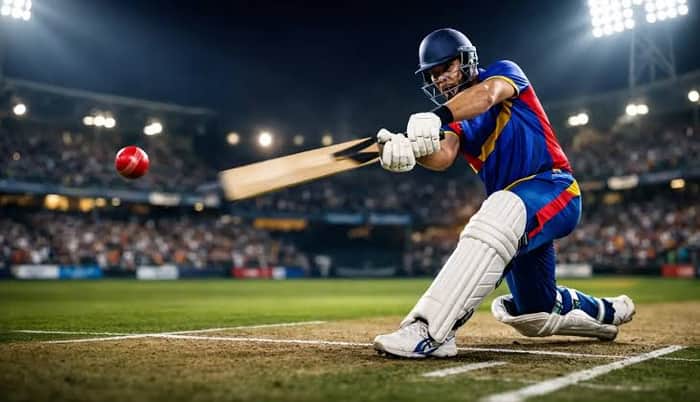
Partnerships are central to cricket because batting is not simply an individual activity. Two players at the crease must manage strike rotation, scoring opportunities, communication, and risk together. When a partnership ends, the dynamics of an innings can change significantly.
For live cricket bettors, partnership breaks can therefore become important moments. A wicket ending a long partnership may alter expectations around the team's score, batting stability, and match result.
However, the effect is never automatic. The importance of a partnership break depends on the players involved, the match situation, and how much time remains.
What Makes a Partnership Important?
A partnership can provide stability during an innings.
Two batters may combine different strengths. One might attack while the other rotates the strike. Another partnership might focus on rebuilding after early wickets.
Partnerships can therefore serve several purposes:
Rebuilding an innings
Increasing the scoring rate
Protecting wickets
Creating pressure on bowlers
Establishing control
Preparing for a final scoring push
Breaking such a partnership can change the team's tactical position.
Why Long Partnerships Attract Attention:
A long partnership often indicates that the batting team has established some control.
The longer two batters remain together, the more comfortable they may become with the pitch and bowling attack.
If the partnership ends after a significant contribution, the incoming batter must establish a new relationship at the crease.
This transition can influence live expectations.
Partnership Breaks in T20 Cricket:
T20 cricket makes partnership breaks particularly important because time is limited.
If two batters are scoring quickly and building momentum, their dismissal can immediately affect the innings.
For example, losing a set batter during the final five overs may reduce boundary hitting potential. Conversely, an early partnership break may have plenty of time for the team to recover.
The timing is therefore essential.
Partnership Breaks in ODI Cricket:
In ODIs, partnerships can develop over longer periods.
A team may use the middle overs to rebuild before accelerating during the final ten overs.
If a key partnership breaks during the rebuilding phase, the team may need to reassess its approach.
A new batter may initially prioritise survival before increasing the scoring rate.
Partnership Breaks in Test Cricket:
Test cricket offers an even broader perspective.
A partnership can last for several hours and significantly change the state of a match.
Breaking a major partnership can give the bowling team renewed confidence, particularly when the pitch or ball conditions favour them.
However, another partnership can begin immediately, making it difficult to predict the long term effect.
Why the Players Matter:
Not all partnerships have equal value.
A partnership between two recognised top order batters may carry more importance than one involving a tail end batter.
Similarly, the dismissal of a batter who has been scoring at a high rate can have a different impact from the dismissal of a batter playing a defensive role.
Live markets may account for these differences.
The New Batter Can Change the Match:
When a partnership ends, a new player arrives.
That player may have:
Strong power hitting
Defensive technique
Limited experience
Excellent strike rotation
Specialist skills against spin
Strength against pace
The identity of the incoming batter can therefore influence expectations.
Required Run Rate and Partnership Breaks:
In a chase, the required run rate adds another layer.
A team needing runs quickly may struggle if an established partnership ends.
If only a few overs remain, the incoming batter may have little time to settle.
However, a powerful finisher entering at the right moment can sometimes reverse the situation.
Partnership Momentum Is Difficult to Measure:
Momentum is often discussed in cricket, but it should not be treated as a precise measurement.
A long partnership may indicate good batting conditions, strong execution, or a weakness in the bowling attack.
Breaking it can therefore change the psychological and tactical balance.
Yet another team can quickly regain control with a few boundaries or wickets.
Live Betting Markets and Partnership Events:
Depending on the platform and event, live markets can include options relating to innings totals, player performances, match outcomes, and other match statistics. When comparing different platforms, users may also come across services such as Radhe Exchange Official when exploring cricket betting options and related market features.
When a major partnership breaks, prices across several markets may change.
The important point is that these changes reflect the new match situation rather than guaranteeing what happens next.
Why Bettors Should Avoid Emotional Reactions:
A partnership break can create a dramatic moment, especially when a batter is dismissed after scoring heavily.
It can be tempting to assume the batting team will immediately collapse.
But cricket frequently produces recoveries.
Before interpreting a partnership break, bettors can consider:
Current score
Overs remaining
Wickets available
Incoming batter
Required run rate
Pitch conditions
Bowling attack
Frequently Asked Questions:
Why are partnership breaks important in cricket?
They can change batting stability, scoring momentum, and the tactical approach of the innings.
Do partnership breaks always favour the bowling team?
Not necessarily. The incoming batter may be capable of scoring quickly or rebuilding the innings.
Are partnership breaks more important in T20 cricket?
They can be because T20 teams have limited overs to recover, although the significance depends on the exact match situation.
Can a new partnership change live betting expectations?
Yes. A strong new partnership can improve the batting team's position and alter expectations.
Conclusion:
Partnership breaks can be important turning points in live cricket because they disrupt established batting combinations and force teams to adjust their strategy. Their impact depends on timing, player quality, score, remaining wickets, and the demands of the match.
For anyone following live cricket betting markets, understanding partnership dynamics provides useful context. However, no individual event should be treated as a guaranteed prediction. Cricket remains unpredictable, and responsible decision making is essential.
