Why Postgraduate and Professional Courses Are Becoming Essential for Career Growth
When I talk with founders, entrepreneurs, or even early-career professionals, one theme keeps coming up: how do we stay relevant in such a fast-moving world?
Technology is shifting industries, AI is rewriting job descriptions, and career paths are no longer linear. A bachelor’s degree used to be enough — now it’s just the starting point. That’s where postgraduate and professional courses come in.
Beyond the Basics: Why Postgraduate Study Matters
Pursuing postgraduate education isn’t just about adding more letters after your name. It’s about:
Depth of knowledge: going further into a field that matters to you.
Career resilience: giving yourself the flexibility to adapt to changes.
Global perspective: opening doors to opportunities beyond your home market.
Employers today want more than technical know-how — they’re looking for people who can think critically, innovate, and lead in uncertain times.
Professional Courses: Practical Upskilling for Busy People
Not everyone has the time (or the budget) for a full master’s or MBA right away. Professional courses are a game-changer here. They’re:
Shorter, focused, and industry-relevant.
Built to upskill without career disruption.
Often interdisciplinary, which matches the reality of today’s work challenges.
I’ve seen professionals use these courses to pivot industries, accelerate promotions, or simply stay sharp in competitive markets.
Why Interdisciplinary Learning Is the Future
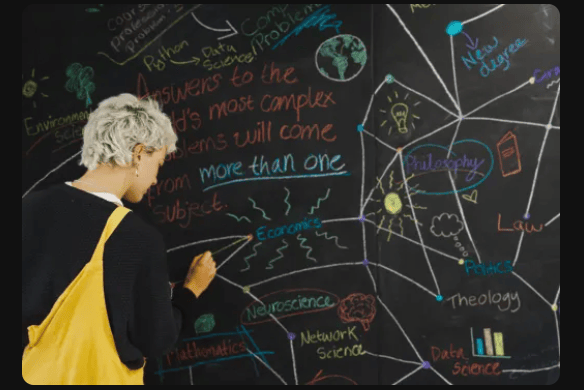
The biggest problems of our time — climate change, digital ethics, social inequality — can’t be solved by one discipline alone. That’s why universities and innovators are moving towards interdisciplinary learning.
Institutions like LIS
are leading the way by designing programmes that merge disciplines, encouraging students to tackle challenges from multiple perspectives. This isn’t just an academic trend — it’s exactly what employers are asking for.
The Career Edge You Can’t Ignore
If you’re serious about long-term growth, postgraduate and professional study is less of an option and more of a career strategy. It helps you:
Build resilience against industry shifts.
Expand your professional network.
Develop leadership and problem-solving skills that stand out in a crowded market.
In short: investing in your learning is investing in your future.
Final Thought
The most successful professionals I’ve met share one trait — they never stop learning. Whether it’s a full postgraduate programme, an MBA, or a targeted professional course, the key is to keep evolving.
The world isn’t slowing down. And if you want to build a career (or company) that lasts, education is the tool that keeps you ahead of the curve.

Your point about practical upskilling really resonates
I've been taking online sterile processing classes https://www.steriletechprograms.com/online-programs/ to gain hands-on healthcare credentials without disrupting my job. They're a perfect example of affordable, focused training that directly boosts career resilience
The flexibility made it easy to fit around my schedule, and the material is immediately applicable