Why Remote Teams Stop Talking (And Don't Even Notice It)
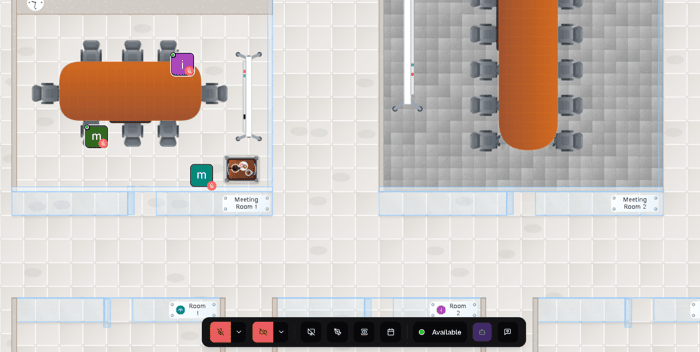
Most leaders think remote teams have a communication problem.
I don't think that's true.
Most remote teams communicate all day.
Slack messages.
Emails.
Video meetings.
Comments on documents.
The real problem is something much smaller—but much more important.
They've lost awareness.
In a physical office, you constantly absorb information without trying.
You notice who's focused.
Who's available.
Who's discussing an idea.
Who's taking a break.
Those tiny observations help people choose the right moment to ask a question, brainstorm an idea, or offer help.
None of this requires a meeting.
It just happens.
Remote work removed that layer.
Now every conversation begins with uncertainty.
"Are they busy?"
"Should I wait?"
"I'll ask tomorrow."
Multiply those small hesitations across an entire team, every single day, and collaboration slowly fades.
This is why many companies feel less connected even though they're sending more messages than ever before.
The answer isn't adding another chat tool.
It's restoring shared presence.
When people feel like they're working alongside each other—even from different cities—they naturally communicate more, interrupt less, and collaborate faster.
Technology shouldn't just connect devices.
It should help people feel connected.
That's exactly the idea behind RovaSpace.
We're building a virtual workspace that recreates the awareness of a shared office, helping remote teams communicate more naturally without adding more meetings or notifications.
I'd love to hear your thoughts.
What's one thing your team misses most about working in the same office?

Why can't this issue be simply solved by using the chat status features in communication software, such as setting statuses like online, busy, or away? Isn't this making a simple requirement unnecessarily complicated?
That’s a fair question — and on the surface, status indicators do look like they should solve it.
The issue is that “online / busy / away” is too coarse to represent what’s actually happening in a team.
For example:
“Online” doesn’t tell you if someone is deep in focus or open to a quick question
“Busy” doesn’t tell you if it’s a 5-minute interruption or a 3-hour block
People also tend to ignore or forget updating statuses, so trust in them drops quickly
What ends up happening is teams still default to hesitation or interruption, just with an extra step in between.
RovaSpace is trying to go a bit further than status — it creates a shared virtual office where presence feels more natural and expressive. Instead of just a label, teammates get lightweight signals, spatial awareness, and social cues (like reactions/emotes) that make collaboration feel more human.
The goal isn’t to complicate status. It’s to make presence understandable and enjoyable, so people don’t have to guess whether it’s a good time to talk — they just naturally know.
Happy teams also tend to communicate more fluidly when presence feels less mechanical and more social — that’s the direction we’re exploring.
I like the way you've framed this. The hesitation before messaging someone is real, especially when you can't tell if they're deep in work or free for a quick chat. Curious, how do you balance creating that sense of presence without making people feel like they always have to be "visible"?
That's exactly the challenge we spent the most time thinking about.
For me, "presence" shouldn't mean "everyone is watching you." It should simply answer one question: Is this a good moment to talk?
In RovaSpace, the goal isn't activity tracking or productivity scoring. It's giving teammates the same social signals you naturally have in a physical office—whether someone is available, focused, in a meeting, or already chatting with someone else.
If you're heads-down, people naturally wait. If you're available, conversations happen without the hesitation loop. We want visibility without pressure, so people can focus when they need to and collaborate when it makes sense.
I'd love for you to try it with your team. I'm currently offering a free one-month trial for early teams, and I'd really value your feedback.
Thanks, I appreciate the invite! I'll definitely take a look at it.
One thing I'm curious about though, after speaking with remote teams, what's the biggest operational challenge they usually bring up besides communication?
Thanks! One pattern I keep hearing is that it's not the communication tools themselves that are the problem—it's the lack of shared awareness.
Teams already have Slack, Zoom, and project management tools. The challenge is knowing who's available, who's deep in focus, or whether it's a good time to ask a quick question. Without those everyday social cues, people hesitate, conversations become scheduled, and decisions take longer than they need to.
Another common issue is onboarding. New team members often struggle to build relationships because they miss out on the casual interactions that naturally happen in a physical office.
Those conversations are what led me to build RovaSpace. The goal isn't to replace the tools teams already use, but to restore that sense of presence that makes collaboration feel more natural. I'm still learning from every team that tries it, so it's been really interesting to see the same themes come up across different companies.
"The 'hesitation loop' is such a brutal reality of remote work. People stay silent just because they don't want to interrupt. The biggest challenge in this 'presence' space is keeping it frictionless so it doesn't feel like a chore or surveillance. How is RovaSpace making sure that shared presence feels effortless for the team?"
I completely agree—the moment it feels like "work" to maintain your presence, people stop using it.
Our approach with RovaSpace is to make presence a byproduct of working together instead of something you constantly update. The idea is that teammates should be able to glance at the virtual office and immediately understand who's around, who's focused, who's in a conversation, and who can be interrupted.
We're intentionally avoiding metrics, rankings, or anything that feels like surveillance. The goal is reducing friction, not measuring people.
If you're interested, I'd love to hear what you think after trying it with your own team. I'm giving early-stage teams a free month because feedback from people actually building remote companies is incredibly valuable.
That makes so much sense! Making presence a byproduct of work rather than an extra task is exactly the sweet spot. Also, love the strict boundary against metrics that's how you actually build trust.
To give you some context, my team and I actually built our own tool called Trackly to solve this exact hesitation loop for our remote team.
So I completely resonate with the problem you're tackling! But what I really like about RovaSpace's angle is the visual/ambient aspect of a virtual office it feels less like a dashboard and more like a shared room.
If you're curious or want to compare notes, I'd also be happy to share more about how we approached this with Trackly.
Really insightful post. I’ve been thinking about this a lot while building Trackly. We’re trying to tackle that exact 'hesitation loop' by automating the context-sharing part, but it's a fine line to walk between being helpful and becoming 'noise'. Do you think teams are ready for tools that focus more on presence than communication, or is the 'surveillance' fear too deeply ingrained?
I think you captured the problem even better than I did.
The issue isn't communication—it's the missing context around communication. In an office, you instinctively know whether to ask a question now or wait 10 minutes. Remote work removed those tiny signals, and over time those small hesitations compound into weaker collaboration.
Your point about spontaneous conversations is also something I believe strongly. Some of the best ideas don't come from scheduled meetings—they happen because two people happen to notice each other at the right moment.
That's exactly why I started building RovaSpace. The goal isn't to replace Slack or Teams, but to recreate enough shared presence that those natural interactions can happen again without making people feel monitored.
If you ever want to test it with your team, I'd be happy to give you a free month. I'd genuinely love to hear how it compares with your current workflow.
I think you nailed the difference between communication and awareness.
I work almost entirely remotely, and I've noticed I don't hesitate because I don't know how to ask someone—I hesitate because I don't know if I'm interrupting them.
In an office, you can glance over and instantly know whether someone's deep in thought, available for a quick question, or already talking with someone else. Online, that context disappears, so a 30-second conversation often turns into "I'll just wait until tomorrow."
I've also found that the best ideas usually come from unplanned interactions, not scheduled meetings. Those are much harder to recreate remotely.
It'll be interesting to see whether tools like RovaSpace can bring back that sense of shared presence without becoming another app demanding attention. I think that's the balance every remote-work tool has to get right.
I actually like that approach. Keeping the rhythm alive is often more important than the format itself.
What I've noticed, though, is that rituals like async standups help maintain communication, but they don't completely solve awareness. You still don't know whether someone is available right now, so those spontaneous questions often never happen.
That's one of the reasons I built RovaSpace. Instead of creating another check-in, the idea is to recreate the feeling of sharing the same workspace so people naturally interact throughout the day.
If you have a small team, I'd love for you to try it for a month and tell me where it helps—and where it doesn't. That's the kind of feedback that really shapes the product.
The silent drift is real. What makes it dangerous is that nobody notices until something breaks. We started doing a 15-min async standup in Slack every morning just to keep the rhythm. Not for status updates - just to keep the channel warm. Works surprisingly well for a 3-person team.
I like that approach. Keeping the channel "warm" is a great way to prevent teams from drifting apart, especially with a small team.
I think it also highlights an interesting gap. Daily async standups help maintain a rhythm, but they don't fully recreate the feeling of working alongside your teammates throughout the day. You still don't know who's available for a quick question or who's deep in focus, so people often hesitate anyway.
That's exactly why I built RovaSpace. It's designed to bring back that shared sense of presence so conversations happen naturally, not just during scheduled check-ins.
Since your team has only three people, you can actually use RovaSpace for free—our Free plan supports teams of up to 5 members. I'd love to hear what you think if you decide to give it a try.
Hey everyone,
I’m building ResilientRoute AI, a predictive routing infrastructure application designed to solve complex supply chain bottlenecks.
What I bring: I have completely mapped out the market validation, the commercial angle, and I have already built a live, fully interactive frontend prototype completely solo and on a $0 budget.
What I’m looking for: A technical equal/peer who loves logistics, complex data pipelines, or machine learning algorithms. You will own the backend architecture from scratch.
The Split: Straight 50/50 equity. I am broke, capital is zero, but the hustle is real. I need a true builder, not an employee.
If you want to check out the frontend prototype and talk math, comment below or send me a DM!
The "death by a thousand cuts" pattern is so true. We had the same drift problem—fixed it by replacing 80% of async updates with a single weekly 30-min written standup (not a call). Async voice memos also work great for non-native speakers. Curious if your team has tried forcing 1 synchronous creative session/week—it is the only thing that rebuilds trust muscle when it atrophies.
That's a really interesting approach. I can definitely see how a weekly written standup and async voice memos would reduce noise while keeping everyone aligned.
I also agree that regular synchronous sessions help rebuild trust—they create space for the kinds of conversations that rarely happen asynchronously.
The problem I'm trying to solve sits a bit earlier in the workflow. Even between those sessions, there are dozens of moments where someone hesitates because they don't know if it's the right time to reach out or who they should involve. Those tiny decisions add up over time.
I see practices like the ones you mentioned and RovaSpace as complementary rather than competing. Good team habits are essential—I just want to make the time between them feel more like working alongside your teammates instead of working in isolation.
Have you found that the sense of connection lasts throughout the week after those creative sessions, or does it gradually fade until the next one?
I ran a company across six continents for almost 20 years, and what remote teams actually lose isn't awareness, it's the cheap, low-stakes moments where trust gets built without an agenda. Recreating presence helps, but the teams that stayed tight made status explicit (what I'm on, when I'm heads-down) instead of expecting people to infer it. The trap with any virtual office is it can start to feel like surveillance, so the design has to make people feel seen, not watched.
That's a really valuable perspective, especially after managing teams across six continents.
I actually think trust and awareness reinforce each other. Those low-stakes interactions are where trust grows, but they happen more naturally when people have enough shared context to know when to start a conversation in the first place.
I also completely agree about the surveillance risk. That's something I'm very conscious of. The goal isn't to monitor activity or measure productivity—it's to recreate the feeling of working alongside your teammates, where presence is there if you want it, not something that's imposed on you.
I really like how you phrased it: "seen, not watched." That's exactly the balance we're aiming for.
Out of curiosity, what was the biggest thing your teams did to create those low-stakes trust-building moments remotely?
The solo part gets easier as systems replace decisions. The hard part is knowing which decisions are worth systematizing and which you just make once and move on.
I completely agree.
I think one of the biggest mistakes founders make is trying to systematize everything too early. Some decisions only need to be made once, while others happen dozens of times a day and quietly consume everyone's attention.
Those repeated, low-friction decisions are the ones I'm most interested in. In remote teams, questions like "Is this a good time to ask?", "Who's available?", or "Should I interrupt?" happen constantly. Individually they're tiny, but together they have a surprisingly large impact on collaboration.
That's a big part of the thinking behind RovaSpace—reducing the number of small decisions people have to make before they can simply work together.
This really resonates with me. Remote teams don't lack communication, they often lack context. Knowing whether someone is focused, available, or already discussing something used to happen naturally in an office. Curious to see how RovaSpace recreates that sense of shared presence without becoming another source of distraction.
I think that's the key challenge.
If RovaSpace becomes another app demanding attention, then we've failed.
The goal isn't to create more notifications or another communication channel. It's to recreate the subtle awareness that naturally exists in a shared office, so people know when it's the right moment to start a conversation—or when to let someone focus.
Ideally, it reduces interruptions instead of creating them, because people have more context before they reach out.
I'm still learning what the right balance looks like, so I'd love to ask: what would make a tool like this feel helpful to you rather than distracting?
As someone who's worked on remote teams, I think the sweet spot is reducing the need for people to think about the tool itself. The more it depends on manual updates, the less likely people are to use it consistently. If it can surface lightweight context automatically while respecting privacy, I could see it helping teams communicate with fewer interruptions instead of more.
I think that's exactly the challenge.
If people have to constantly update their status or tell the system what they're doing, it quickly becomes another task on their checklist—and those habits rarely last.
My goal is for RovaSpace to make awareness feel as effortless as it does in a physical office. You don't actively announce that you're deep in work or having a quick discussion with a teammate—people naturally pick up on those cues.
The tricky part is finding ways to surface just enough context to be useful while keeping privacy and user control front and center. I think that's the balance that determines whether a tool feels supportive or intrusive.
The "awareness" framing is the right one. The hesitation loop you describe — "are they busy? should I wait?" — isn't just a delayed question. It's a micro-decision to stay silent that compounds invisibly.
In an office, you passively track what people are thinking about, not just whether they're available. Someone at their whiteboard, or reading something intensely, or visibly stuck — that ambient signal tells you when to approach and what kind of conversation to open. Status indicators solve the availability problem but leave the "what are they working on" problem completely untouched.
That drift in mental models is the real cost. By the time a team realizes it's misaligned, it's been drifting for weeks — without anyone having made a single bad decision in isolation.
Curious how RovaSpace handles the "work in progress" visibility side, beyond just presence. Is there a layer for showing what people are actually working on?
I really like how you put it: "the drift in mental models." That's a great way to describe what's happening.
Our first goal is to restore awareness through presence—letting teammates naturally see who's around, where conversations are happening, and making it easy to join them without scheduling another meeting.
For "work in progress," I actually think there's a balance to strike. I don't want people to spend time constantly updating statuses or writing what they're working on. The ideal is that some of that context emerges naturally from being present in the workspace and interacting with teammates, rather than becoming another thing to maintain.
That said, I do think there's room for lightweight signals that add context without creating extra work. We're still exploring what that should look like.
I'm curious—if you could add just one passive signal that would help you understand what your teammates are working on, what would it be?
In my opinion - in a physical office, you can easily spot when a developer is frustrated or staring blankly at a screen, and you instantly know they’re blocked.
Whereas...in a remote setup, they silently wait for tomorrow's standup to surface that they are missing a client asset or SOW clarification.
I worked for a startup in Germany which actually handled virtual workspaces, so RovaSpace makes sense to me.
Recreating that shared context without drowning people in more Slack/Whatsapp/Discord noise is definitely the hardest part of remote scaling.
That's exactly it.
The cost isn't just the delay—it's that nobody realizes help is needed until a scheduled meeting.
In an office, you'd notice someone stuck after a few minutes just from body language or seeing them staring at the same screen. Someone naturally walks over and asks, "Everything okay?"
Remote work removed those spontaneous moments, so even small blockers can sit for hours.
That's the kind of awareness we're trying to bring back with RovaSpace—not more messages, but enough shared presence that people know when it's the right moment to reach out.
Out of curiosity, what did that startup in Germany do well, and what do you think was still missing?
Oh it was advertised as the ‘AirBnB of workspaces’ so the logic was to have ‘seats’ and ‘desks’ with a virtual private key (iLOQ) to ensure security and work performance. My team did the gathering and the product very well along with word of mouth and marketing. We eventually raised around 3 million in seed. What failed the company long term was the fact that they thought small - RovaSpace does exactly what i thought they would eventually do - virtualising the experience and making people feel like office is fun again - no decision fatigue, just pure execution. Kudos.
That's really interesting, especially coming from someone who worked on a product in this space.
I think your point about "thinking small" is important. For me, the goal isn't to recreate an office visually—it's to recreate the natural interactions that make teams work better. If people feel more connected and more aware of each other, the technology almost disappears into the background.
It's fascinating that your team managed to raise that much and still ran into that challenge. If you don't mind me asking, looking back now, what do you think they missed strategically? Was it the product itself, the timing, or the market's understanding of the problem?
The shift from "communication" to "awareness" is what made me stop reading and think. Most remote tools optimize for sending more messages. You're arguing the real loss is all the tiny decisions people make because they can see what's happening around them. If that's true, then the product isn't replacing Slack—it's restoring the invisible context that made offices work in the first place. That's a much more interesting position.
I think you captured it perfectly.
Slack, email, and meetings already solve communication. They're great at delivering information.
What they don't recreate is the ambient awareness that exists in a shared workspace—the ability to glance around, notice who's deep in work, who's available, or when a conversation is happening that you should join.
Those tiny signals influence dozens of decisions every day, and when they disappear, teams compensate by scheduling more meetings or sending more messages.
That's exactly the problem we're trying to solve with RovaSpace. Not replacing the tools teams already use, but restoring the context that made those tools less necessary in the first place.
I'm curious—do you think awareness alone is enough to change team behavior, or do you think something else is still missing from remote work?
That's exactly the implication I was thinking about.
Your reply made me think about one consequence of that distinction that could end up changing how the product gets built, but it's probably too much to unpack properly in a thread.
Happy to explain what I mean if it's useful. What's the best email to reach you on?
Thanks! I'd really appreciate hearing your thoughts.
You can reach me at info@rovaspace.com.
I'm always interested in discussing how remote teams actually work in practice, so feel free to send over whatever was on your mind.
Just sent it over by email.
Whenever you get a chance to read it, I'd be genuinely interested to hear whether it resonates or if you see it differently.