Why Smart Irrigation Systems Need Professional Design to Deliver Real Water Savings
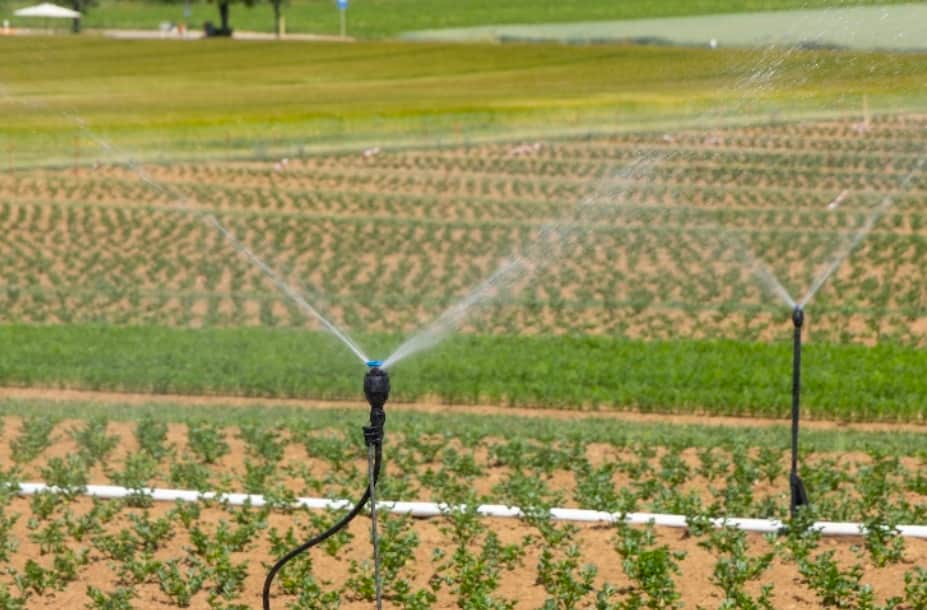
Smart irrigation technology promises to cut outdoor water use by 30% to 50%, and under the right conditions, it delivers exactly that. The problem is that the right conditions are far less common than the marketing suggests. Residential outdoor water use in the United States accounts for nearly 8 billion gallons per day, with the EPA estimating that up to 50% of that water is wasted through overwatering caused by inefficiencies in irrigation methods and systems. Smart irrigation controllers exist precisely to close that gap. But as a peer-reviewed analysis of more than 80 residential smart irrigation studies found, the gap between what controlled research demonstrates and what homeowners actually experience in the field is significant. Controlled studies show average water savings of 50%. Case studies on real residential and commercial landscapes find an average of 30%. The difference is not the technology. It is the design and installation behind it.
What Smart Irrigation Systems Are Actually Designed to Do
A smart irrigation system is not simply a sprinkler on a timer. It is an integrated system that uses real-time data from weather stations, soil moisture sensors, and evapotranspiration models to determine when plants actually need water, and delivers only that amount. WaterSense labeled irrigation controllers, certified under EPA performance standards, use local weather and landscape conditions to adjust watering schedules automatically, eliminating the overwatering that results from preset clock-based schedules set at peak season rates and never adjusted. The EPA estimates that replacing a standard clock-based controller with a certified smart controller can save an average home up to 15,000 gallons of water annually. If every home in the United States with an in-ground sprinkler system did so, the country could save 390 billion gallons per year, equivalent to the annual household water needs of 5 million homes. That potential is real. Realizing it requires more than purchasing the right controller.
Why Technology Alone Is Not Enough
The most authoritative research on smart irrigation performance makes a point that the industry does not always communicate clearly to homeowners: the smartest controller available cannot compensate for a poorly designed or improperly installed irrigation system underneath it. A peer-reviewed study published in the Journal of Water Resources Planning and Management found that smart irrigation controllers consistently reduce water demand by 15% among general users and more than 40% among users who overwater. The difference between those outcomes is largely explained by the underlying system quality and user engagement, not the controller itself. Improper head spacing, misaligned or crooked sprinklers, leaking components, aging valves, and incorrect water pressure all produce waste that no software algorithm can correct. A smart controller scheduling water efficiently into a broken or poorly zoned system simply delivers the wrong amount of water more reliably.
The Most Common Design Mistakes That Undermine Water Efficiency
Irrigation system design errors that reduce smart system performance follow consistent patterns. Mixing products with different precipitation rates in the same irrigation zone is one of the most frequent mistakes: rotary heads typically deliver water at 0.4 to 0.6 inches per hour, while spray heads deliver 1.5 to 2.0 inches per hour. Placing both on a single zone guarantees that some areas are chronically overwatered while others remain dry. Incorrect head spacing, pressure that falls outside the designed operating range, and mixing plant species with significantly different water requirements in the same zone all produce waste that compounds over the life of the system. Each of these errors existed before the smart controller was installed and will continue regardless of how sophisticated the scheduling technology becomes. Landscape irrigation efficiency depends on design, installation, and site conditions working together. The controller is the last variable, not the first.
What Professional Irrigation Design Actually Involves
Homeowners who purchase smart irrigation controllers and install them on existing systems often expect immediate water savings. What professional landscape irrigators find, when they assess those systems, tells a different story.
“We get called in after homeowners have already bought the smart controller and installed it themselves, and the water bill has not moved,” said Luis Navarro, owner of Nitrogen Landscapes. “The controller is doing exactly what it is supposed to do. The problem is everything underneath it. Wrong zone design, mixed head types, pressure issues, and plants grouped that have completely different water needs. A drip system for your shrubs and a spray zone for your lawn cannot run on the same schedule. When we redesign the system from the ground up, with proper zone separation, matched precipitation rates, and soil moisture data actually informing the schedule, that’s when you start seeing the 30% or 40% reductions on the water bill. The technology is not the hard part. Getting the infrastructure right underneath it is.”
That practitioner observation aligns precisely with what peer-reviewed research confirms: the smart controller is a scheduling tool, and scheduling improvements cannot overcome distribution inefficiency in the physical system.
How Drip Irrigation and Zone Separation Multiply Smart System Performance
The installations that consistently achieve the highest water savings combine smart controller technology with properly separated irrigation zones and drip irrigation for plant beds and trees. Drip irrigation delivers water directly to plant root zones, eliminating evaporation and runoff losses that reduce the efficiency of overhead spray systems. When paired with soil moisture sensors that override scheduled watering when soil conditions do not require it, and smart controllers that adjust for evapotranspiration rates and weather data, the combination achieves consistent water reduction across diverse landscape conditions. A University Research Park installation using this integrated approach saved 25 million gallons of water and $120,000 in water costs across 55 acres. That outcome required professional system design, not simply the installation of a smart controller on an existing system.
What to Ask Before Installing a Smart Irrigation System
Homeowners considering a smart irrigation system upgrade should approach the decision the same way they would approach any other significant home infrastructure project: with an assessment of the existing system before selecting new technology. Key questions include whether the current irrigation zones are separated by plant type and water requirement, whether head spacing meets coverage standards without overlap or gaps, whether the system operates within the correct pressure range for the installed heads, and whether any components are leaking or misaligned. The Department of Energy confirms that controlled research studies show 50% average water savings from smart irrigation controllers, but also that case studies on actual landscapes average 30%, with results varying widely based on climate, plant type, and how well the underlying system is maintained and operated. A professional irrigation assessment before installation identifies the conditions that will determine which side of that range a homeowner lands on.
The Bottom Line
Smart irrigation technology is effective. The water savings it promises are real and well-documented across a substantial body of research. What the research also consistently shows is that those savings depend on a properly designed, installed, and maintained system as their foundation. The smart controller is the final layer of a water-efficient irrigation system, not a substitute for the layers beneath it. Homeowners who understand this distinction, and who work with qualified landscape irrigation professionals to assess and correct underlying system design before upgrading to smart technology, are the ones who see their water bills reflect the full potential of what these systems can deliver.

