Why Snapchat Is Charging for Memories Storage ?
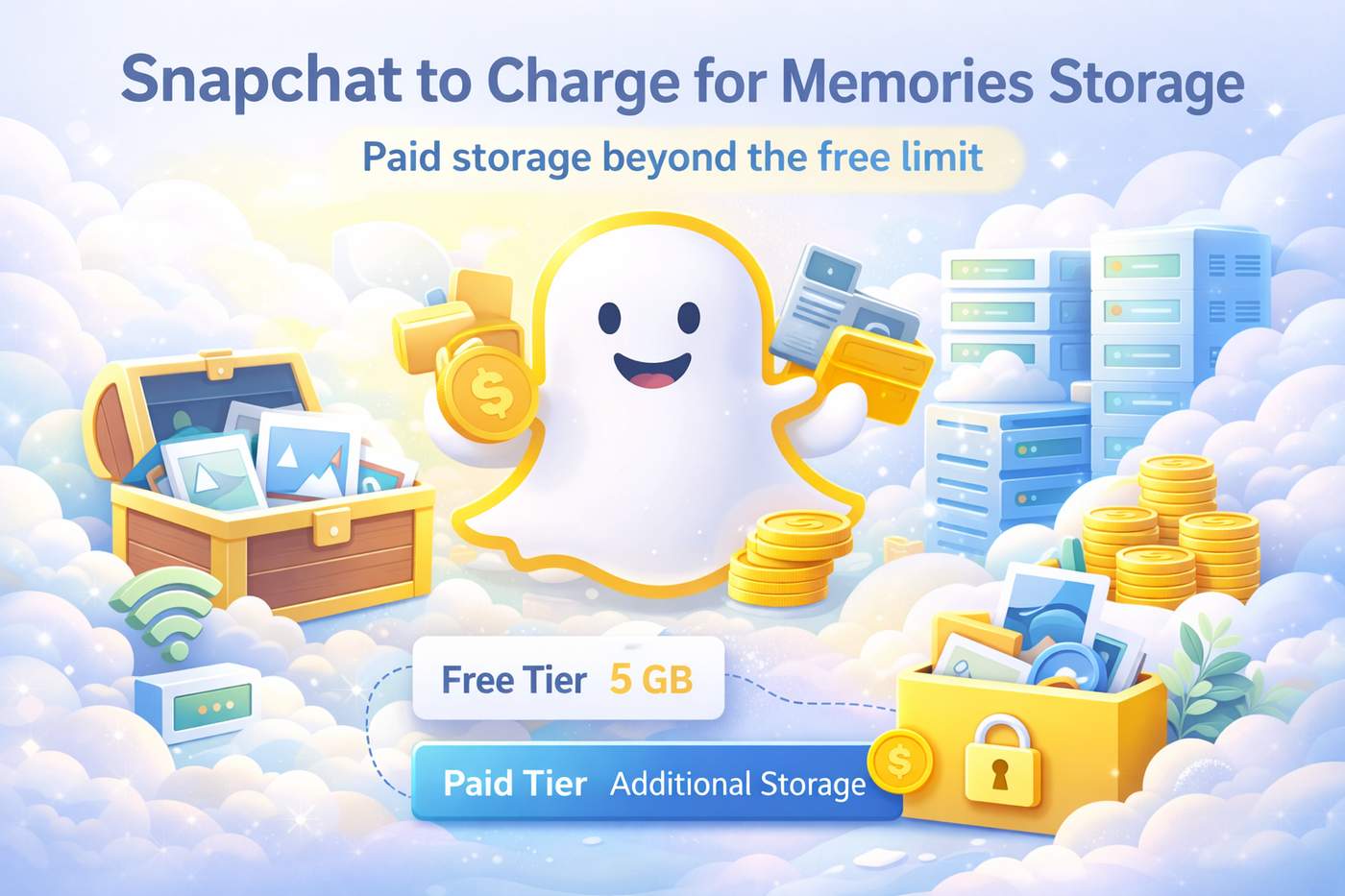
Snapchat long built its reputation on ephemeral sharing — moments that disappear, conversations that never stick. In recent years, however, the platform has shifted toward offering more persistent features, like Memories — a place where users can save photos, videos, and stories.
Now, Snapchat is taking a step further: charging for Memories storage beyond a free limit. If this surprising move has raised eyebrows, you’re not alone. Let’s unpack why Snapchat is doing this, what it means for users, and how it fits into the broader trend in social media.
What Are Snapchat Memories?
Memories is Snapchat’s cloud storage feature. Instead of content disappearing, users can:
Save photos and videos
Archive old Stories
Search and organize personal moments
It’s essentially a built-in digital gallery — and it requires cloud storage to operate.
The Announcement: Paid Storage for Memories
Snapchat recently confirmed that it will:
Continue offering a free tier of Memories storage (e.g., up to 5 GB)
Charge users for additional storage beyond that limit
This shift has sparked discussion across social platforms, with many users asking: “Why pay for what used to be free?”
The Real Reason: Storage Costs Are Real
Cloud storage isn’t free for Snapchat.
Data is stored on physical servers in data centers that require:
Electricity to run drives
Energy for cooling systems
Maintenance and hardware replacement
The company is essentially paying to keep your Memories alive forever. As users upload more photos and videos, storage demands — and costs — grow. Charging for extra storage helps Snapchat cover these costs directly.
Industry Context: Social Platforms and Paid Storage
Snapchat is not the only one to move in this direction:
Google Photos also introduced paid storage plans after offering free unlimited backups for years.
Apple iCloud charges for expanded storage beyond a limited free tier.
Social and productivity services increasingly rely on subscription models to support cloud costs.
This model helps platforms scale sustainably while offering users flexibility.
What Users Get with Paid Storage
Snapchat’s paid storage plan isn’t just a money grab. Depending on the subscription tier, users may benefit from:
✔ Additional Memories storage
✔ Priority upload and restore speeds
✔ Advanced organization tools
✔ Possibly integrated backup features
These perks help turn Memories into a more capable personal library.
User Reactions: Pros and Cons
✅ Pros
Users who value Memories get expanded storage
Snapchat offsets real infrastructure costs
Subscription models reduce reliance on ad revenue
❌ Cons
Casual users may view it as “charging for something once free”
Some feel Snapchat should absorb costs given the volume of content shared
The Broader Trend: Paid Features for Persistent Content
Snapchat’s roots are in vanishing content — a strength that has kept the platform unique. But as usage patterns evolve, users increasingly want:
A digital archive of memories
Easy access to old photos and videos
Cross-device continuity
Supporting these features indefinitely means investing in infrastructure.
By monetizing storage, Snapchat aligns with a broader industry move toward hybrid freemium models — free core features with optional paid enhancements.
Conclusion — What This Means for You
If you rely heavily on Snapchat to save photos and videos, paying for additional Memories storage is becoming part of the modern social-media landscape. Rather than seeing it as a punitive measure, consider it similar to:
Paying for extra iCloud or Google Photos space
Paying a subscription for premium album features
In exchange, you get a reliable, backed-up, and searchable digital archive of your life.
As apps evolve, monetization strategies must evolve too — and Memories storage is one clear example of how companies balance user expectations with infrastructure realities.
by : pdfalltools.com

