Why SurfPrep Interface Pads Deliver Better Sanding Results
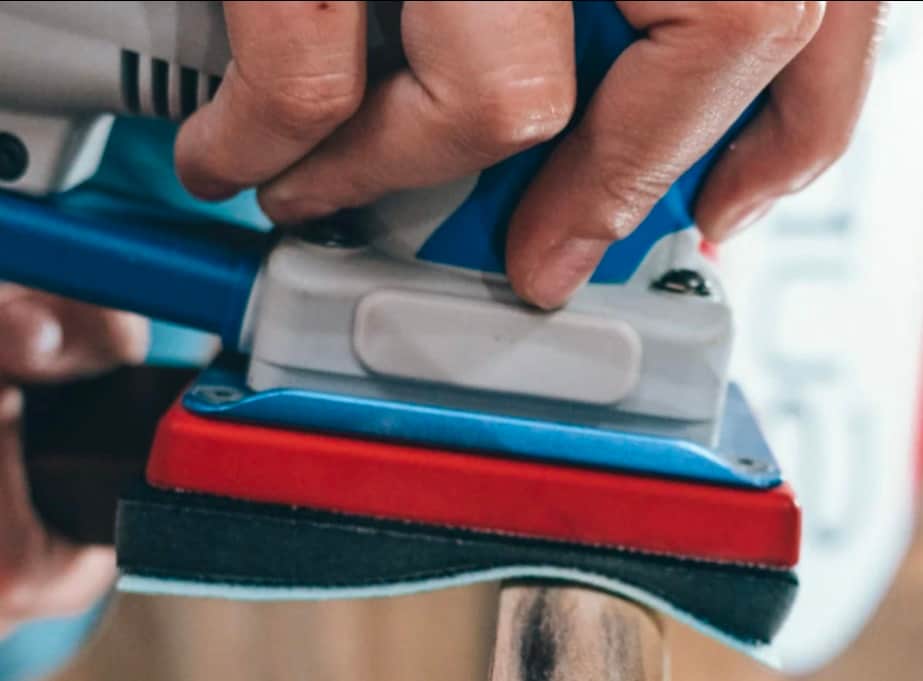
Sanding a flat surface is usually straightforward. Difficulties usually occur when sanding turns, moldings, rounded edges, furniture legs, or other ornamental features. Those shapes may result in pressure inequality, missed points and additional time on sanding. Repetitive passes can also cause more heat and wear on your sanding setup.
To overcome those issues, SurfPrep created Interface Pads to provide a cushion between the abrasive and the backing pad. That extra support can make your abrasive more readily conform to varying shapes, enhancing control and sanding uniformity.
However, you may want to know: what makes SurfPrep Interface Pads effective, and why do they have varying densities and thicknesses?
Below, you will find out which SurfPrep Interface Pad features can help lighten up some of your more challenging sanding jobs.
1. Has Soft Grey Pad for Moldings and Profiles
Moldings and profiles can be some of the most challenging areas to sand. Those shapes often include curves, grooves, and decorative details that a standard setup may struggle to follow. When your abrasive rides over parts of the profile, uneven sanding marks can become difficult to avoid.
Greater flexibility becomes important when your abrasive needs to follow decorative shapes closely. For those situations, SurfPrep offers its Soft Grey Interface Pad.
With greater flexibility, your abrasive can move along the profile rather than skip over high points. Improved conformity helps distribute sanding pressure more evenly throughout the work area.
Even pressure can reduce uneven sanding patterns while helping create a smoother finish. If your project includes decorative trim or detailed profile work, this option can help your abrasive stay engaged with the shape.
That advantage can reduce the chances of sanding high spots while leaving lower sections untouched.
2. Medium Pad offer Better Everyday Surface Control
Not every project involves deep profiles or tight curves. Some tasks require a mix of flexibility and stability. Too much softness may reduce stability, while too much firmness can limit adaptability.
For those situations, SurfPrep offers its Medium Interface Pad. The design helps bridge the gap between flexibility and support, making it easier to work across different surface types.
Extra support helps keep your abrasive steady while still allowing it to move around minor variations in shape. That combination can be useful when your project includes both flat and slightly contoured areas.
More even abrasive action helps reduce the need for repeated passes, which can save time throughout the sanding process. When versatility matters more than maximum flexibility, the Medium Pad offers a practical solution.
Such balance can be especially helpful when moving between flat panels and lightly shaped surfaces during the same project.
3. Has 7mm Firm Pad for Furniture Legs and Spindles
Furniture legs and spindles often feature curves, transitions, and narrow sections. Those details can make it difficult to maintain even sanding pressure with a traditional setup. Missed spots may force you to revisit the same area multiple times.
Detailed sanding often requires better reach around narrow features. For that reason, SurfPrep highlights its 7mm Firm Interface Pad for applications such as furniture legs and spindles.
Pairing the pad with a J-Hook Backup Pad and offsetting it slightly can further improve its effectiveness. The added reach helps your abrasive access tighter areas around furniture details.
Improved access supports smoother sanding while reducing the frustration that often comes with narrow or complex shapes. If your project includes furniture restoration or detailed woodworking, this setup can improve control.
Greater control often makes it easier to maintain an even sanding pattern around curved features and hard-to-reach sections.
4. Comes with 15mm Firm Pad for Extra Surface Conformity
Some projects include shapes that vary continuously throughout the material. Those changes can make it difficult for your abrasive to stay aligned with the contour across sections. Uneven abrasive engagement may affect the quality of your finish.
Extra cushioning becomes valuable when your abrasive must adapt to constantly changing contours. The SurfPrep 15mm Firm Interface Pad was developed with that challenge in mind.
Additional thickness creates more movement between the abrasive and backup pad. Greater flexibility allows the abrasive to adapt to changing contours while maintaining steadier interaction with the material.
As a result, sanding performance remains more uniform from start to finish. If your project involves irregular shapes or challenging contours, the extra cushion can help create smoother results.
Smoother movement can also reduce the amount of corrective sanding needed before applying a finish.
5. Has Heat Protection for Backup Pads
Heat is a natural byproduct of sanding. As friction builds between the abrasive and material, temperatures can gradually increase. Over time, excessive temperatures can affect the hooks on your backup pad and contribute to wear.
A protective barrier between the abrasive and backup pad can reduce direct heat exposure. SurfPrep Interface Pads provide that barrier during sanding.
Part of the heat generated during sanding is absorbed before it reaches the backup pad. Reduced heat exposure helps preserve the hook surface that holds your abrasive in place.
Less wear can extend the useful life of your backup pad while helping maintain a secure connection throughout the project. Secure attachment supports smoother operation and more predictable performance.
Reliable performance can also help minimize interruptions caused by prematurely worn sanding components.
6. Offer Better Results with Film, Screen, and Paper Abrasives
Different abrasives respond differently during sanding. Film, screen, and paper abrasives lack the built-in cushion found in foam abrasives. Without extra support, those materials may transfer more heat and vibration directly into your sanding setup.
Film, screen, and paper abrasives often benefit from additional cushioning during use. Because of that need, SurfPrep recommends pairing those abrasives with its Interface Pads.
Additional cushioning helps those abrasives move more smoothly across edges, contours, and detailed features. Smoother movement promotes better adaptation to changing shapes while helping improve finish quality.
More controlled abrasive action can also deliver steadier results across different sections of the project. At the same time, SurfPrep notes that foam abrasives generally do not require an interface pad.
Knowing that difference can help you choose the right setup for each sanding task. Using the appropriate combination of abrasive and interface pad can improve both efficiency and finishing results.
Bottomline
Good sanding results depend on more than choosing the right abrasive. Curves, profiles, detailed surfaces, and heat buildup can all affect the quality of your finish. SurfPrep Interface Pads are designed to help address those challenges by improving abrasive performance and adding a protective cushion between the abrasive and backup pad.
Different options are available for different tasks, including the Soft Grey, Medium, 7mm Firm, and 15mm Firm pads. Whether you’re sanding moldings, furniture details, or irregular surfaces, the right SurfPrep Interface Pad can improve control, support more uniform sanding, and contribute to smoother finishing results.

