Why the Lithium Ion Coin Cell Remains the Engineer's First Choice in 2026
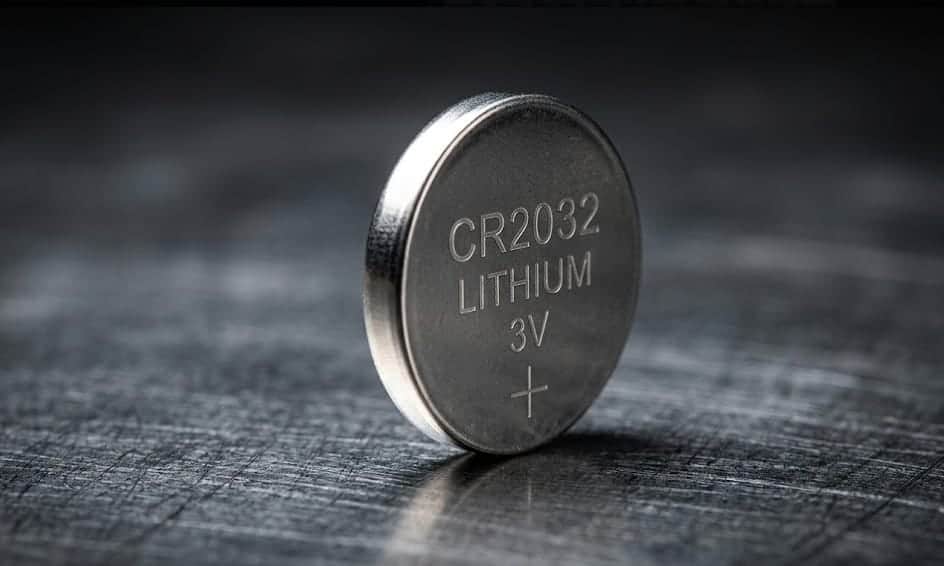
Smaller than a shirt button, lighter than a paperclip. Yet the lithium-ion coin cell powers some of the most demanding small electronics on the market. In 2026, it's still the default choice for engineers. Voltage stability, shelf life, and operating range — it delivers on all three.
Built for Precision, Not Just Convenience
The appeal of the lithium-ion coin cell isn't just its size. It's the flat 3.0V discharge curve that holds steady through most of the cell's life. For real-time clocks, TPMS sensors, Bluetooth trackers, and medical monitors, stable voltage is essential. A drifting power supply doesn't just drain faster. It causes miscalculations, missed signals, and premature device failure.
Alkaline alternatives simply can't match this. Their voltage tapers from the moment discharge begins. That makes them unsuitable for any circuit relying on a consistent reference voltage.
CR2032: The Coin Cell the World Runs On
Among all lithium-ion coin cell formats, the CR2032 stands alone as the global standard. At 20mm wide and 3.2mm tall, it delivers 220–240 mAh at 3.0V. That's enough to power a key fob for years or keep a motherboard clock running for a decade.
The CR2032 is sourced globally and specified across industries. It's supported by a mature ecosystem of battery holders and circuit designs. When you design around it, you're building on proven infrastructure.
Where Lithium Ion Coin Cells Excel
A quality lithium-ion coin cell operates from -30°C to 70°C. That covers automotive interiors, outdoor IoT deployments, cold chain trackers, and industrial field equipment. Shelf life exceeds 10 years. Products can sit in distribution for years without battery degradation becoming a warranty issue.
These characteristics make lithium-ion coin cells the standard in medical wearables, precision instruments, and industrial sensors. They're also ideal where battery replacement is inconvenient or impossible.
What Separates a Quality Supplier
In a commodity component category, supplier quality isn't a given. Reputable manufacturers provide discharge curves at multiple drain rates — not just peak capacity specs. They hold UN38.3, MSDS, and RoHS certifications as standard. These are required for air and sea freight of lithium cells and for EU market access.
For OEM manufacturers, the right supplier also offers flexible production support. That means custom labelling, application-specific assemblies, and the ability to scale from prototype to full production without changing partners.
The Smallest Component Shouldn't Be the Weakest Link
The lithium-ion coin cell is often the last component specified and the first one blamed when something goes wrong. Choose the correct format. Source from a certified manufacturer. Build compliance into your supply chain from day one. That's how you remove battery-related risk from your product development process.

