Why You Should Ignore 99% of Advice from Indie Hackers
TLDR
- Filter advice from those in the same sector, with similar customers, or even similar user needs.
- If you are building anything B2C, prioritize building your product before your audience.
Know Your Customer, Not Theirs
The issue isn't that the advice is incorrect; it's that you are building something different.
There's no one-size-fits-all solution. What works for growing Salesforce might not work for Tinder. It might seem obvious, but ask yourself – are you truly filtering through the advice and not just chasing dream numbers?
Finding the 1% Gem
Ignore 99% of the advice and search for that 1% gem from Indie Hackers. Maybe 10 out of 100 are building a similar product to yours. Perhaps 5 out of 100 target similar user needs. 1 out of 100 might offer genuine insights from their trials and errors.
If you're building a mobile app for casual consumers, only take advice from those building something similar, not from creators of web-focused SaaS for entrepreneurs. SaaS go-to-market strategies might help, but always double-check if they will work for your customer base to minimize failed attempts.
Facts you may have not known yet
Never build your audience first if you are not targeting B2B
Securing a large waitlist with an appealing landing page is great marketing, and being the #1 product of the day is every indie hacker's dream. I still believe these are the best marketing strategies. However, do you have a solid product ready for the market?
According to Lenny’s newsletter, here are the major go-to-market strategies for B2C startups. Remember, 99% of successful B2C projects acquired their first customers through 7 major strategies. Building your audience first is a very niche strategy, accounting for only 1% of total success.
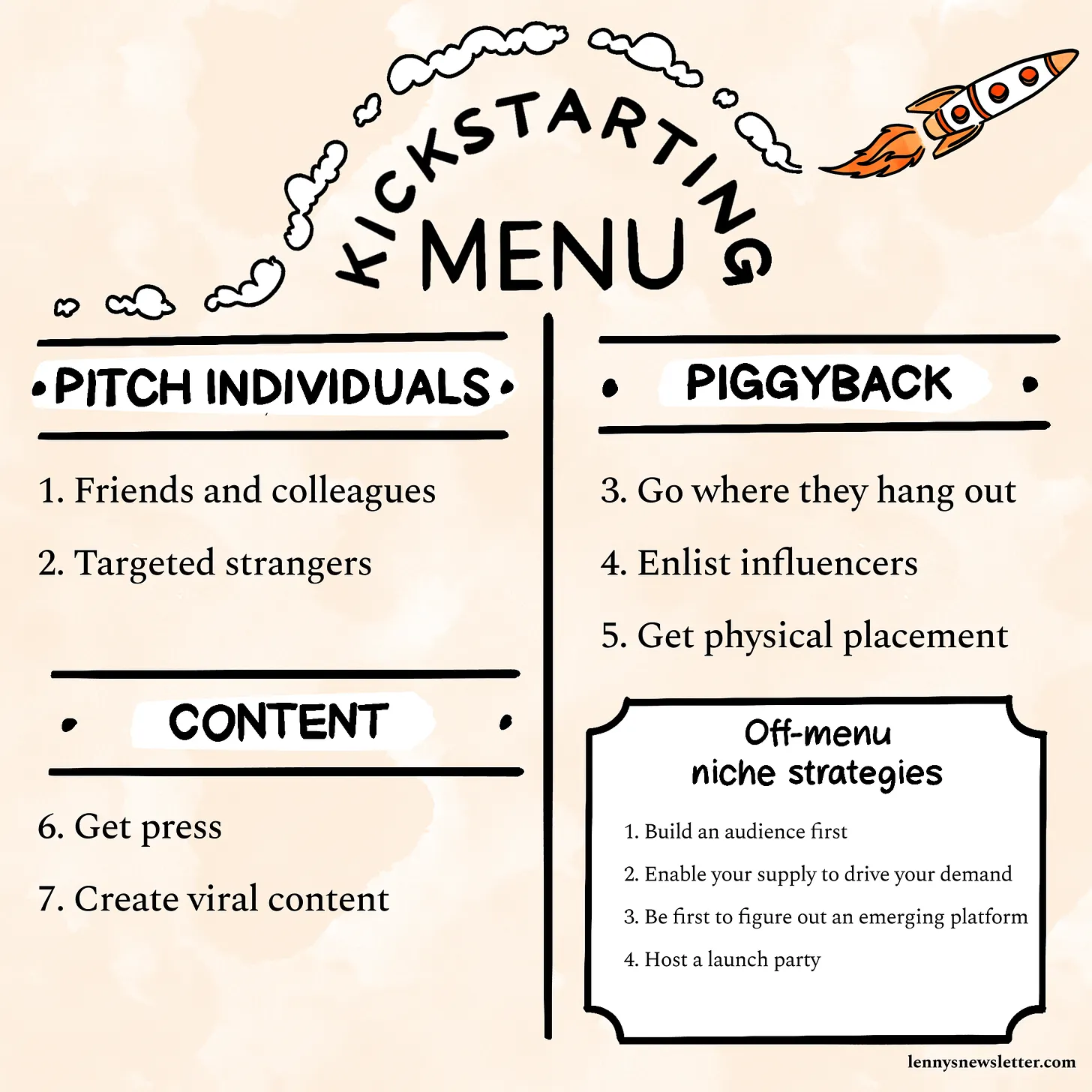
If you are building something that does not target enterprises, you must have a sound MVP, not a landing page, to go to market. It cannot be perfect, but users have to keep using your MVP, not just trying it once and never coming back. The reason they keep using an imperfect version of the product is the new value you give to your users.
A common niche strategy you might be working on so hard is building a Discord community. Maybe true for some projects, but it wasn’t for me. I develop a habit builder for the laziest, which is a total casual consumer app.
Here, think about yourself: are you joined in a Discord community for your everyday alarm app? Probably not.
Discord communities are powerful for identifying your potential users, but it follows the same path of ‘building your audience first’. Remember, this only accounts for 1% of total success strategies. The same is also highlighted in Lenny’s newsletter about consumer business: if it’s a consumer app, you should not diversify your communication channels and just talk to your users using the app.
When I did not know all these, here are my biggest mistakes I regret:
- Promoting only my landing page when people could not actually use my product.
- Building web apps to quickly bring an MVP, which never works for a casual consumer product.
About you?
Does this content resonate with you? What type of product are you building and who are your customers? Please share for insights with similar product builders.
Also, this is my landing page and upcoming product: supersquad.xyz . If you want to take a look, welcome!

This is a good filter. I’d add one more split for consumer apps: advice from “habit apps” is different from advice from “one-time utility apps.”
I’m testing this with MetricSync, and the hardest part is not explaining AI. It is proving the first repeat-use moment fast enough that someone logs a second meal. For a casual consumer app, that retention loop matters more than founder audience, launch hype, or a polished waitlist.
Also I have seen too much positivity on indie hackers instead of generally harsh feedback, like on reddit for eg
That's also something I noticed (and I just joined this week). I have also noticed that the most active content here seems to be from people who offer products/services that support other indie hackers with their products. Kind of feels like the gold rush times, where the ones offering utilities were the ones actually making the money, not the ones digging gold. Maybe there is a connection between both observations? :)
The feedback was harsh, but I think a lot of indie hackers should stay positive. It is the major driving force, especially when we do not have much revenue at first. I kinda think about having a great business partner, but still working on different things, just in a similar sector, to share a lot of ideas and insights, not from everyone.
Agreed. That’s why I don’t really hang out here. Too much toxic positivity and startups aren’t about that
Interesting, The problem is that it can sometimes take a lot of time to find the 1% gem. Are there any tricks and strategies to find the most relevant topics to find the one percent
I also worked on a lot, but my best recommendation is just to find the right keyword. I usually search for 'habit'. If this seems too narrow, than I expand to 'goal', 'productivity' and etc. If this again does not work well, then I change it to 'mobile' or 'apps' to see more casual products.
Why do you believe promoting your landing page was such a bad idea? Did it not generate a buzz?
Landing page promotion worked well, but the stage where I was in was the problem. Both advertising and promoting through communities created great traffic, but the problem was very poor retention. I launched it really fast with a free, web app prototype, and I guess this was the cause. Now I have my app that really works, and I have to do all the marketing again with my landing pages from the beginning.
I know the problem. Finding the right timing and tone in communication is damn challenging for me.
Good to know, It's an amazing post.
Good reminder to make a distinction between consumer and b2b products.
Great post, and supersquads landing page looks amazing
good to know. thanks for sharing
Finding advice from individuals who share similar strengths and weaknesses can indeed be incredibly valuable. It allows for a more relatable and applicable understanding of strategies and tactics, especially in fields like entrepreneurship where personal attributes play a significant role.
Business gurus often espouse advice based on their own experiences and personalities, which may not necessarily align with those of every aspiring entrepreneur. As you rightly pointed out, advice from an extroverted public speaker might not resonate with someone who leans more towards introversion and prefers written communication.
Seeking guidance from successful technical founders, who likely share a similar mindset and skill set, can provide insights that feel more relevant and actionable. These individuals have likely navigated challenges and opportunities that resonate with your own experiences, making their advice potentially more practical and effective for your journey.
By seeking out mentors, role models, or resources from within your own professional or personality sphere, you can tailor your learning and development to better suit your unique strengths and preferences. This approach can lead to proper a more fulfilling and successful entrepreneurial journey as you leverage your innate abilities to overcome obstacles and achieve your goals.
"more money is made giving advice than taking it"
I think it's good to read indie hacker when stuck in an information cocoon
Great point!
Lately, I've been feeling that a lot of startup advice is contradictory and it's difficult to find what would work in my case. Especially when I'm building a B2C product and most advice is for B2B.
That's why the Lenny's article that you shared is a gold mine for me. Thanks a bunch!
Interesting points 🙏
Interesting idea💡
Another reason why advice may not be suitable for you, is it comes from someone with a completely different set of strengths (and weaknesses). A lot of "business gurus" seem to teach you how be just like them. Not surprising, because that's what worked for them. However, if you're learning from an extroverted confident public speaker and you're an introverted writer, then most of their advice is going to sound overwhelmingly draining. It's like you always need something you don't have...
That's why I'm on the lookout for advice from successful technical founders, because they tend to be more like me.
Hi, thanks for sharing your thoughts.
Could you explain more about "building web apps to quickly bring an MVP to market, which never works for a casual consumer product"?
I've been building B2C services using web apps as MVPs to test my ideas. Unfortunately, I'm not getting sign-ups. I'm considering a different approach, but I'm curious how you quickly validated your ideas using a mobile app rather than a web app. Mobile apps have longer development, approval, and update cycles, which could slow things down.
I still lean towards a mobile app for my B2C product, but I'm struggling to figure out how to create a feedback loop as efficient as the one I can achieve with a web app MVP.
Would you mind sharing your experience?
Thank you!
I had a similar issue. Some signed up for my web app, but they were all friends of mine. I failed to connect with real strangers. Perhaps it's because using MVPs to validate our ideas quickly is our excuse. Real users just don't seem to mind, care, or understand what indie hackers consider important in building our product. However, if we're creating something B2C plus casual, we need to pay attention to those users. This is why I went mobile, even though things might be a bit slower on our end.
There could be another problem if you're not getting sign-ups with web app. Maybe you just weren't lucky enough with this launch and could have better luck next time. However, if you're building something casual, I recommend going mobile for better usability.
I have this same issue. Building an app before you validate interest seems counterintuitive to "make what you can sell rather than sell whatever you make". Love to hear input.
Hey man, v helpful🙏 I wrote about our journey in a B2C marketplace, what do u think about the GTM? https://www.indiehackers.com/post/behind-the-scenes-of-a-b2c-marketplace-in-2024-09a04604f0
Great points 🙏
solid advice!
Based
Commenting this to read later
Interesting perspective! I shared your article on my twitter!
Thanks a lot!
The landing page promotion was effective, but the issue arose in the subsequent stage. Despite successful advertising and community promotion driving significant traffic, retention rates were disappointingly low. This was likely due to the rapid launch with a free web app prototype. Now, with a fully functional app in hand, the marketing process needs to restart from square one, including the creation of landing pages.
Interesting perspective!
Thanks!
This comment was deleted 3 years ago