Will e-commerce websites die?
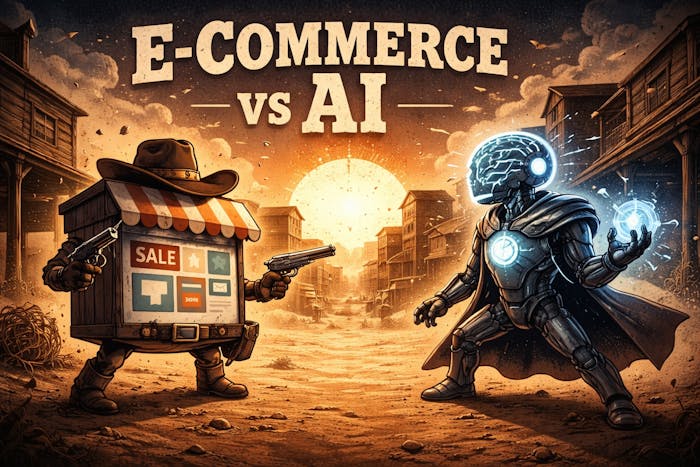
Big shifts are happening fast.
ChatGPT launched checkout. Amazon introduced Rufus. Microsoft rolled out its own checkout. Google had Checkout + Try-On, and now they’re pushing UCP (Universal Commerce Protocol) plus Business Agents.
If users can discover products, compare options, and complete payments inside AI conversations - without ever leaving the chat, what happens to traditional e-commerce sites?
My take:
Websites won’t disappear, but they’ll lose their central role.
The real battlefield will be product listing layers - especially systems like Google Merchant Center.
In an AI-driven world, agents don’t browse websites the way humans do.
They consume structured product data: price, availability, variants, delivery, trust signals.
E-commerce sites may evolve into:
- brand + trust hubs
- content and storytelling spaces
- post-purchase and support centers
But discovery and transactions will increasingly happen elsewhere - inside AI interfaces powered by Merchant Center–like feeds.
I don’t claim to have all the answers, but I strongly believe the near future of e-commerce UX will look nothing like today.
The smartest move right now? Track visibility and adapt early.
At Visby, we’re building around this idea - measuring where and how brands show up, and preparing e-commerce features for an AI-native commerce world.
What do you think?
In the near future, what role will e-commerce websites actually play?

@Elon musk:As i conclude my journey with the American people my at DOGE, I want to express my gratitude to President Donald Trump for the opportunity to help wasteful spending. My time as a Special Government Employee has been truly amazing. The mission of DOGE will continue to strengthen over time, becoming an essential part of government operations. I will remain committed to serving as an advisor to the president. Thank you all for your support. Love you all, always ❤️If you are a proud supporter of the Trump administration and the MAGA movement, please send me a follow request or a message me saying "MAGA" to show your support