You don't need a brand new app idea to build a successful business.
A lot of founders spend months trying to come up with a completely original idea.
But if you look at what's actually making money, you'll notice a different pattern.
Take AI calorie tracking apps:
Cal AI reportedly reached around $2M in monthly revenue by making calorie tracking as simple as taking a photo of your food.
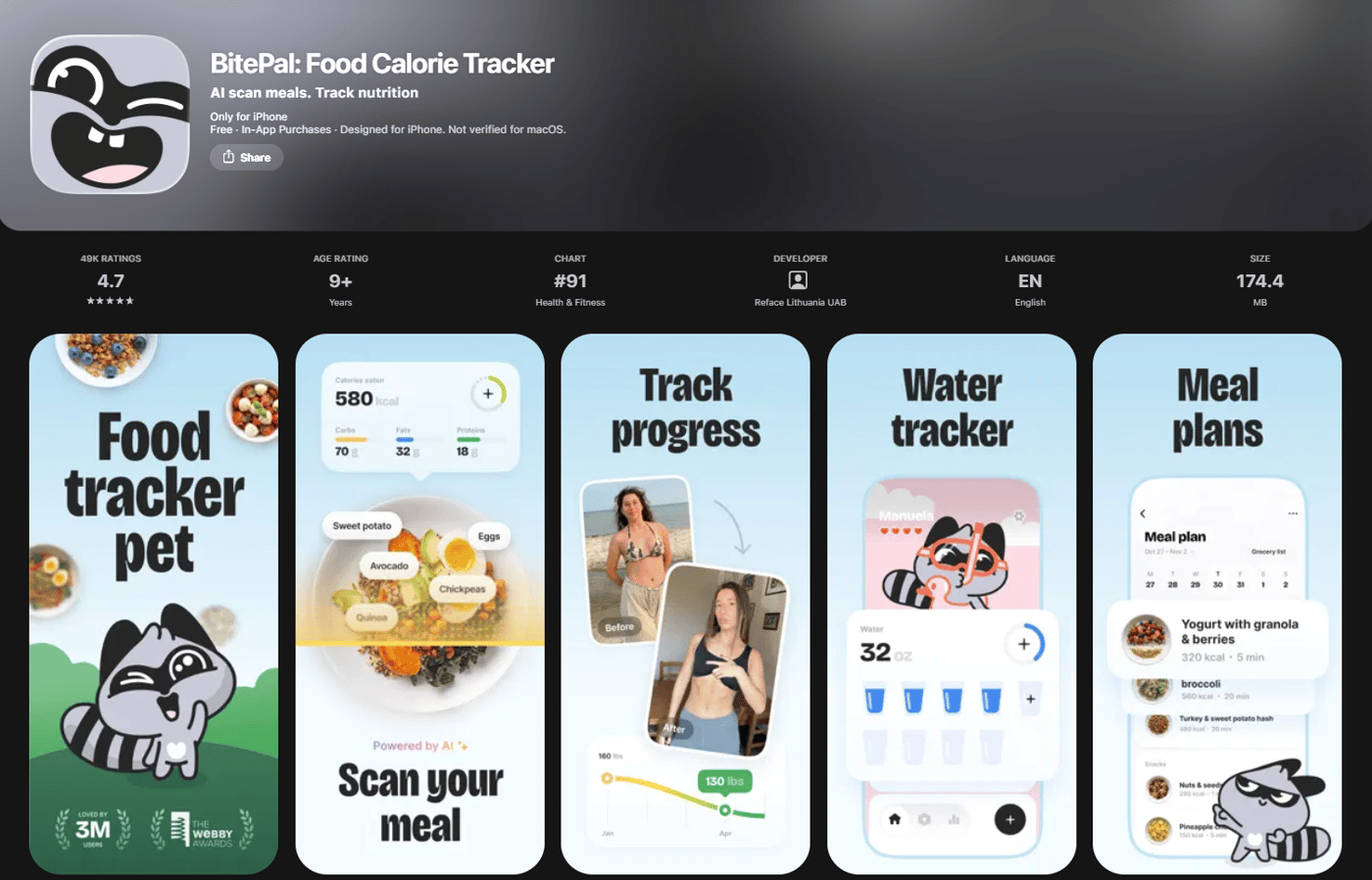
BitePal has also grown into a strong business, with estimates putting it at around $900k/month in revenue.
Neither company invented calorie tracking.
Apps like MyFitnessPal had been around for years.
What they did differently was remove friction:
AI food recognition instead of manual logging.
Better onboarding.
A cleaner user experience.
Strong short-form content and creator marketing.
Subscription-based monetization.
That's the lesson.
You don't always need to invent a new category.
Sometimes the opportunity is to take something people already use, make it faster, simpler or more enjoyable and market it well.
There are thousands of proven app ideas that already have paying customers.
Your job is to build a better version.
I've been collecting validated mobile app ideas along with their estimated MRR and the marketing strategies they used to grow.
You can check them out here: Clone the app


Very true! I built Illumea while there are already so many chatbots around. The main thing is to figure out the differentiators. In my case, it was actionable insights/intelligence and proactive engagement which no other chatbots provide. Well, it could be better UX, more features or new ideas that could define things.
exactly. great to know about Illumea.
This is a valuable reminder that execution often matters more than originality. Understanding customer pain points and solving them better can be a powerful competitive advantage.
That's amazing, great idea
This is a solid reminder that execution beats originality way more often than people like to admit. Most “new” successes are really just removing friction from something that already had demand.
The hard part, in my opinion, is actually being honest about which friction matters enough to move revenue. Some improvements feel obvious in hindsight but don’t change behavior in practice.
Curious how you decide which “existing markets” are worth cloning vs just saturated with no real room left for differentiation.
Definitely a powerful observation, but that doesn't make the task of picking out the businesses or processes in need of refinement any easier.
You hit the exact point. Founders waste time trying to invent new behaviors. Customers do not care about innovation. They just want their current tasks done faster. You build a real business when you find a proven market and strip away all the friction.
most “new ideas” are just old markets with better friction removal.
the real edge is picking one bottleneck and going 10x on that, not polishing everything.
Agree with this completely. PM OS (SOW → project plan generator) isn't a
new category either — SOW-to-plan translation is a problem PMs have solved
manually forever, and there are established PM tools already. What made it
worth building was removing the specific friction: instead of a general
project management tool, it does exactly one translation step well —
upload a SOW, get a structured plan in 2 minutes, no setup or configuration
needed. I think the "better version of something people already pay for"
approach is underrated because you skip the hardest part of a new
category — teaching people the problem exists in the first place. They
already know they have it.
This is exactly why I started my own SaaS. I wasn’t trying to invent a new category—I was frustrated by the tools my own band was using every week. The lesson I’ve learned is that building the product is only half the battle. The much harder part is proving to strangers that your version solves the problem better than what they’re already using.
Couldn't agree with this more. I did exactly this with a discount grocery store app in South Africa and eventually sold to the retailer.
Do you have any community where founder can discuss their growth strategies?
please can you share the marketing strategy used
I agree. Validation often matters more than originality. A lot of successful products win by improving UX, reducing friction, or targeting a specific audience rather than inventing something entirely new. Execution and distribution usually make the biggest difference.
This resonates a lot. The hardest part of building a new product isn't the idea — it's having zero data on whether customers will actually pay. Cloning a proven app flips that: the market has already voted with their wallets, you're just competing on execution.
The acquisition + retention angle someone mentioned is key though. I've seen founders nail the product clone and then struggle because the original app owned the SEO keywords and had 3 years of reviews. Would love to see you document the distribution strategy as you go — that's usually where clones win or die.
great post ill be following up
The cloning angle is interesting, but I’d be careful not to only clone the product surface.
For a consumer subscription app like affirmations, I suspect the hard part is less “can you build the features?” and more “can you replicate the acquisition + retention loop?”
— App Store keywords, short-form creatives, onboarding conversion, push notification timing, habit formation, and paywall testing.
Would be really useful if you documented each week as an experiment:
1. what assumption you’re testing,
2. what metric would prove it,
3. what you learned.
A lot of people can clone the UI. Fewer can clone the growth loop. That would make this series much more valuable to follow.
I run a social scheduling tool in a category that already had Buffer and Hootsuite years before us, so I'm biased toward this. Cloning only works if you pick one segment the incumbents treat as an afterthought and out-serve them there. Copy the product and you're a worse-funded version of them; copy the idea and go deep on a niche they ignore, and you have a business.
This is a smart approach,
Too many founders waste months chasing completely new ideas when there are already proven ones out there. Cloning and improving an existing app (better UX, better marketing, different niche) makes a lot more sense.
Thanks for building Clone The App — definitely checking it out.
The clone-and-improve frame is right, but the trap I keep watching people fall into (and fell into myself) is assuming the improvement THEY see is the one users are actually paying for.
Cal AI didn't win because it was "better" across the board. It won because it picked one axis — friction of logging — and made that axis 10x. The UX polish and content were downstream of that bet. Founders cloning it who spread improvement thin across 'cleaner UI + better onboarding + more features' usually end up with something that's marginally nicer and totally ignorable.
So the question I'd add to your framework: before you clone, figure out which single dimension the incumbent is worst at that users actually complain about (not what YOU'd complain about as a builder). That's your wedge. Everything else is table stakes.
Curious which axis you're picking for the ideas you're collecting — speed, price, niche, distribution?
Great view
thanks
I think the biggest takeaway is that validation reduces risk, but it doesn't remove the need for execution. Two people can build the same type of app and end up with completely different outcomes because of UX, positioning, pricing, or distribution. Looking at proven markets is a much better starting point than trying to invent something no one has asked for. The challenge isn't finding an idea anymore, it's building something people prefer to use and then getting it in front of the right audience.
I agree, plus a good marketing strategy can make a huge difference.
I think that's one of the biggest misconceptions in startups. Improving an existing workflow is often a better opportunity than chasing a completely new idea. Distribution and execution usually matter much more than originality.
Exactly, when they say History repeats itself its just those patterns that come across again and again. And here for people around to know there literally were 3 German brothers who became billionaires by cloning successful U.S. startups like eBay, Airbnb, and Amazon, and launching their replicas in Europe. And in this AI era no one can blame of not having velocity and scale on same scale.
Great insight. Most successful products don't reinvent the wheel—they solve the same problem with a better user experience. Reducing friction and executing strong marketing often matter more than having a completely original idea.
great insight!
thanks!
that's a good way to find new app ideas.
it's a great way.
Great point. A lot of founders underestimate how much distribution matters after product validation.
A better product + better positioning + consistent acquisition usually beats just having a "unique" idea.
This matches what I keep seeing too, but I'd push it one step further. The hard part usually isn't cloning the product, it's cloning the distribution. Cal AI's real moat wasn't photo calorie tracking, it was the short form content and creator engine they built around it. The tracker is copyable in a weekend. That marketing machine is not.
So when you rank these ideas, do you weigh how copyable the distribution is, not just the MRR? A $2M app that grew on a distribution edge nobody can repeat feels very different from a $200k one that grew on plain ASO. Curious if your list captures that.
Right. If the market is validated, there is no need for your own validation. Just make it better and easier.
True, we genuinely underestimate the potential this framework holds ... and there are true examples of how founders looke up for industries that had visible spots of growth and just made everything better than everyone in the market to hold the maximum share of it.