Your product’s worth is a matter of context
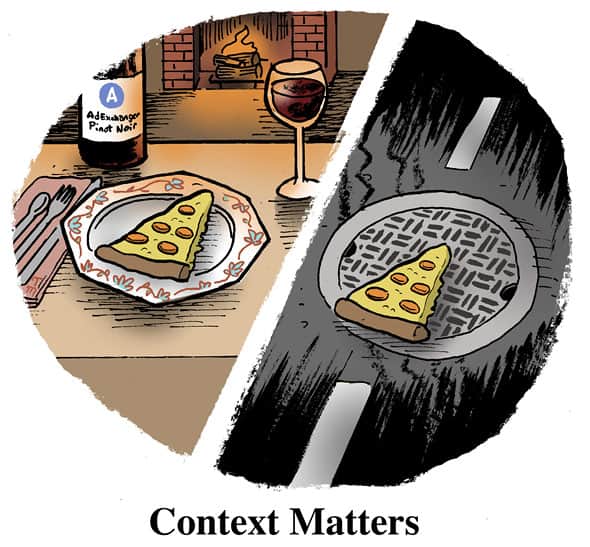
I was listening to a podcast with Andrew Wilkinson recently, the founder of Metalab, one of Silicon Valley’s largest design agencies.
In it, he mentioned how in the early days he leveraged the benefit of being in the digital world (where people can’t really see what’s on the back end) to somewhat hide the fact that the “agency” was only him on his parent’s basement.
He figured if his services were good, he might as well behave as a stablished company and charge accordingly.
Considering that, I figured it would be useful for some founders if I listed aspects that can help in setting the context and lift your user’s perception of trust and value of your product/service.
Those tips are largely well known, but the key thing to remember here is that no single aspect can be used alone – look at it in terms of setting a coherent context where each of the elements reinforce each other.
-
Objective high quality: Although people can be influenced by subjective aspects, having something that solves people’s problems is an awesome starting point.
-
Adjacent high quality: Things that are related to your product can be used as a proxy for its quality. Make sure you’re not neglecting the design and copywriting on your website or social media, for example. Great logo and brand identity goes a long way too.
-
Pricing: in the right context, customers tend to perceive high value as high quality.
-
Social Proof: People tend to be influenced by the perception of others. Reviews, Positive Star Ratings, Testimonials and Case studies, Media Publisher Quote, Safe Checkout Badge and Influencer Endorsements are all ways to build a context that invites trust and the perception of value.
Supreme, for example, combines scarcity and social proof via collaboration with other brands and celebrities to charge $1000 for $10 shirts. -
Scarcity bias: We unconsciously assume things that are scarce are valuable and things that are abundant are not. Only leverage this if it’s true, putting false 14 minutes countdowns can be seem as scammy.
A good example is Amazon’s “Order this in 1h to receive by tomorrow” element on its product pages.
Those are the key ones for me.
I don’t like using “hacks” or “psychological triggers”, but I do recognize the power of setting the right context to influence the customer and be able to charge what we are worth!
Hope that’s useful.
Do you have a tip on something that made a huge difference in your ability to price or get more customers? Leave your comment!

I would say that the context that (probably) matters the most is the context in which your product is being USED.
For example, recently we bought a local lead gen SaaS. The context under which we used that SaaS was to "generate leads from Google Maps/Yelp/other local sites".
Yet, nobody has used that on their landing page. It was clear these people haven't talked much with their customers.
Totally agree with 2).
Sure! Being able to specifically communicate with customers in terms of their actual "Jobs to be done" is also key.
Nice post Daniel. The scarcity bias one is particularly tricky I find. On the one hand, say I'm downloading an app, and I see that one app has been downloaded by 2m+ users and a competing app has been downloaded 300,000 times, I'd probably opt for the first app, assuming it's the better app. On the other hand, you're right, I think oftentimes creating a sense of scarcity or at least urgency can really motivate people - I think it's a tough one to get right.
You're right, with an app it is trickier to do. It works more seamlessly with physical goods or for example consulting/course spots.
Your example highlights the importance of not trying to force it too much and to consider the whole context around the product/service.
I totally agree, it's not easy. It ties into the social proof element too. I'm heavily influenced by reviews, for example. In fact, I'd say it's arguably the most important point out of the points listed. There are a lot of sites that aren't particularly aesthetically pleasing, but if they've got good reviews, I wouldn't be quick to dismiss them.