
Expenzey
Track. Analyze. Save. All in one place
I’ve been building an expense tracker called Expenzey for a little over a year.
The surprising thing I’ve learned isn’t about budgeting.
It’s about behavior.
Most people don’t stop tracking expenses because they don’t care about money.
They stop because logging expenses becomes a chore.
Every transaction requires:
Open app
Enter amount
Pick category
Save
Repeat hundreds of times.
The industry response seems to be adding more features:
More categories
More charts
More reports
More budgets
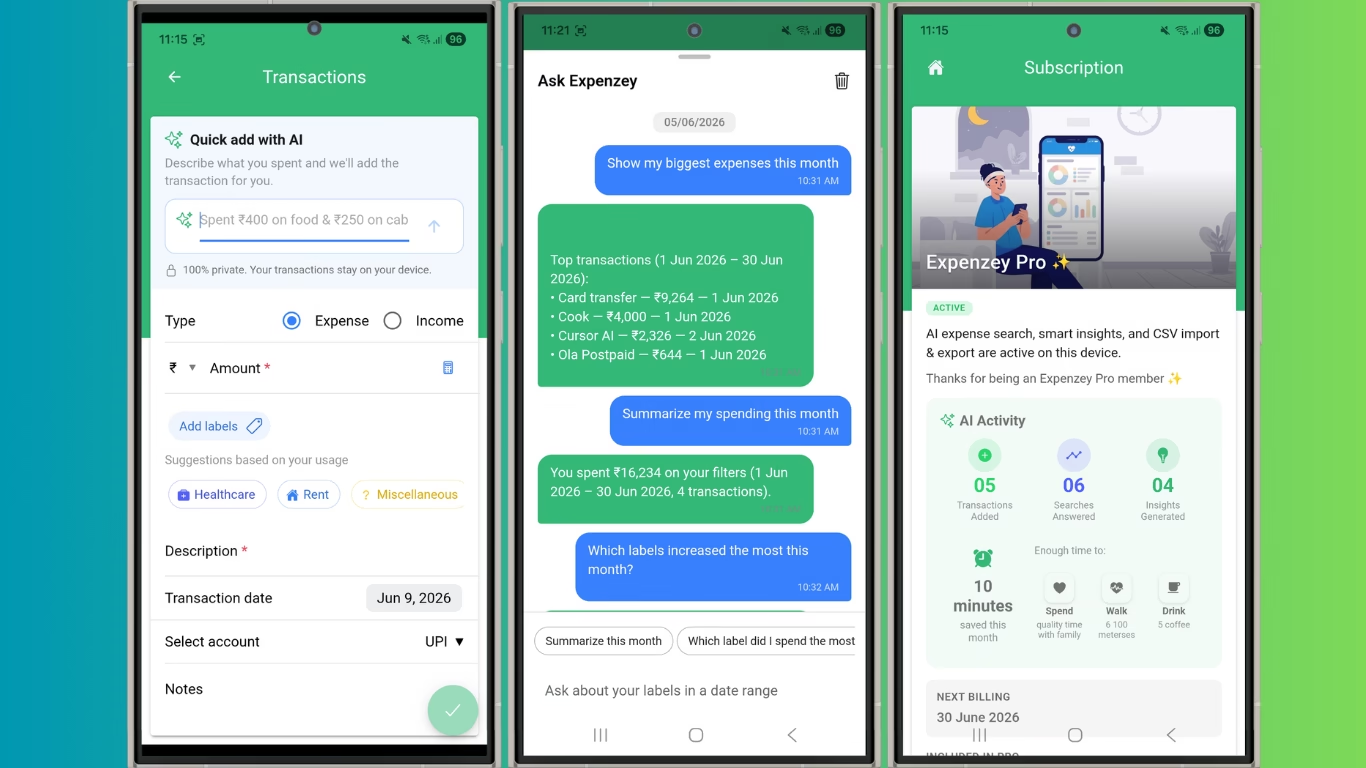
But I’ve started wondering if that’s solving the wrong problem. So lately I’ve been experimenting with reducing friction instead. Instead of filling forms, users can type:
Coffee 100
Netflix 799
Home Loan 12000
and the app creates and organizes the transactions automatically.
I’ve also been testing AI queries like:
“How much have I spent on Netflix this year?”
instead of making users manually filter through old transactions.
The interesting part is that users seem to engage more with convenience than analytics.
People say they want better reports - what they actually seem to want is less work.
Curious if others building habit-based products have seen something similar.
Have you ever discovered that the feature users asked for wasn’t actually the thing keeping them around?
P.S. If you’d like to see the product behind these observations - https://play.google.com/store/apps/details?id=com.abSarah.expenzey

Comment