
GatherrGo
All your trips, events, plans & memories - in one place
I recently asked ChatGPT a simple question:
“What’s a useful skill I can learn in 10 days to help me build GatherrGo?”
I expected answers like design, content creation, or marketing.
Instead, it said:
Learn how to communicate effectively.
Interestingly, it didn’t suggest coding either. I already have a basic programming background, and realistically, 10 days isn’t enough to meaningfully level up there. The answer it gave was quite detailed—I’m essentially redrafting and reflecting on that here.
The initial confusion
At first, the answer felt counterintuitive.
If tools like ChatGPT can:
Help write content
Improve messaging
Structure ideas
Why invest time in communication at all?
Isn’t that something I can just rely on AI for?
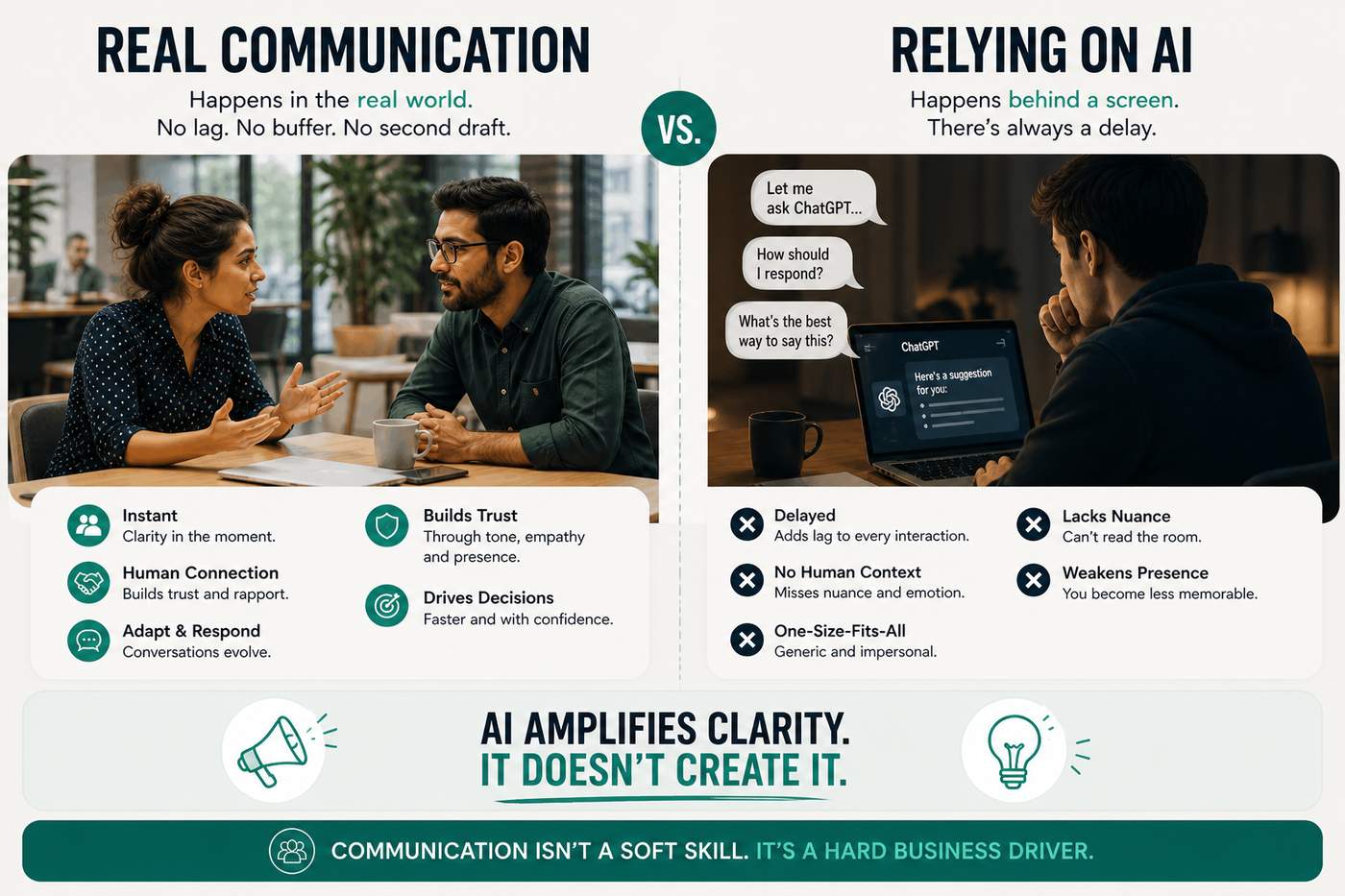
The deeper insight: AI amplifies clarity, it doesn’t create it
The core idea was this:
AI is only as good as the clarity you bring to it.
If your thinking is vague, your prompts are vague—and the output reflects that.
If your thinking is sharp, AI becomes a powerful multiplier.
It doesn’t replace communication.
It exposes whether you’re good at it.
Real-world communication doesn’t wait
Most meaningful communication isn’t written, edited, and refined.
It’s spontaneous.
It happens:
When talking to users
When explaining your product in one line
When answering unexpected questions
When pitching without preparation
There’s no pause button here.
No time to “check with AI and come back.”
You can’t hide behind a screen in real-world interactions.
There’s no lag, no buffer, no second draft.
Clarity has to exist in the moment.
Why this matters for what I’m building
In case you’re wondering what I’m working on—
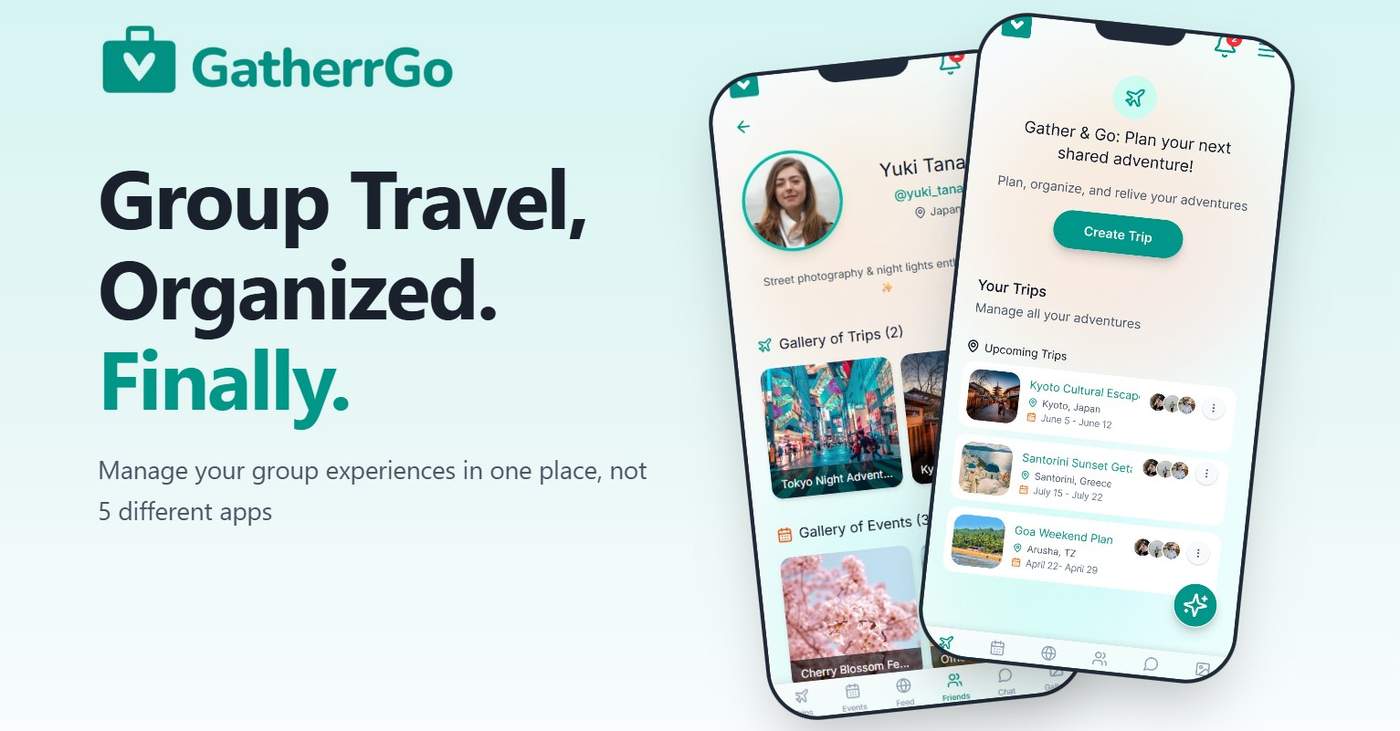
I’m building GatherrGo, an app that helps groups plan trips, manage expenses, and coordinate everything in one place.
Today, group planning is fragmented—recommendations come from AI or travel sites, plans live in spreadsheets, conversations happen on chat apps, and expenses are tracked elsewhere. It works, but barely.
GatherrGo is my attempt to simplify that—bringing planning, coordination, and shared experiences into a single, structured space.
And building something like this has made one thing very clear:
If I can’t communicate the problem well, I can’t build the right solution.
Communication is not a soft skill
It’s easy to label communication as a “soft skill.”
But in reality, it’s a hard business driver:
Clear messaging → better user understanding
Strong conversations → better insights
Better articulation → better product decisions
Better prompts → better AI outputs
It directly impacts growth.
The uncomfortable takeaway
Learning communication doesn’t feel like progress.
There’s no feature shipped. No visible output.
But it compounds faster than almost anything else—especially as a founder.
The takeaway
The suggestion wasn’t about avoiding design, marketing, or coding.
It was about leverage—especially within a short time frame.
Before you rely on tools (including AI), you need clarity in how you think and communicate.
Because in the end:
You don’t win by using AI.
You win by knowing what to say—especially when there’s no time to ask AI.
https://gatherrgo.com/

Recommendations and inspiration come from ChatGPT or TripAdvisor. Plans are made on spreadsheets. Conversations happen on WhatsApp. Expenses go into Splitwise. And once the trip is over, everything turns into digital debris.
I’ve experienced this repeatedly across trips and events. It’s a problem people just work around, but it’s fundamentally broken.
That’s why I started building GatherrGo.
GatherrGo is an app that brings group planning into one place—so you can manage itineraries, track expenses, assign responsibilities, and keep everyone aligned without the chaos. The goal is simple: reduce coordination overhead so people can focus on the experience, not the logistics.
What began as a solution for trip planning is now evolving into something broader—helping groups coordinate any shared experience, from casual outings to larger events.
Right now, GatherrGo focuses on:
Centralizing planning, communication, and tracking
Making expense management simple and transparent
Helping groups stay organized with minimal effort
It’s still early, and I’m iterating quickly based on user feedback. The aim isn’t to build just another tool, but something that fits naturally into how people already plan together—and actually replaces the patchwork they use today.
GatherrGo is a bootstrapped effort by a team of two. I’m building it as the founder, with a background in product and program management, based out of Bangalore. Akash Yadav, based in Seattle, supports as a Tech Advisor and senior developer. Between us, we bring 30+ years of experience working in MAANG companies.
I’m sharing this journey to learn, get feedback, and document what it takes to build something like this from scratch.
If you’ve dealt with similar chaos while planning trips or events, I’d love to hear how you’re solving it today.
Comment