
IPTVPOST
Branding to world
Energy markets are becoming more complex as businesses manage changing demand, renewable energy generation, fluctuating prices, and increasingly interconnected supply networks.
Companies operating in electricity, natural gas, oil, and other energy markets need systems that can manage commercial transactions and operational requirements. Traditional manual processes may become difficult to maintain when trading volumes increase or market conditions change quickly.
This is why energy trading software has become an important part of modern energy operations. Businesses can use technology to connect trading, risk management, scheduling, contracts, and settlement processes.
Organizations exploring energy trading software should consider how a platform can support their specific markets, workflows, and compliance requirements.
Understanding the Complexity of Energy Trading
Energy trading differs from many other forms of commodity trading because physical delivery and timing can play a significant role.
For example, electricity cannot generally be stored in the same way as many physical commodities. Supply and demand must be balanced, and market participants may need to manage delivery schedules, generation forecasts, transmission limitations, and price changes.
Natural gas trading can also involve transportation capacity, storage, pipeline constraints, and regional pricing differences.
These characteristics create a need for accurate information and coordinated processes.
Key Functions of Energy Trading Software
Energy trading platforms may support several stages of the trade lifecycle, including:
Deal capture
Contract management
Market data management
Scheduling
Position management
Risk analysis
Settlement
Reporting
Compliance monitoring
The available functionality depends on the solution. Companies should review the features relevant to their market and operating model.
Managing Market and Price Risk
Energy prices can change because of weather, demand, fuel costs, generation availability, geopolitical events, and infrastructure problems.
A sudden change in market conditions can affect open positions and contractual commitments. Energy trading software can help organizations monitor exposures and analyze potential financial impacts.
Risk teams may evaluate:
Price volatility
Volume exposure
Basis risk
Counterparty exposure
Delivery risk
Liquidity risk
Currency exposure
Risk analysis should be supported by reliable data and clearly defined methodologies. Software can make calculations and reports more efficient, but the organization must still establish appropriate risk policies.
The Role of Scheduling
Scheduling is especially important in physical energy markets. A transaction may involve specific delivery times, locations, quantities, and operational requirements.
Errors in scheduling can result in additional costs, delivery problems, or contractual disputes.
An integrated energy trading system can help coordinate schedules with trade records and operational teams. It may also provide a more complete view of upcoming obligations.
Companies should examine whether the solution supports the markets and scheduling structures relevant to their business.
ETRM and Energy Trading Operations
An ETRM system is designed to support energy trading and risk management. It may connect front-office activities with middle-office monitoring and back-office settlement.
When these processes are separated, teams may spend considerable time reconciling information. A connected platform can reduce unnecessary duplication and improve data consistency.
Businesses considering a modern ETRM solution should evaluate:
Trade lifecycle coverage
Market and product support
Data integration
Risk calculation capabilities
Settlement workflows
Reporting and audit trails
System scalability
The right choice depends on the company’s size, markets, technology infrastructure, and operational complexity.
Supporting Renewable Energy Markets
The growth of renewable energy introduces additional challenges and opportunities. Solar and wind generation can vary according to weather conditions, which may affect forecasting and balancing requirements.
Energy trading technology can support the analysis of generation data, market prices, and delivery commitments. However, forecasting accuracy depends on the quality of available data and the methodology used.
Companies should avoid treating software forecasts as guaranteed outcomes. Forecasts should be reviewed alongside market knowledge and operational information.
Conclusion
Energy trading software can help businesses manage the operational and financial complexity of modern energy markets. By connecting trading, scheduling, risk management, and settlement, the right platform can improve visibility and reduce manual coordination.
Businesses should select technology based on their actual market requirements and long-term growth plans. Integration, transparency, scalability, and usability are essential considerations for building a reliable energy trading environment.

Building an online gaming business is very different from simply launching a website and waiting for users to arrive. The market is competitive, users have many choices, and a new platform has to earn trust before people are willing to spend time using it.
For founders working on gaming products, the biggest challenge is often not building the technology. It is creating a product that people understand, trust and want to return to.
Start With a Clear Product
One of the first things a gaming startup needs is a clear purpose.
A platform should make it easy for visitors to understand what it offers within a few seconds. Complicated navigation, unclear categories or too many unnecessary features can make a new product difficult to use.
A focused online gaming platform can make the experience much easier by organizing its games and information in a simple way.
The goal should be to answer basic questions quickly:
What does the platform offer?
Who is it designed for?
How does it work?
What makes the experience different?
How can users get started?
When these answers are easy to find, visitors are more likely to explore the platform further.
User Experience Should Come Before Growth
Founders sometimes focus heavily on traffic before making sure the product experience is ready.
That can create problems.
If a visitor arrives from Google, social media or another website and immediately faces slow pages, confusing menus or broken features, getting more traffic will not solve the underlying issue.
A better approach is to make the basic experience smooth first.
Pages should load quickly, navigation should be simple and important information should be easy to find. This is particularly important for gaming products because many users access them through mobile devices.
Mobile Experience Matters
Mobile has changed the way people use online products.
A gaming website may receive visitors from different devices, screen sizes and internet connections. A design that works well on a desktop computer may not provide the same experience on a smartphone.
For this reason, founders should test their product on multiple devices before investing heavily in promotion.
Simple improvements such as readable text, easy navigation, fast-loading pages and properly sized buttons can make a significant difference.
Trust Is a Growth Factor
Trust is especially important for online gaming businesses.
People are naturally careful when a platform asks them to create an account, provide personal information or make a payment.
A startup can improve trust by clearly explaining its policies, providing accessible support and making important information easy to find.
Transparency also matters. If there are rules, eligibility requirements, payment conditions or regional restrictions, they should be presented clearly instead of being hidden in complicated pages.
For platforms involving real-money gaming, founders should also make sure their product follows the laws and licensing requirements that apply to their target market.
Content Can Help New Platforms Get Discovered
A good product still needs a way to reach potential users.
Content marketing can help gaming startups build visibility by answering questions that their audience is already searching for.
Instead of publishing dozens of low-quality articles, a startup can focus on useful topics such as:
How different online games work
Beginner guides
Gaming terminology
Mobile gaming tips
Game comparisons
Responsible gaming information
Industry trends
Technology behind online gaming
Useful content can bring visitors from search engines while also helping a new brand demonstrate knowledge of its industry.
Build Around the Audience
Another important lesson for gaming founders is to listen to users.
Analytics can show where visitors leave a website, but direct feedback can explain why they leave.
Founders can use surveys, community discussions, support messages and user interviews to understand common problems.
Even a small number of conversations can reveal useful information. Perhaps users cannot find a particular game, do not understand a payment option or want better mobile navigation.
These small observations can become valuable product improvements.
Retention Is More Important Than One-Time Traffic
Getting someone to visit a website once is only the beginning.
A successful gaming product needs reasons for users to return.
That could come from new games, better content, community features, improved usability or a more reliable overall experience.
Founders should therefore look beyond simple visitor numbers. Metrics such as returning users, engagement, registration completion and customer feedback can provide a better understanding of whether the product is actually improving.
Start Small and Improve
Gaming startups do not need to build everything at once.
A smaller product with a clear purpose can be easier to test and improve than a platform overloaded with features.
Founders can launch the core experience, collect feedback and gradually introduce improvements based on actual user behavior.
This approach also reduces the risk of spending months building features that nobody wants.
Final Thoughts
The online gaming market can be competitive, but that does not mean every new product needs a massive budget to get started.
A clear product, strong user experience, mobile-friendly design, transparent communication and useful content can give a startup a solid foundation.
Most importantly, founders should focus on building something users can understand and trust. Once the product experience is strong, marketing and growth become much easier to build around it.

Building a website can drain cash fast. Domain registration, hosting, privacy, renewals, and stray add-ons all add up. The bill grows before the first page goes live. Smart site owners cut waste early and treat every charge like a challenge. Coupon pages matter here, though many don't deserve trust. Some list dead offers. Some hide the real savings under clutter. The sharper move is to use a source that tracks deals clearly and pair that with a provider known for low entry pricing. That mix turns a routine purchase into a controlled expense, not a financial trap. Cheap decisions made early often shape the entire yearly budget.
Start With the First Cut
The first cut usually comes from the domain, and that is where Hostinger domain coupons from HostAdvice can make a direct difference. A buyer checks the current offer, compares it with the default checkout price, and applies the code at Hostinger’s checkout to confirm the savings. People often overpay through laziness, not need. Saving a few dollars on a domain can free up room for privacy, email, or basic hosting. Small cuts add up. That isn't glamorous, though it works. Budget discipline starts with the first purchase, not after mistakes pile up.
Dodge the Checkout Trap
Low starting prices lure people into sloppy buying. Then checkout arrives with extras, longer terms, and upsells that feel urgent. A coupon only helps if the final cart still makes sense. Strip the purchase down to what the site actually needs right now. A domain. Suitable hosting. Maybe privacy. Nothing else should slide in without scrutiny. Many first-time buyers confuse options with necessities, and that confusion costs money fast. Companies profit when buyers stop reading the cart line by line.
Buy at the Right Moment
Timing changes the math. Promotions are often linked to holidays, campaigns, and competition. A buyer who watches pricing for even a short period often finds a better deal than someone who rushes in. Patience has economic value. Ignore the countdown timer in the theater. Compare current deals with recent ones, check whether the coupon applies to the exact plan in question, and buy only when the numbers improve. Impulse is expensive. Waiting usually isn't. The best bargain often goes to the person who pauses and verifies everything.
Look Past the Intro Price
The rookie mistake is obvious. People fixate on the opening discount and forget the renewal bill. That later bill often reveals the true picture. A wise budget looks past year one and asks tougher questions. What does the domain renew at? Does hosting jump after the first term? Which extras renew automatically unless canceled? A coupon should support a sound choice, not hide a bad one. Strong budgeting controls total cost across time, not just the first flashy number. Short-term savings mean little if long-term costs erase them.
Conclusion
Cutting website costs isn't magic. It is a method. A buyer who combines a reliable coupon source with careful checkout review, smart timing, and a close look at renewals usually saves money. The pattern stays the same because the basics don't change. Spend less at the start. Avoid useless extras. Ignore pressure tactics. Plan for the second bill, not just the first. Savings don't arrive through luck. They appear when you treat every purchase like a business decision instead of a shiny impulse buy. That habit protects cash now and keeps future costs from turning a cheap launch into an expensive commitment.

Leo Lo has spent 12+ years building automatic door distribution networks across the GCC, growing from 18 to 65+ distributor partners.

I grew up in Guangdong, China. In 2012, I moved to the Gulf with a suitcase and a job exporting gate automation equipment from Shenzhen. My first role was handling Middle East exports at a small manufacturer — distributor pricing, technical documentation, and a lot of awkward phone calls in broken English.
Twelve years later, I run online sales for a contract manufacturer that supplies automatic door parts to the six biggest brands in the industry. We sell through Shopify. We ship globally. And we’re profitable with a small team.
Nobody in the indie hacker community talks about selling door parts. And that’s exactly why it works.
The Path That Made This Possible
My career in automatic doors wasn’t planned. It started at Shenzhen Turboo Gate & Door Automation, where I spent three years learning the technical side — which Dunkermotoren motor fits which Dorma system, why a Geze Slimdrive encoder is different from an Assa Abloy one, and why “compatible” doesn’t always mean “equivalent.”
In 2015, I moved to Modun Gulf Building Contracting in the UAE as Regional Sales Manager. Over six years, I grew our distributor network from 18 partners to 65 across the GCC. I learned to sell in three languages — Mandarin, English, and Arabic — and I learned something more important: what actually breaks in automatic doors in extreme conditions.
By the time I joined DoorDynamic in 2021, I’d replaced over 500 door carriers across Dubai, Riyadh, Jeddah, and Doha. I’d opened enough broken door panels to know that the wheel is the most stressed component in any sliding door system. I’d watched consumer-grade capacitors fail in 65°C controller enclosures because nobody spec’d them for Gulf heat. That hands-on knowledge is what makes our e-commerce business work.
The Insight
The automatic door aftermarket has a structural problem. The big brands — Dormakaba, Geze, Record, Assa Abloy, Gilgen, BEA — sell door systems at premium prices, and replacement parts carry the same brand premium. A facilities manager maintaining a hotel full of Dorma ES200 operators has historically had one option: buy OEM parts at full price from an authorized dealer, wait 6-8 weeks for shipping from Europe, and pay for it.
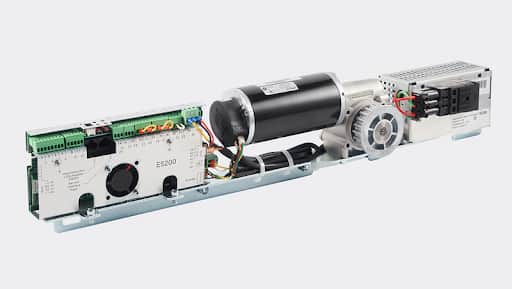
The Dorma ES200 is the most widely specified sliding door operator globally. DoorDynamic produces both genuine OEM and certified compatible components for this system.
But here’s what I learned from years on the ground: the factories that make the OEM parts have the same production lines, the same materials, and the same quality standards. The only difference is the label on the box. Some brands use the exact same Dunkermotoren GR63x55 motor internally but charge 30-50% more because it carries their sticker.
DoorDynamic is the contract manufacturer behind several of these brands. We produce both genuine OEM components and certified compatible alternatives — same specifications, same performance, same warranty (up to 5 years). Customers choose: genuine or compatible. Transparent, no fine print.
We sell through a Shopify store. B2B. Global.
Why This Beats SaaS (At Least for Me)
The customers are sticky. Distributors and facilities managers don’t switch suppliers for fun. Once they trust your parts and your dispatch times, they reorder for years. Our repeat purchase rate is north of 60%.
The margins are healthy. Compatible parts carry significantly better margins than OEM — no brand licensing fees. The price to the customer is 30-50% below OEM, but well above our manufacturing cost.
Competition is near zero. Every indie hacker is building AI tools. Nobody is optimizing a Shopify store for “Assa Abloy SL500 carriage assembly.” The SEO competition for niche B2B industrial parts is almost nonexistent compared to any digital product category.
The moat is knowledge. Knowing that a belt slightly too tight wears motor bearings within months. Knowing that wheel diameter deviations of 0.5mm shift door balance and create uneven track wear. Knowing which controller capacitors survive GCC rooftop temperatures and which ones die in 18 months. That knowledge — built over 12 years and 500+ service calls — is the real moat. Not code, not capital.
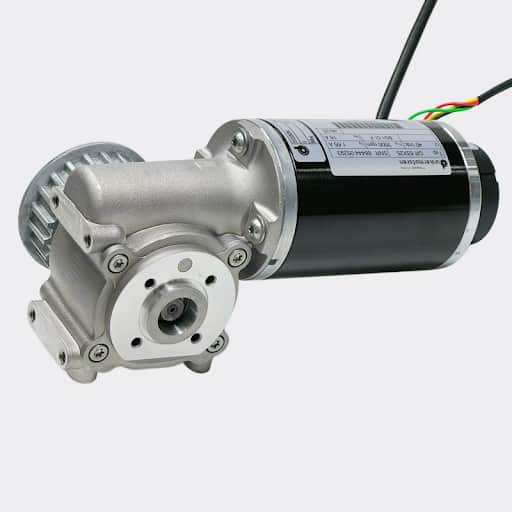
The Dunkermotoren GR63x55 is the industry’s most widely specified brushless DC motor for automatic sliding doors. The same core motor powers multiple major brands — with brand-specific mounting configurations and encoder settings.
What I’d Tell Anyone Considering This
Pick a niche where brand premium is absurd. The bigger the gap between manufacturing cost and retail price, the more room for a transparent alternative.
Lead with specification data. Every product page on doordynamic.com has exact specs, compatibility matrices, and installation references. B2B buyers research before they buy. Give them what they need.

Every component on our store includes full technical specifications, compatibility lists, and installation references — not just a product photo and a price.
Warranty is your marketing. Offering up to 5 years on compatible parts eliminates the biggest objection. “What if it doesn’t work?” becomes a non-question.
Go global from day one. A Geze PowerDrive in Berlin uses the same parts as one in Dubai. Shopify + international shipping = global niche business.
Be trilingual if you can. I quote in English, confirm specs in Mandarin with the factory, and close deals in Arabic with GCC distributors. That’s not a nice-to-have — it’s the entire competitive advantage.
The Shape of the Business
Average order value is 3-5x higher than consumer e-commerce. Customer acquisition cost is low because SEO and technical content do the heavy lifting. We’re profitable with a small team. And the business compounds — every technical post I write on LinkedIn brings inbound inquiries from distributors who already trust the specs before they reach out.
Not every business needs to be a unicorn. Sometimes the best move is to sell door parts — and sell them better than anyone else in your market.
Comment