
KVdb.io
NoSQL Database as a Service for Developers
I finally added billing, so users can now sign up for a subscription, which increases the amount of data you can store in KVdb, as well as removes API rate limits!
I debated whether to launch a paid plan at all, since the number of active users is so low, but a few potential users told me they were discouraged from even trying out the product since there was no mention of a paid plan.
Finally, I can focus on talking to customers now, which I should have been doing much sooner :)

In addition to API access, I just released a web UI that lets users view their buckets and keys in a web browser, as well as update bucket policy via the web:
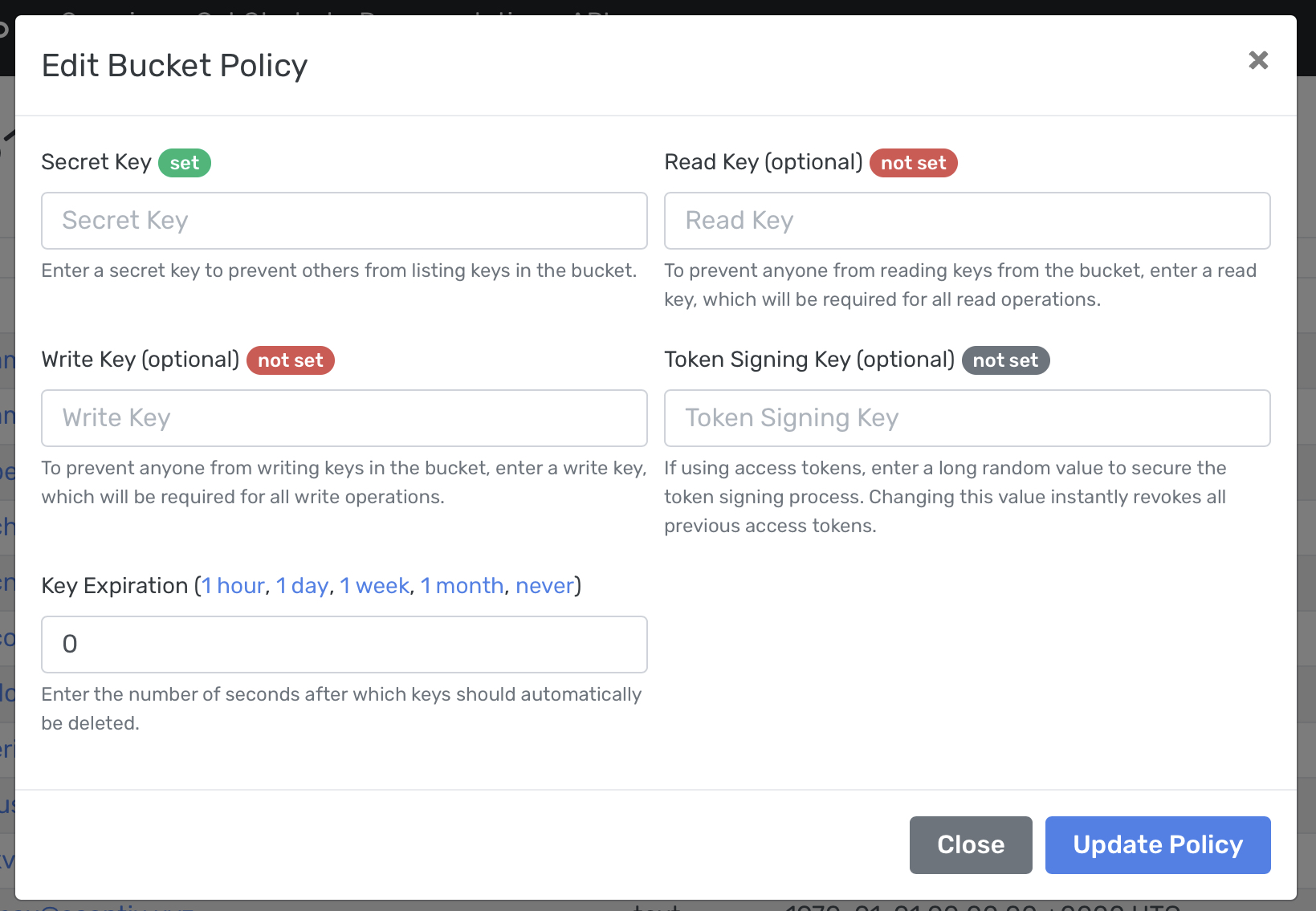
Sometimes when you’re troubleshooting or debugging an app, having a convenient web UI makes it easy to figure out what’s going on :)
It’s been a while, and KVdb has been on the back burner for more than a year, but people have been using it... I have no idea how they found it! Unfortunately, I neglected to collect email addresses when people created buckets, so I had no way to reach my users. This is a dumb oversight, but I’ve rectified it now by requiring users to provide an email address when creating buckets. I can’t wait to finally talk to some of my users to see how they are using KVdb!
What was supposed to be a weekend project, turned into a few weeks of work, but I finally went live with KVdb! Compared to other hosted key-value stores, KVdb intelligently figures out what kind of data you are storing and lets developers atomically operate on values.
For example, let’s say you need to count the number of visitors to a page in your app, you can store that as a counter in KVdb and atomically increment the counter whenever someone visits that page without any server-side logic. This is one of many convenient operations KVdb will be supporting in the future!
Comment